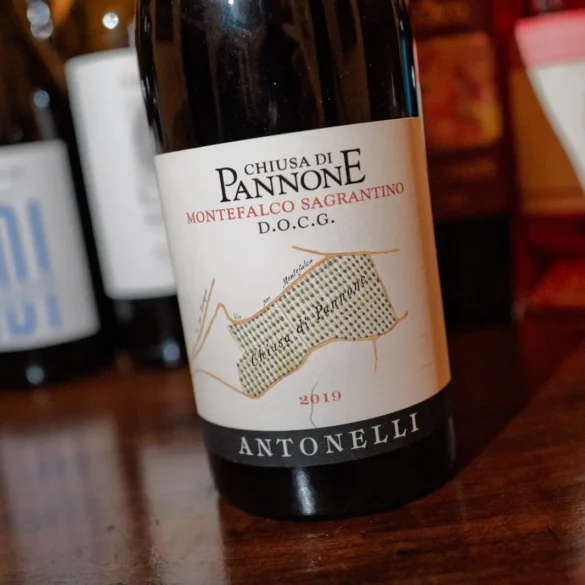
Wine professionals often dismiss the idea that certain wines have seasonality, and it is easy to understand why. They have to sell wine all year long, and most bottles are opened within hours of purchase. Asking a client to wait, to defer their pleasure, just doesn’t fit with the times we live in. So why limit sales of rosé to summer when it complements fall’s roasted vegetables or strums the right chord on Valentine’s Day? I understand the impulse.
If you look out the window and say “it’s sweater weather,” then it’s obviously Sagrantino Season.
But living wine is seasonal. It only works in certain contexts, because it has its own ideas. It doesn’t want to attend every party on the calendar; it wants to show up to the right one and be appreciated fully.
Take for instance Montefalco Sagrantino, arguably Italy’s most tannic red wine and an absolute delight to savor — but only when you catch it in the right moment: with at least a few years of age, with at least a hearty dish to soften its potency, and with at least some cool ambient temperatures to suit the mood. If you look out the window and say “it’s sweater weather,” then it’s obviously Sagrantino Season.1
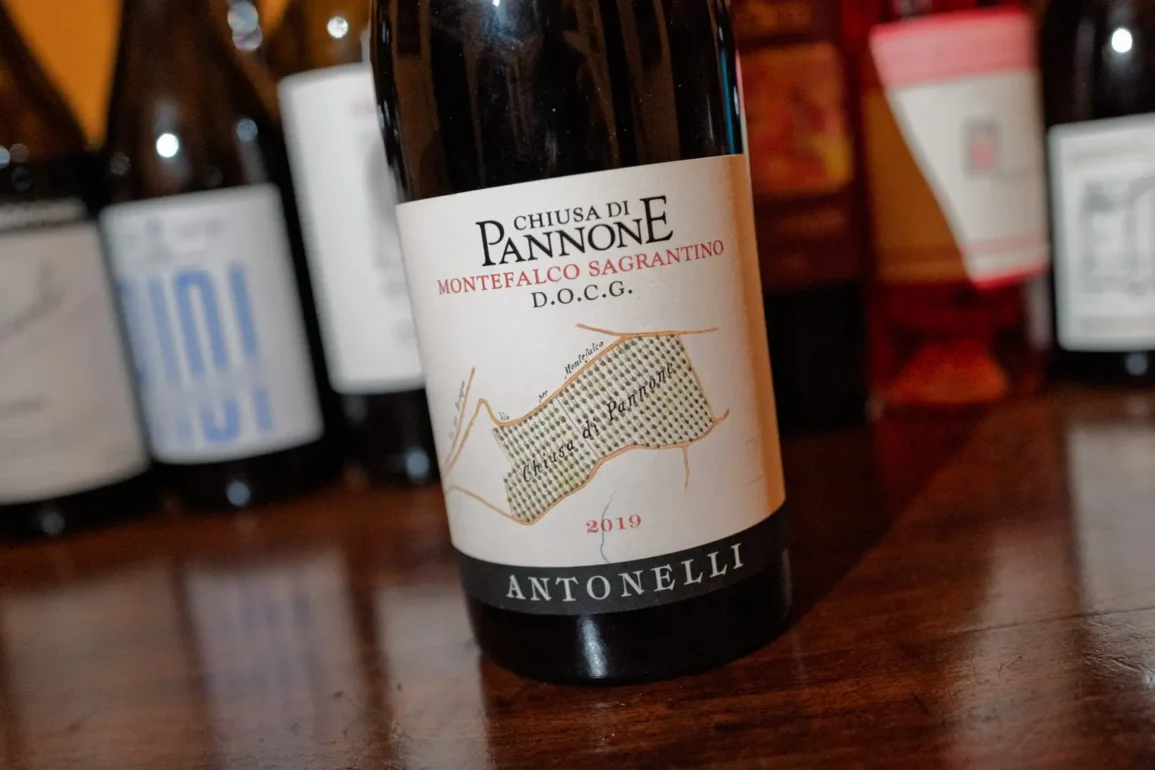
Arnaldo Caprai and Paolo Bea are the two most famous producers, but over the past year I’ve been impressed with the wines from Antonelli San Marco (note: on the front label you’ll find it merely says Antonelli). This historic estate once belonged to the Vatican, but it was sold to an Umbrian family in 1883, and they’ve been the caretakers ever since. It is a massive but biodiverse estate, with ample forest, and 13 hectares of olive trees which are dwarfed by 60 hectares of vines (both are certified organic). “Chiusa di Pannone” and “Molino dell’Attone” are the two single-vineyard Sagrantino wines; the former faces south, the latter faces east. I recently tasted the 2019 “Chiusa di Pannone” which demonstrated some of the most balanced winemaking I’ve seen from the region. It was potent yet inviting, rich yet supple, and while the tannins were very forward, I noticed that they were fine-textured and not aggressive. And this is where I like this wine the most: it taught me a new perspective on Sagrantino that will help me assess these wines better in the future. You see, a less tannic wine, such as Barolo, can often feel more tannic because of the tannin’s liveliness. Sagrantino has a huge quantity of tannins, there is no way around that. But when they behave and all work in the same direction, as is the case with the 2019 “Chiusa di Pannone,” the resulting wine achieves a certain harmony that is unique.
That said, this is still a specific wine for a specific occasion, and for merchants looking to move this bottle, it is best to lean into that now. In an effort to make wine easier and more acceptable to new audiences — which, it no doubt needs right now given certain sales figures — we threaten to dull its magic. Open your Sagrantino now. And if you are reading this next summer? I have to say it: buy the bottle but defer your pleasure. Wait until you look out the window and think “ah, it’s sweater weather again.”
1This is not intended to be a rule, but rather guidance for optimal enjoyment.
2019 Antonelli “Chiusa di Pannone” Montefalco Sagrantino
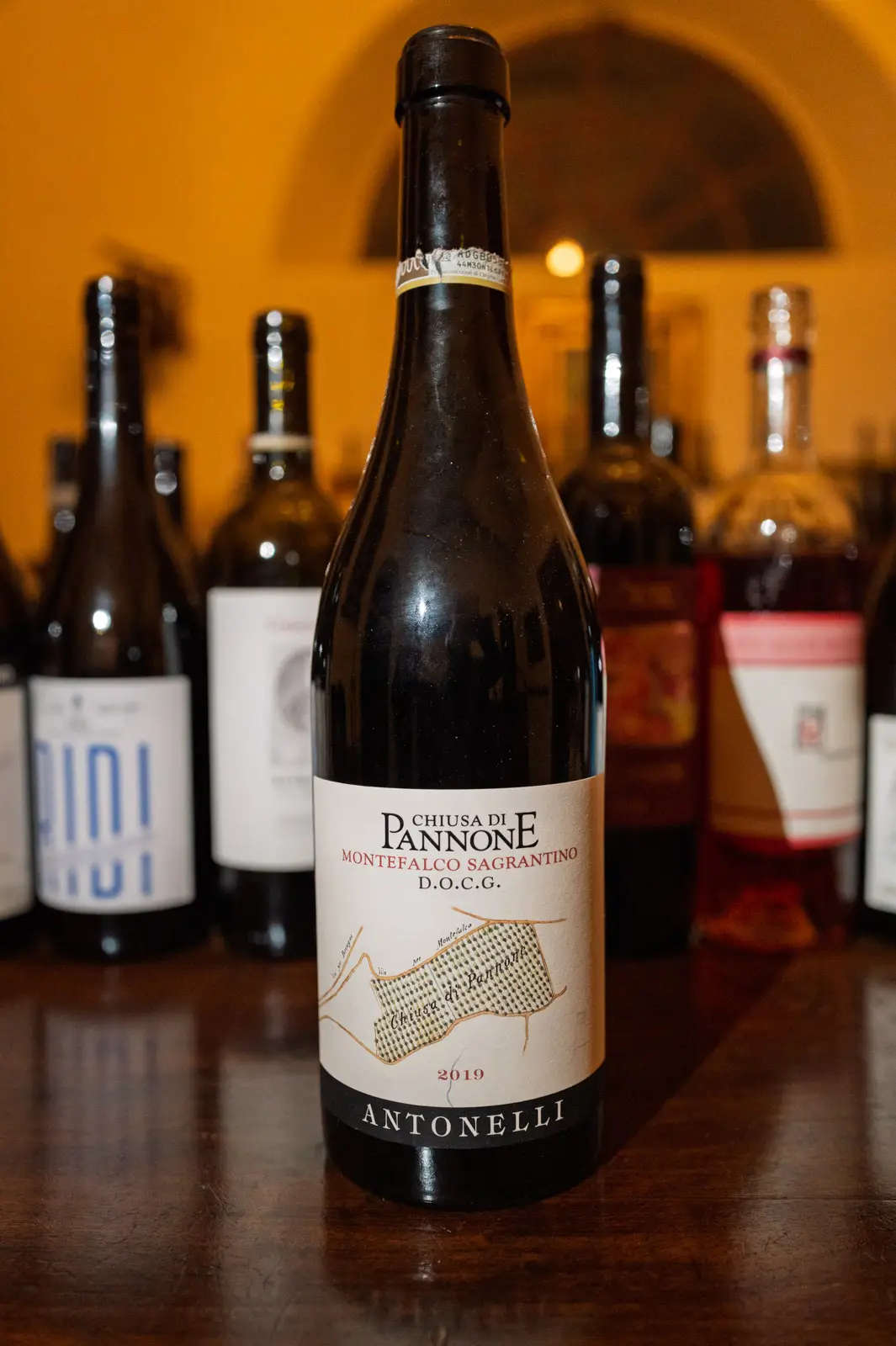 Montefalco Sagrantino DOCG
Grapes: Sagrantino (100%)
Alcohol: 15%
Food friendliness: Limited
Value: As expected
A beginner might like … thinking about fabrics while trying to put words to Sagrantino’s tannins. Do they feel like wool? Coarse cotton? Burlap? There is certainly a textural sensation here that always has me thinking in this direction when describing the wine. One step further: the action of those tannins, which will surely slow down over time (but we’re talking 10 to 15 years).
A wine obsessive might like … paying attention to the bitter traits of this wine: both bitter aromas (e.g. espresso bean, orange peel) and bitter flavors. I found ample fruit and savory quality here to balance this bitterness, and because of that, the bitterness seems to work like a stimulant for the palate. I imagine that a professional chef, who thinks about the architecture of his or her dishes, would appreciate this trait in “Chiusa di Pannone.”