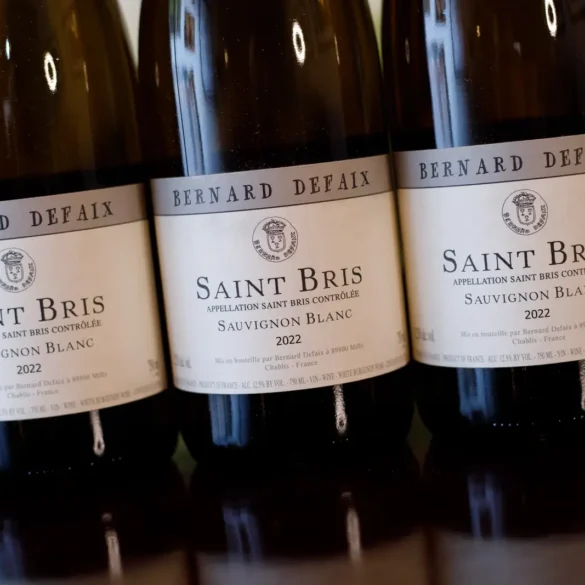
The longer I do this wine writing gig, the more I believe that terroir and wine-making culture are not equally important. Terroir is the irreplaceable “somewhere-ness” of a location, and so we rightly fawn over it as a topic. But terroir is the inconsistent one, vulnerable to the volatile swings of each vintage’s weather. A durable winemaking culture — where style, certain priorities and institutional knowhow stitch the wineries together — can help ensure quality no matter the weather. Some places foster winners because of their culture, while others can’t break free from a short-term mindset and its lower standards.
In the glass, Saint-Bris behaves more like Chablis. It’s like meeting an expatriot whose accent now belongs more to their adopted country than their birthplace.
The tiny French village of Saint-Bris-le-Vineux has me pondering this anomaly.
With its strong terroir and even stronger winemaking culture, Chablis sits a mere 20-minute drive away. And to the southwest, about an hour and a half away by car, resides Sancerre.
On paper, Saint-Bris should resemble Sancerre because rather than Chardonnay, they grow Sauvignon Blanc (and the occasional Sauvignon Gris). Yet in the glass, Saint-Bris behaves more like Chablis. It’s like meeting an expatriot whose accent now belongs more to their adopted country than their birthplace.
Last year, I tried to put together a mini-tasting report on Sancerre, but the results were so uneven I abandoned the project. Sancerre may have good terroir in certain spots, but its winemaking culture continues to yield mixed results. Pull the cork on a Saint-Bris, however, and there is no mistaking the Burgundian finesse. The priorities of the winemaker and what they want out of the wine show beautifully.
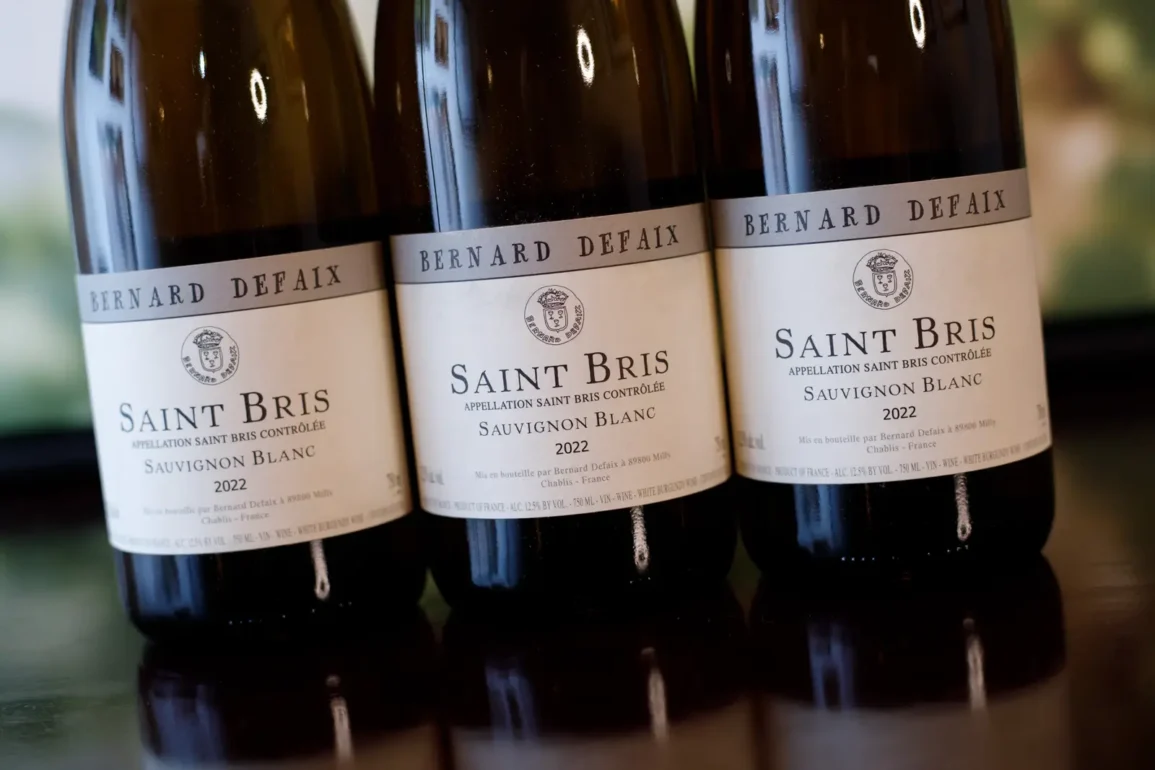
This odyssey started in the fall with a portfolio tasting of La Chablisienne, a Chablis cooperative who has long been one of my favorites in the area. Their Saint-Bris, however, was the most intriguing wine of the day. A sommelier friend of mine who led the tasting agreed, and together, we went in on a mini Saint-Bris shopping spree. This wine from Bernard Defaix, while harder to find, is even more glorious than La Chablisienne’s rendition. It is a wine of extreme peaches, which are reigned in by a perfectly sculpted texture and lightness. The strong identity of Sauvignon Blanc, only given a Burgundian twist of elegance and poise.
Chalk another one up for winemaking culture.
2022 Bernard Defaix Saint-Bris Sauvignon Blanc
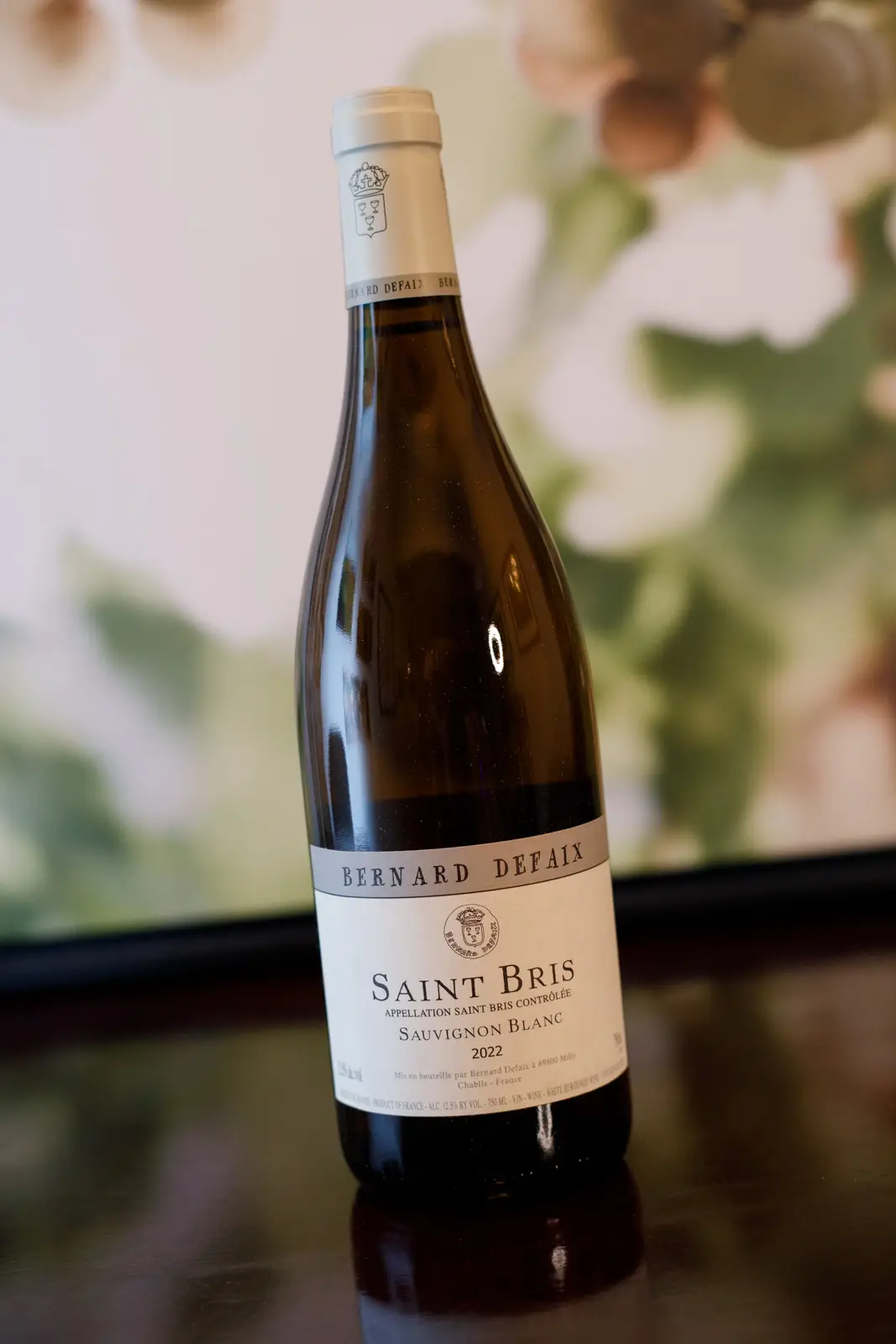 Saint-Bris AOC (Bourgogne )
Grapes: Sauvignon Blanc (100%)
Alcohol: 13%
Food-friendliness: Versatile
Value: As Expected
A beginner might like … knowing about Saint-Bris, the only appellation of protected origin in Burgundy focused solely on Sauvignon Blanc. Then, knowing that it is located between Chablis and Sancerre mirrors what it tastes like on the palate.
A wine obsessive might like … the ample fruitiness of this Sauvignon Blanc, which isn’t exactly the first word that comes to mind when describing French versions of this grape. Yet in 2022 in Saint-Bris, the generosity of the vintage led to a peachy goodness that was irresistible. If you find the 2023, know that conditions were similar.