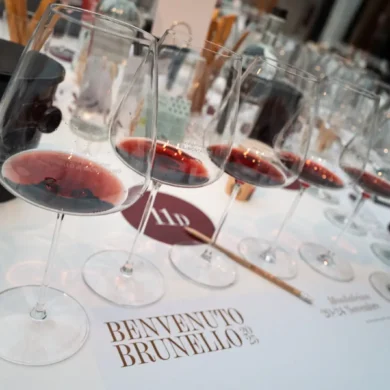
“Pay attention to the shadows,” a colleague told me as I set my camera on the table, about to embark on a marathon tasting of Sangiovese just outside the city of Florence. His comment could have been about my photography, but I suspect it was really about taste. I couldn’t shake the beautiful poetry of that remark days later when I reached Montalcino and set about tasting the boldest, darkest variant of Italy’s most well-known red grape.
Brunello is a wine of shadows, but it can also be a wine of radiance. This chiaroscuro provides a handy lens through which to evaluate the wines, and gives the taster an interesting choice: which would you prefer to pay attention to?
It is true that Sangiovese Grosso grown in Montalcino (known as Brunello, a distinct biotype of Sangiovese) has thicker grape skins and a different anthocyanin profile than the clones used elsewhere in Italy. This simple difference, plus the microclimate of Montalcino, yields a wine of intensity, and robust power. To me, the fruit tones often skew darker, while the tertiary tones that emerge with age recall forest floor and smoke.
Indeed, while it is the “shadows” that make Brunello unique, my analysis of dozens of wines from the 2021 vintage revealed that it was the radiance that most often separated the great wines from the merely good. This balancing factor speaks not only of longevity in the cellar, but more importantly in today’s world, immediacy. While it would be against Brunello di Montalcino’s nature to be truly “pop and pour” upon release, it is fair to expect a degree of dexterity in youth. The following 20 wines offered that, and in some cases, considerably more.
Enjoy This Article Free Courtesy of Consorzio del Vino Brunello di Montalcino
The Consorzio del Vino Brunello di Montalcino has used a benefit of their Wine Trade Group Subscription to unlock this article from our paywall one month after its publication so everyone can enjoy it. To access the companion reports on Rosso di Montalcino and Brunello di Montalcino Riserva, become a member of Opening a Bottle below.
The Brunello Forma
Indeed, radiance seems to be a vintage trait — a conclusion reached by many of the producers who lived through 2021’s conditions as well as my colleagues in the tasting room.
Each year, the Consorzio del Vino Brunello di Montalcino publishes a report on the newly released vintage known as the Brunello Forma. As I wrote about last year, the Consorzio has moved away from assigning stars to each vintage — a practice that I, too, have abandoned in my own reviews — in favor of a more descriptive approach. A panel of experts analyzes data and tastes samples from across the vintage before agreeing to three words or phrases that sum up the vintage character. This year, they settled on fragrant, defined and vertical.
Every evaluative framework will have limitations, but I applaud this fresh approach because it at least encourages dialogue rather than hollow ranking. It also separates the assessment from commercial pressures, which was always a problem with the star system. After all, why quantify a vintage with three out five stars if it risks becoming a self-inflicted wound to sales?
Still, I believe it is premature to fully interpret 2021 through these three words. Their true value will only emerge once a broader word bank spanning multiple vintages assessed in this manner is established, just for comparison sake.
It is also important to read these terms contextually when comparing Brunello to its peers. “Fragrant,” for example, is relative to other vintages, not to Sangiovese as a whole. Before reading the Brunello Forma, I had already made noted that Brunello di Montalcino often presents more reserved aromas than Chianti Classico. It is a wine that lurks under the surface and makes itself fully known only once it is on the palate.
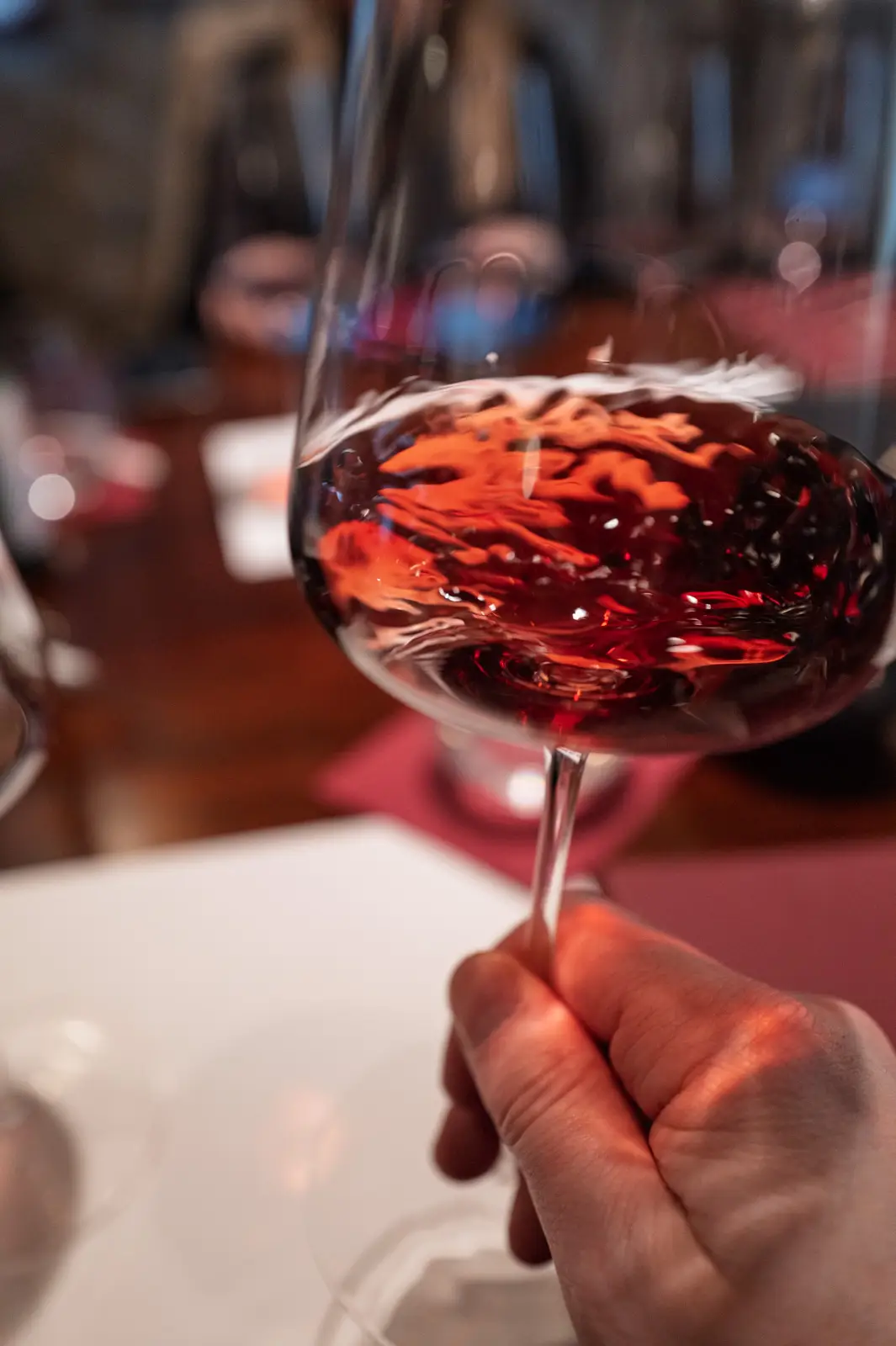
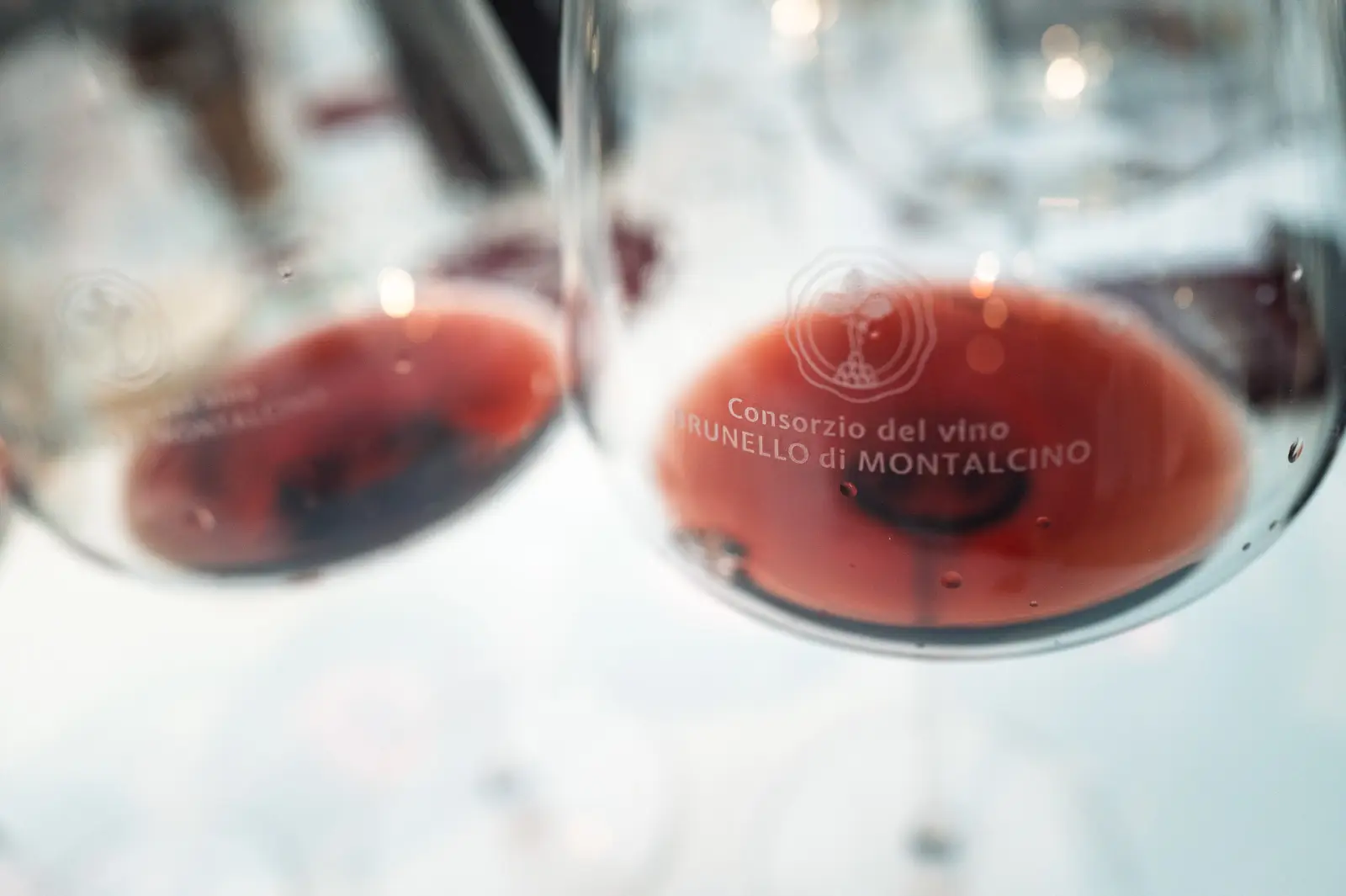
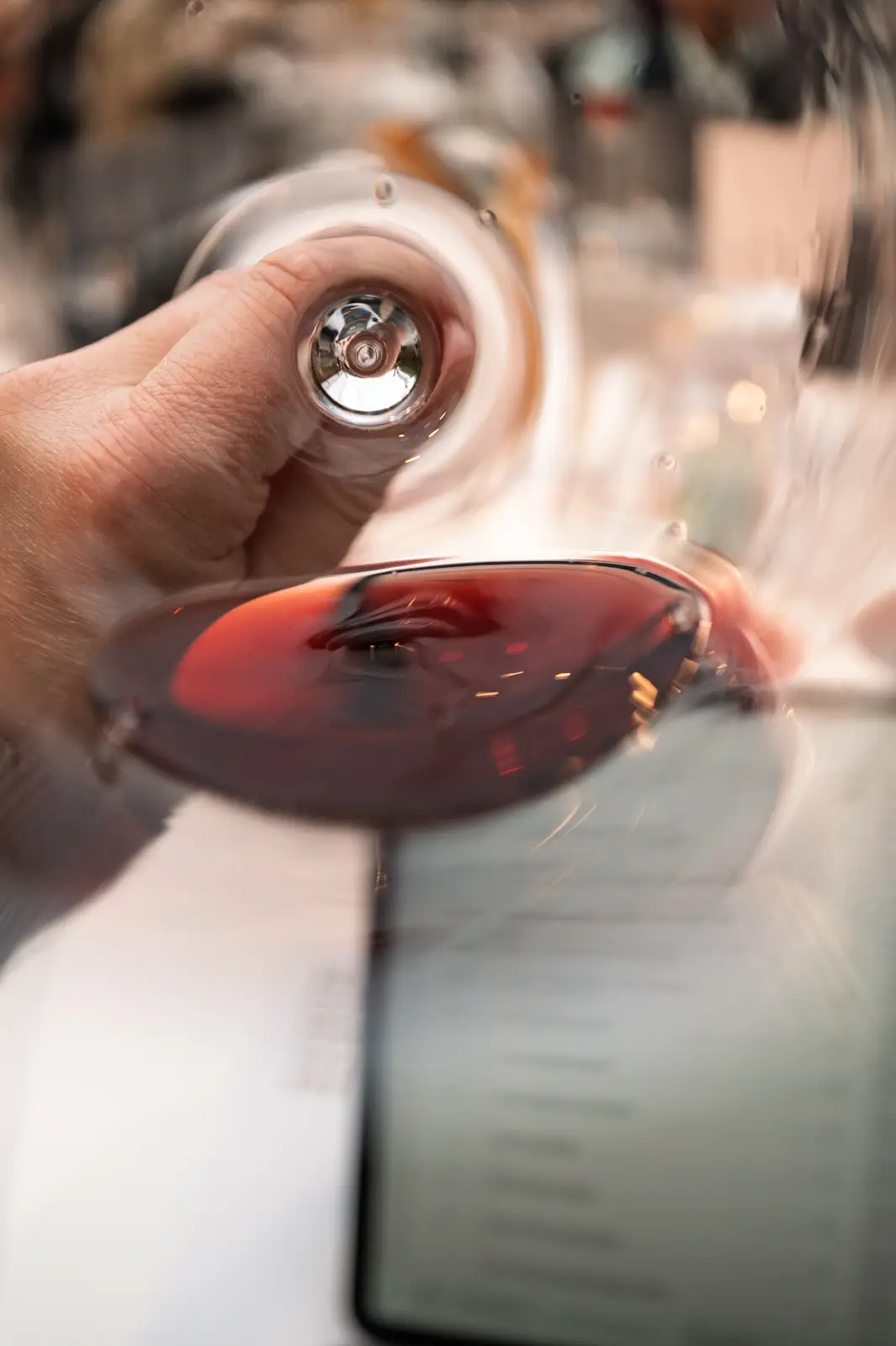
Which is perhaps why I was so thrilled with a photograph I took midway through Benvenuto Brunello. Putting my Leica Q3 on macro lens mode, I wanted to capture the taster’s perspective of this marathon assessment from up-close. In one shot, reflected on the surface of the wine, was the top of the glass stem, seemingly casting a stern, authoritative glance at the taster. To me, that shot — the Eye of Brunello — captures these wines better than any of my notes.
Defining Brunello di Montalcino
The Brunello di Montalcino DOCG mandates a number of strict parameters for a wine to qualify for the appellation. Most importantly, the wine must be produced from 100% Sangiovese Grosso (i.e. Brunello) grown within the boundaries of the zone. Yields in the vineyard cannot exceed eight tons per hectare. Following fermentation, Brunello di Montalcino undergoes an extended aging period that helps mold the wine into its proper form. By law, wines cannot be released before January 1 on the fifth year after harvest (in other words, four years and about three months of aging). During this élevage, the wine must spend at least two years in wooden barrels and a minimum of four months in the bottle.
As with the Riserva wines I profiled last week, all of the Brunello I previewed was drawn from the newly released 2021 vintage and were opened for the media approximately two months before the release date.
Navigate This Guide
- Most Exceptional
- The Benchmark
- Most Elegant
- Most Complete
- Most Rock and Roll
- Most Raring to Go
- The Treasure Hunt Wine
Alphabetical
- 2021 Donatella Cinelli Colombini Casato Prime Donne “Progetto Prime Donne” Brunello di Montalcino
- 2021 Gianni Brunelli – Le Chiuse di Sotto Brunello di Montalcino
- 2021 Il Paradiso di Manfredi Brunello di Montalcino
- 2021 La Gerla Brunello di Montalcino
- 2021 Le Chiuse Brunello di Montalcino
- 2021 Lisini Brunello di Montalcino
- 2021 Mastrojanni Brunello di Montalcino
- 2021 Mastrojanni “Vigna Loreta” Brunello di Montalcino
- 2020 Mastrojanni “Vigna Schiena d’Asino” Brunello di Montalcino
- 2021 Máté Famiglia Brunello di Montalcino
- 2021 Padelletti Brunello di Montalcino
- 2021 Pietroso Brunello di Montalcino
- 2021 Poggio di Sotto Brunello di Montalcino
- 2021 Ridolfi Brunello di Montalcino
- 2021 Ridolfi “Donna Rebecca” Brunello di Montalcino
- 2021 San Carlo Brunello di Montalcino
- 2021 Sesti Brunello di Montalcino
- 2021 Talenti “40esima Vendemmia” Brunello di Montalcino
- 2021 Uccelliera Brunello di Montalcino
- 2021 Val di Suga Brunello di Montalcino
2021 Donatella Cinelli Colombini Casato Prime Donne “Progetto Prime Donne” Brunello di Montalcino
I have always enjoyed how articulate the wines of Donatella Cinelli Colombini are, and the 2021 “Progetto Prime Donne” is no different. Brunello’s dark fruit has the lead role in this wine from start to finish, which makes it a great choice for beginners looking to ease into the region’s powerful wines. I enjoyed how the 2021’s supreme silkiness is contrasted by steely tannins that not only hold the wine together, but feel like an exciting contrast to all that fruit.
I selected this wine as one of Italy’s 100 Wines to Admire in my book Opening a Bottle: Italy for good reason. It is not only a consistent performer, but the story of how the cuvée of barrels is selected is a good one. Read more about it on Donatella Cinelli Colombini’s Essential Winemakers page. And order the book today to read about the 99 other wines I selected.
Most Raring to Go: 2021 Gianni Brunelli – Le Chiuse di Sotto Brunello di Montalcino
“There is something to be said for not waiting.” That’s not a direct quote from this wine, but it may as well be given what this wine had to say in the glass. There was a remarkable freshness and elegance to it that cut through the clutter of the tasting. It wasn’t so wound-up and unrelenting, as young Brunello can often be. Instead, a nice earthiness countered the wine’s bright cherry flavors and stern tannins. This was the most eager, Rosso-like Brunello I tasted in terms of its openness, and I didn’t mind that one bit.
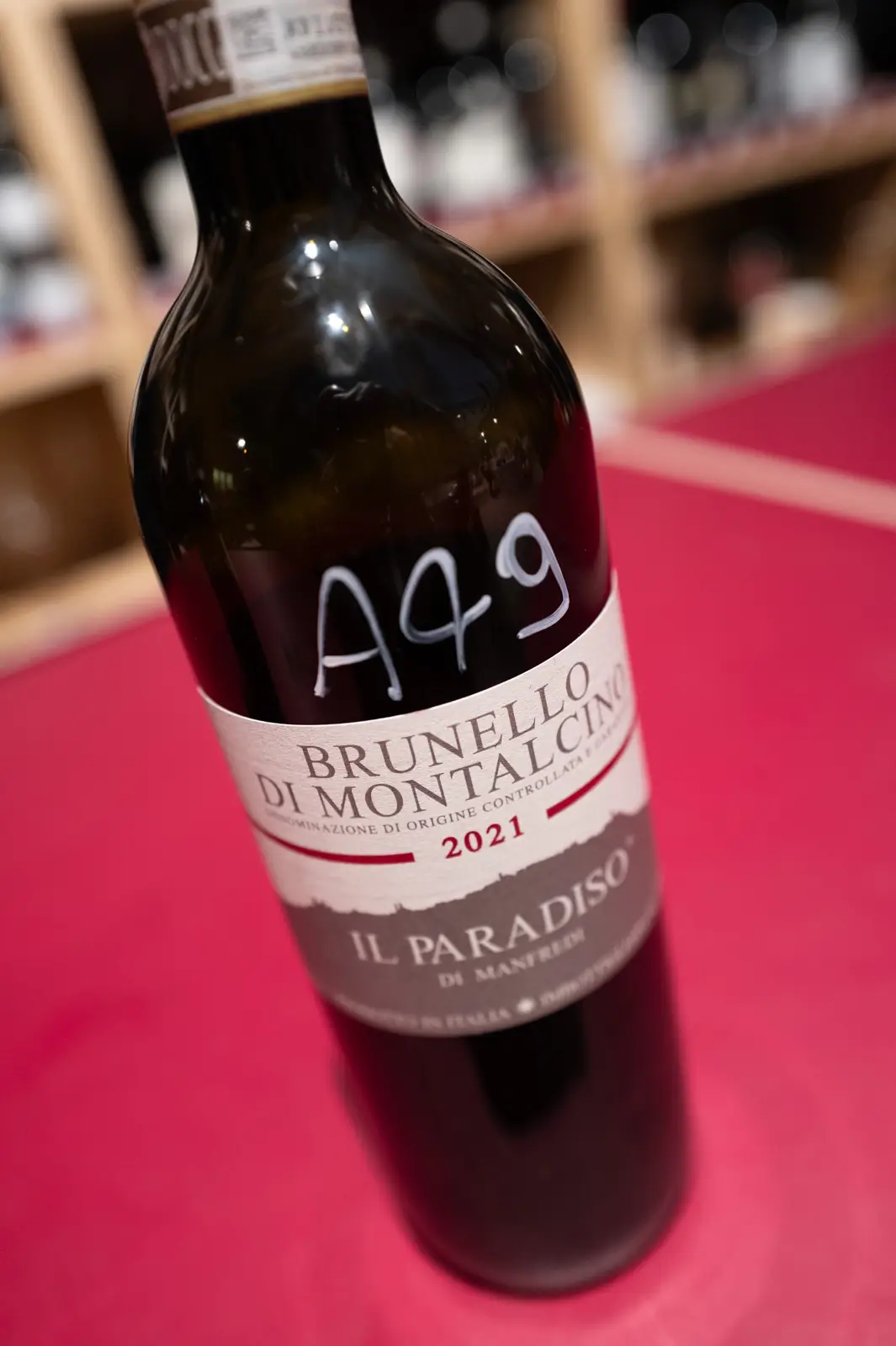
2021 Il Paradiso di Manfredi Brunello di Montalcino
This wine from Il Paradiso di Manfredi seemed to uphold the promise of the 2021 Brunello Forma — fragrant, defined, vertical — the most. Expressive traces of mint and minerality permeated the aromas, while the fine-grained nature of the tannins lent a sense of subdued age-worthiness. Still, I felt like this wine needed at least five more years of bottle aging to let go of some of its more tightly kept secrets, but I was intrigued by what it was showing now.
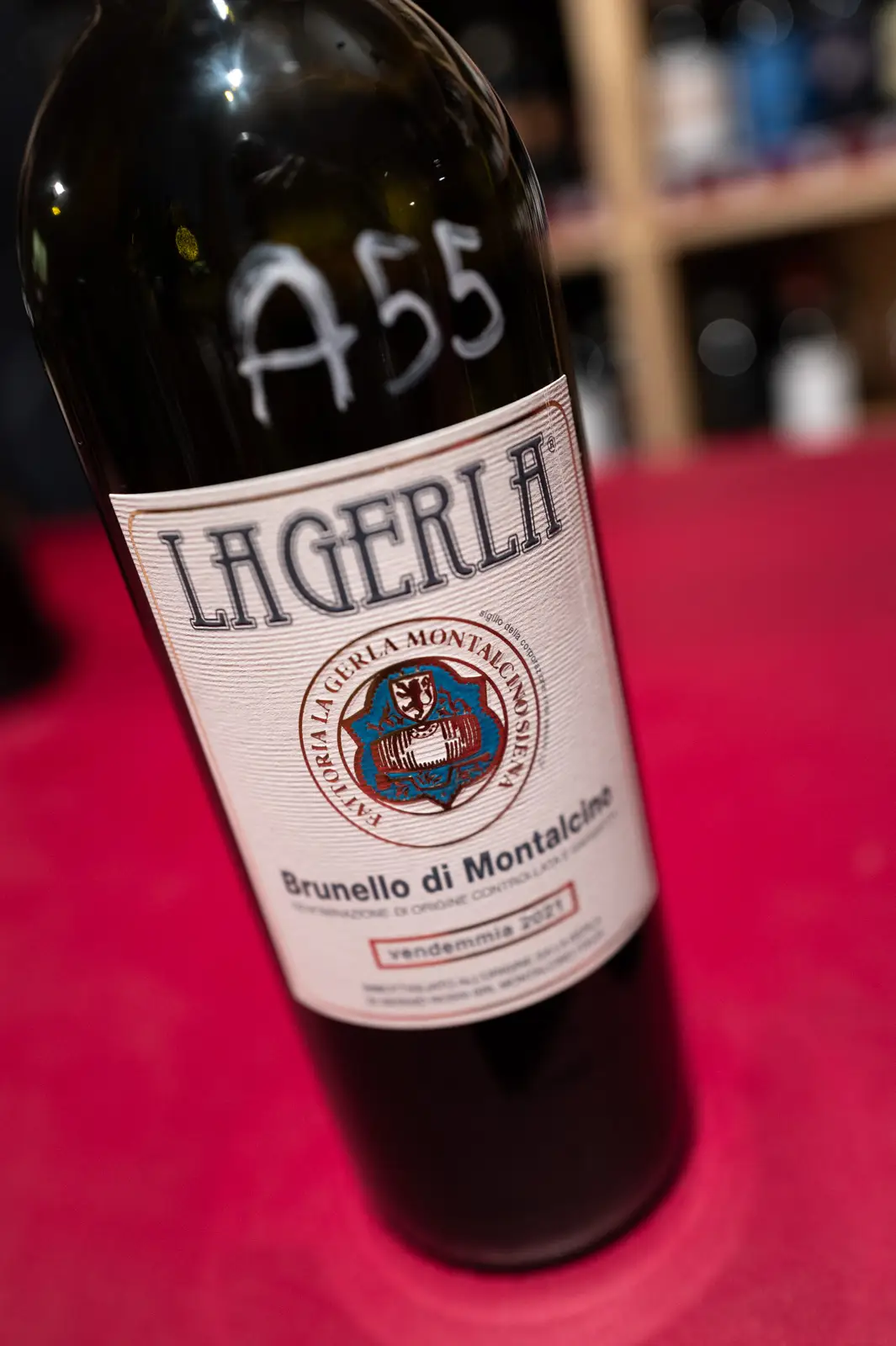
2021 La Gerla Brunello di Montalcino
“This is a Pinot Noir Lover’s Brunello” I wrote in my raw notes during the tasting. Indeed, upon revisiting the wine later in the evening, there was a certain saunter to this elegant, versatile Brunello di Montalcino that had me thinking of Dundee Hills Pinot. But make no mistake, those savory, juniper-tinged aromas overlaying sour-bitter cherries was 100% on-point for Brunello. When you are tasting this many wines at once, it is this kind of feature — a sense of place mixed with a new perspective — that feels most welcome. This would be a great by-the-glass selection for those in the trade.
Most Complete: 2021 Le Chiuse Brunello di Montalcino
Le Chiuse is one of the most respected wineries in Montalcino, and for good reason. For one, there is Le Chiuse’s familial lineage to Biondi Santi, which has provided the genetic grand slam of massal selected vines from the great Il Greppo estate. Then we have the mystique that comes from knowing the estate’s origin story. Lastly, there is the terroir, which is highly specific. Le Chiuse resides on the north-northeastern slope of the great Montalcino hill, and its position benefits from the cooling winds of high altitude and a soil rich in marine fossils which seems to give the estate’s wines a sense of direction on the palate. The 2021 offers brilliant swirls of hedonistic mint and black cherry on the nose, countered by a sanguine disposition that feels compelling. Finely balanced and confident on the palate, its agility makes it one of those rare, totemic wines that is equally versatile at the table and legendary in the cellar.
Most Rock and Roll: 2021 Lisini Brunello di Montalcino
The vines that provide fruit for Lisini’s Brunello di Montalcino wines date back to the 1930s and 40s, an incredibly long time by Sangiovese standards. This rare attribute, combined with the estate’s southwesterly position, likely accounts for the highly concentrated, powerful aromas that emanate from the glass on the 2021. The “shadows” of Brunello are on full display with sensations of dark fruit, bitter dry herbs and forest floor. There is quite a bit of astringency, as well as noticeable alcohol, but I was impressed with the wine’s sense of direction. It never overwhelms or gets muddled by its force.
2021 Mastrojanni Brunello di Montalcino
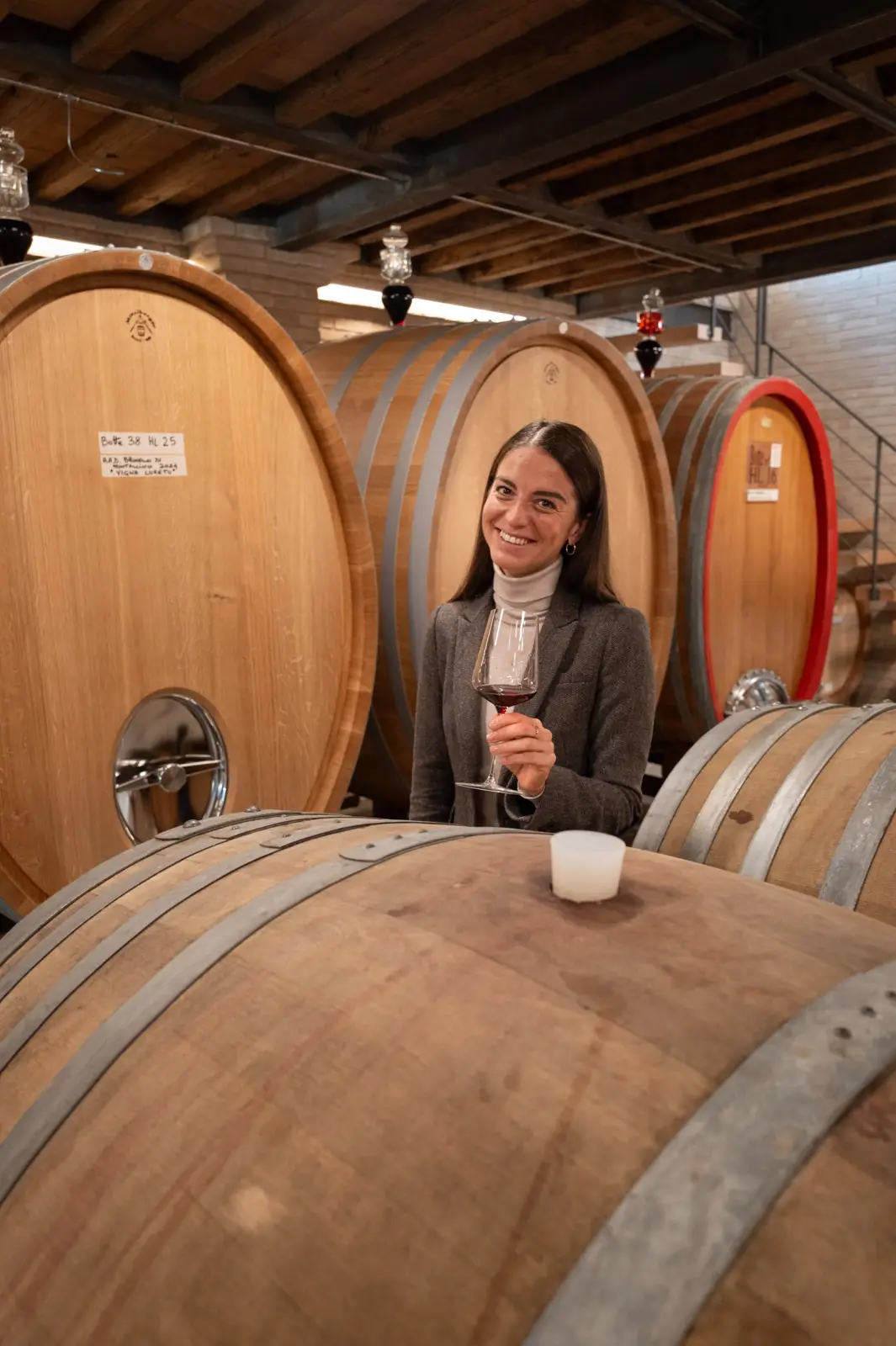
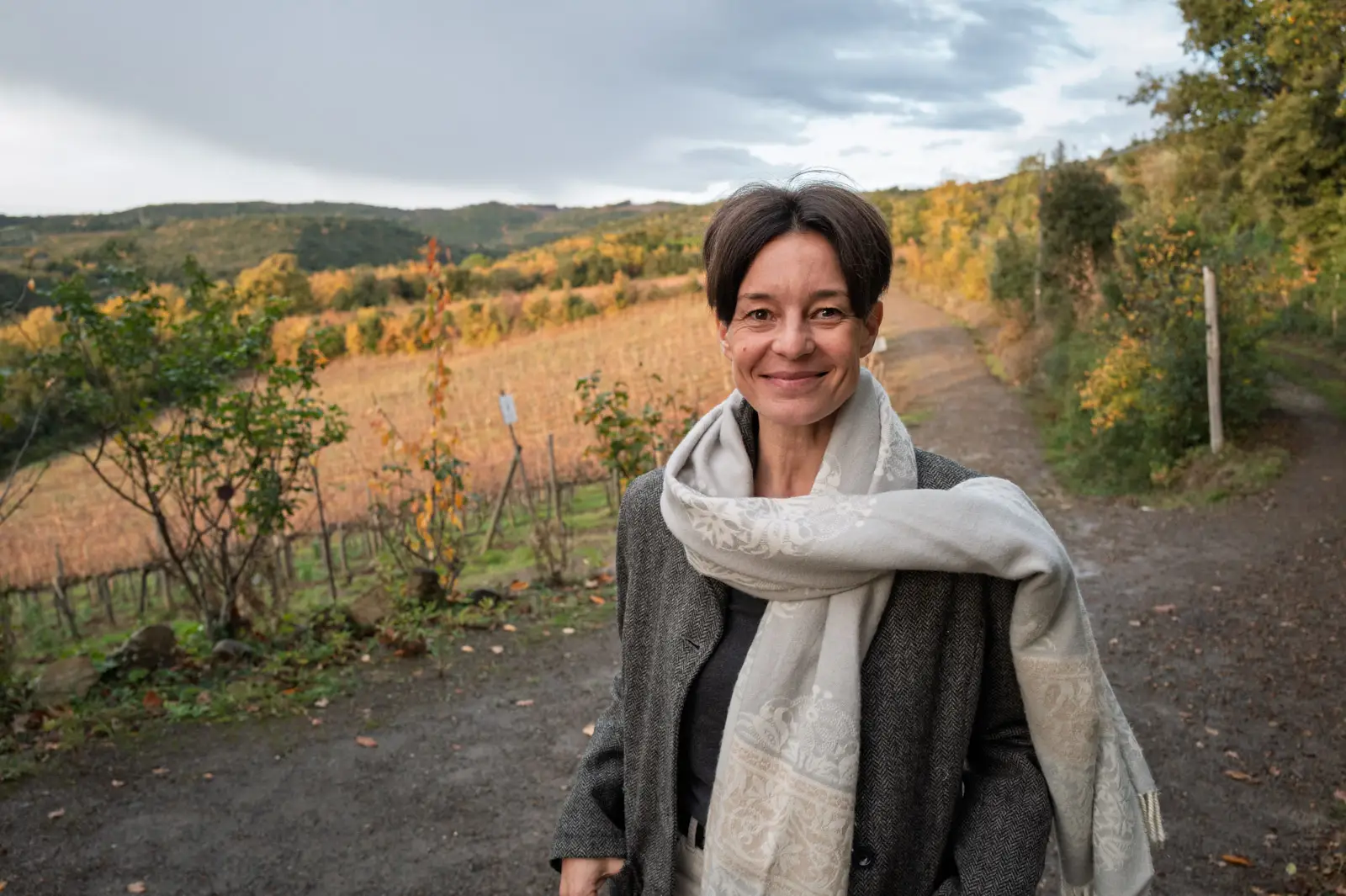
Despite the lack of a Brunello di Montalcino Riserva, I found Mastrojanni to be the producer with the most complete narrative from one wine to the next at Benvenuto Brunello. The Rosso is explosively aromatic and fresh, as it should be, and this Brunello provides the next level up in terms of seriousness, structure and complete balance. It is surprisingly juicy and quenching, with the active tannins exhibiting a fine, light graininess. There are also two single-vineyard Brunello — “Vigna Loreta” and “Vigna Schiena d’Asino” —which take the conversation to a more specific realm. Tasting the four wines in succession reveals the graceful arc of this estate’s interpretation of Brunello, which is a testament to winemaker Giulia Härri (pictured right / below). I am including both single vineyard wines below as well.
Most Extraordinary: 2021 Mastrojanni “Vigna Loreta” Brunello di Montalcino
I already wrote about this wine in my Top 12 Wines of 2025 article, which came out last month. May as well repeat that here because this is why it was the most extraordinary, new-release Brunello: “What I loved about this wine was its symphony of fruit, something that stands out in the cherries-and-citrus dominated world of Sangiovese. After making note of this complexity, winemaker Giulia Härri agreed, saying that at fermentation, the grapes from Vigna Loreto — just below the winery and facing southeast — always emit an aroma similar to white peach. ‘It is thrilling for me to detect that note again years later in the wine,’ she said. But don’t let this fruity narrative mislead you on what else Vigna Loreto offers in the glass: with profound elegance it waltzes across the palate with already perfect tannins and silky acidity.”
2020 Mastrojanni “Vigna Schiena d’Asino” Brunello di Montalcino
What is interesting about Mastrojanni’s pairing of single-vineyard wines is that the old-vine parcel, Vigna Schiena d’Asino, is given an additional year of aging but without the Riserva designation. The vineyard’s name means the Donkey’s Back because of the way it slopes towards both the southeast and southwest. This dual exposure — plus very old Sangiovese vines — seems to transmit a more powerful and savory expression of Brunello. There is a feeling of sour fruit here that is thrillingly assertive, yet there is also a level of finesse on the finish that feels hospitable and gracious.
2021 Máté Famiglia Brunello di Montalcino
No matter how much trend-following I do as an Italian specialty wine writer, I still come upon producers who are new to me. Drinking Máté’s wines felt like my biggest personal discovery at Benvenuto Brunello, even though this estate is relatively well established, having planted vines in the late 1990s. I enjoyed the 2021’s sense of vibrancy, which was neatly countered by the savory properties that make Sangiovese so distinctive. Graceful acidity and articulate tannins suggested an openness at an early age that should nonetheless age well over time.
2021 Padelletti Brunello di Montalcino
Competing with Lisini for the most “rock and roll” Brunello was Padelletti. This staunchly traditional family always releases some of Montalcino’s most structured, tightly wound Brunello wines. “I feel like I need a pickax to know what’s in there” I wrote in my notes as I initially tried (and failed) to tease out the details of the nose. However, knowing this was Padelletti, I set the glass aside and let ten minutes of air do the digging. Sure enough, there was a teasing sense of what’s to come: savory tones, citric acidity, herbal aromas, and ample flavors of amaro-tinged cherries, all backed up by some of Montalcino’s most elegant tannins. File this wine under “Not Quite Ready for the Corkscrew.” Or file it under “15 years from now … oh man.” Padelletti demands the cellar. It just does, and we must oblige.
Most Elegant: 2021 Pietroso Brunello di Montalcino
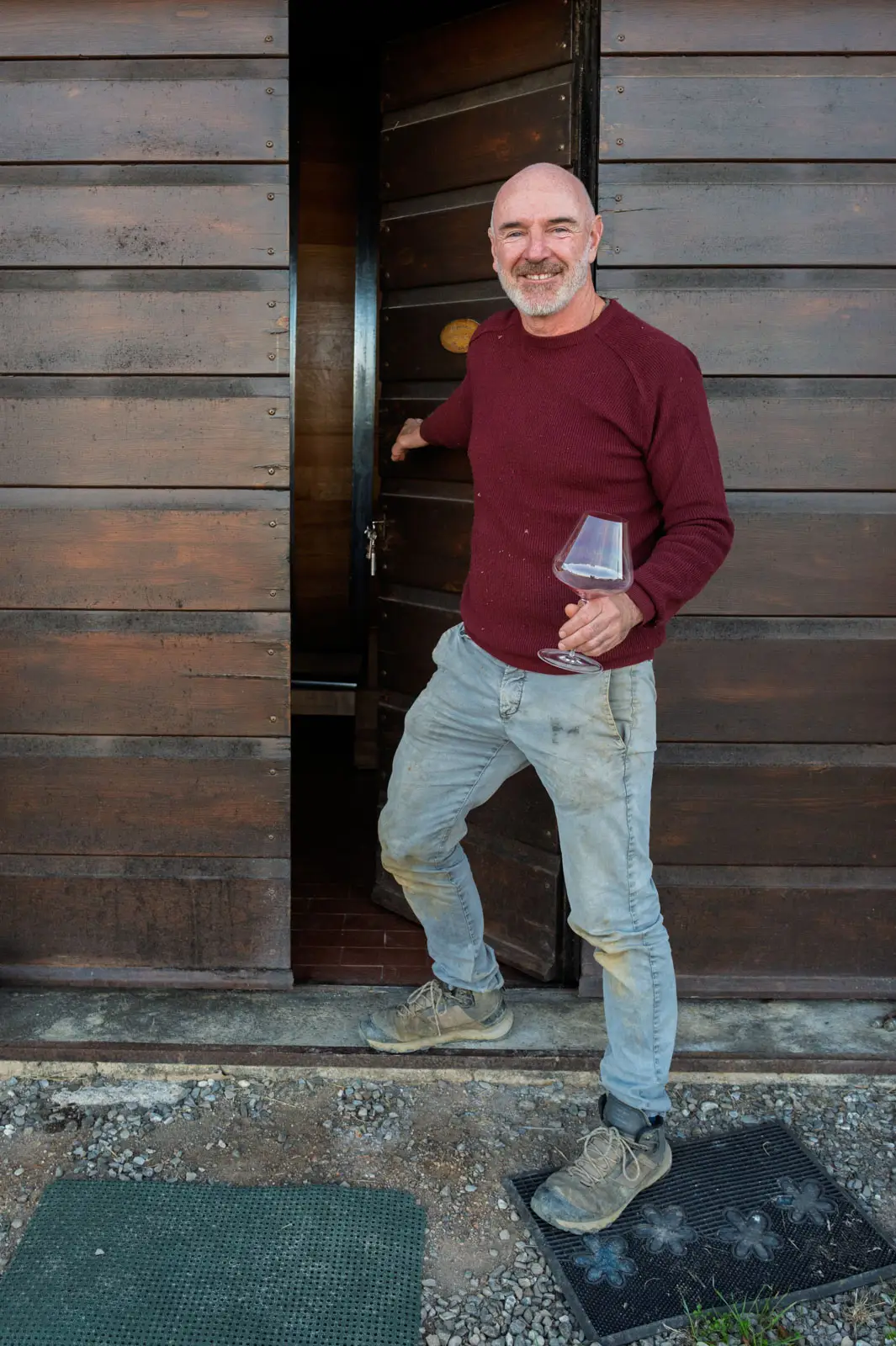
The Berni and Pignattai families have presided over the idyllic, wooded estate known as Pietroso — “place of stones” — on Montalcino’s west slope since the early 1970s. Alongside his wife Cecilia, daughter Gloria and enologist son, Andrea, Gianni Pignattai (pictured right/below) crafts wines that are currently my favorite from the whole region. They are pure and natural, yet orchestrated and composed. Simple as that.
The 2021 Brunello di Montalcino is a blend of vineyards from Pietroso, Colombaiolo and Fornello, and it is exhibiting a knife’s edge of balance early in its life that I imagine will hold for 10 or 20 years more. Less smoky than their 2020, and highly mineral throughout, it exhibits generosity and definitely assures this writer that indeed, the word “fresh” can be applied to young Brunello. The tannins feel like the softest cotton.
2021 Poggio di Sotto Brunello di Montalcino
For me, Pietroso is Montalcino’s most consistently elegant producer, while Poggio di Sotto is consistently the most refined. With each release, the estate seems to anchor itself at a higher level. While the 2020 Riserva was the benchmark wine in that category, the standard-bearer 2021 Brunello di Montalcino felt very nascent in its gestation on the nose. On the palate was another matter: the most incredibly balanced sense of fruit, an exquisite lightweight frame, and fine-grained active tannins of the highest order.
2021 Ridolfi Brunello di Montalcino
Like Mastrojanni, Ridolfi impressed me with multiple Brunello di Montalcino wines at Benvenuto Brunello, although the leap in quality from this wine to the single-vineyard wine (“Donna Rebecca,” below) was a bigger gulf than the one at Mastrojanni. While this wine’s aromas felt restricted and limited at this early stage, its presence on the palate was undeniable: firm but silky, and enough freshness to encourage a second serving. The fine-grained finish is enticing because the fruit seems to come back to whisper some more.
The Treasure Hunt Wine: 2021 Ridolfi “Donna Rebecca” Brunello di Montalcino
Few wines could hold a candle to Ridolfi’s new release of “Donna Rebecca,” which possessed the most exclamation marks in my raw tasting notes. (“My God, what a nose,” is how they started off). What was so intriguing with this wine was the way it mingled fresh and dried notes at the same time — cherries and citrus, dried rosemary and leathery tones — creating an appetizing tension throughout its core. Every element seems to waltz together across the palate before the precise tannins come in with a little grip. This wine is in limited quantity, especially in the United States, but if you are visiting Montalcino, a stop at this winery just to taste this wine might be in order.
2021 San Carlo Brunello di Montalcino
On a press tour, I often have to relinquish control over the itineray and just roll with it. On my third day in Montalcino, I was added to a group that visited five wineries in a single day, starting with the superstars of Mastrojanni and Poggio di Sotto. By the fourth stop, I had given up on following us on my map app to save battery life. We ambled up to the door of San Carlo just as a late-autumn rainstorm hit.
Gemma Marcucci is the proprietor of this tiny winery deep in the woods of southern Montalcino. Eight of the 11 hectares are forest, and they only produce 10,000 bottles per year from the remaining three, with 60% of the wine being this Brunello di Montalcino. The new release stood out for its impeccably clear perspective: lean, direct, and decked with the pomegranate-like mountain fruit tones I normally associate with Lamole or Radda in Chianti Classico. Where “the shadows of Brunello” emerged was in a deep sanguine flavor and the sprig-of-rosemary aroma floating over it all. The tannins need some time to sort themselves out, but I’d imagine this wine starts to reach its peak in the five to seven year window. A good selection if you prefer lighter, more natural wines.
2021 Sesti Brunello di Montalcino
I always look forward to my conversations with winemaker Elisa Sesti, especially if I have a glass of her Brunello in my hand. Together, they reveal two sides of this extraordinary person: Elisa’s sharp intellect, but also her intuitive nature. Her wines seem to be crafted as much by feeling, as though her technical understanding of winemaking is merely there to keep things in check. While the aromas of her 2021 Brunello di Montalcino still feel rather nascent at this stage, I certainly detected her signature style on the palate. Generosity, subtlety and gravitas all come together beautifully through its core. Like an espresso shot in the afternoon, there is a fun, bitter tinge to this wine’s flavor that stimulates the palate on the finish.
The Benchmark: 2021 Talenti “40esima Vendemmia” Brunello di Montalcino
With a vanity name commemorating their 40th harvest, Talenti’s 2021 Brunello di Montalcino was a showstopper in every sense. For me, it came in the last flight, when conventional wisdom would say that the wines are at a disadvantage from palate fatigue. Conventional wisdom would also say that only a brash, muscle-bound wine could stand out under such circumstances. But instead, Talenti’s 2021 seemed to sweep everything off the table and reset the terms of what we were doing. Elegant and dare I say Burgundian in its refinement, it refreshed my palate then invited me back for more. A sort of salty persistence gave this wine outstanding momentum and generosity on the palate, allowing me to appreciate its shades of light and dark for longer and with more clarity. Complementing the purity of the fruit were tones of anise seed, mushroom and smoked brisket. Just an exceptional wine.
2021 Uccelliera Brunello di Montalcino
It is nice to see some of the arguments of modern versus traditional winemaking recede into the distance across Italy. When I started out, it tended to dominate conversations in places like Barolo and Montalcino. Now, a middle ground has been staked out, particularly by those who prefer the gentle use of barriques. There can be a far more sensible approach with small barrels that doesn’t involve an infusion of that vanilla-like flavor. Uccelliera comes to mind. This wine pulls its power from a different direction than most, relying on the vibrancy of its fruit to define its mission statement, followed by its precise minerality and fine-grained tannins.
2021 Val di Suga Brunello di Montalcino
Tightly wound around a cherry core with ample minerality and some smoke showing on the nose, Val di Suga’s 2021 Brunello di Montalcino was the best wine I’ve seen from this estate. The intensity at Val di Suga has always struck me as a bit full-throttle, but here there was a sense of subdued elegance that speaks to promising potential. Decked in brilliant red and black fruit, with hints of fresh rosemary and blood orange acidity throughout, I’d like to see where this wine goes into the future.
Captions
(©Kevin Day/Opening a Bottle)
At right for desktop, bottom for mobile:
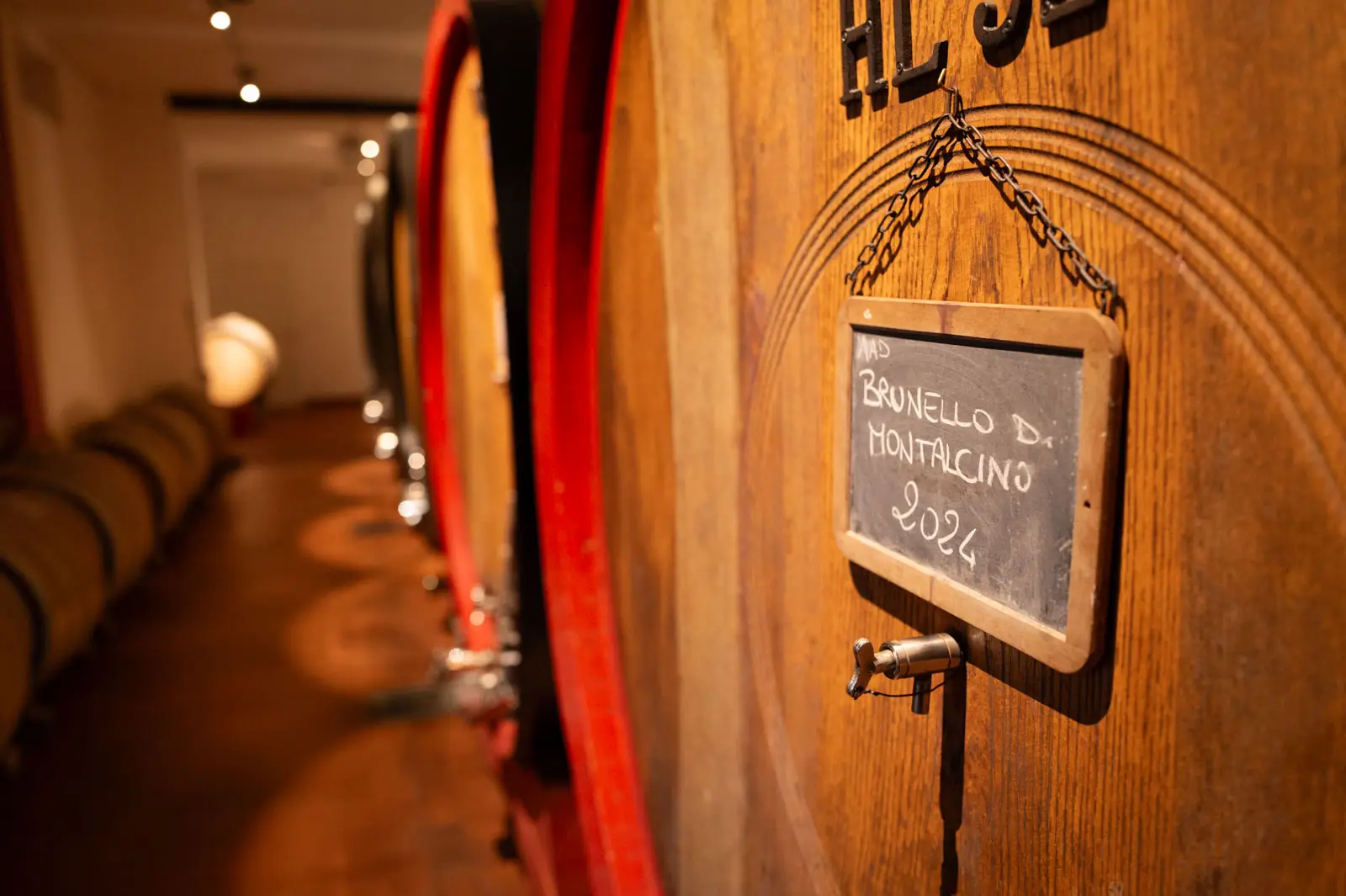
- Pietroso’s 2024 resting in the cellar, a wine I’ll be assessing three years from now
- Giulia Härri is the talented winemaker behind Mastrojanni
- Gianni Pignattai at this cellar door at Pietroso
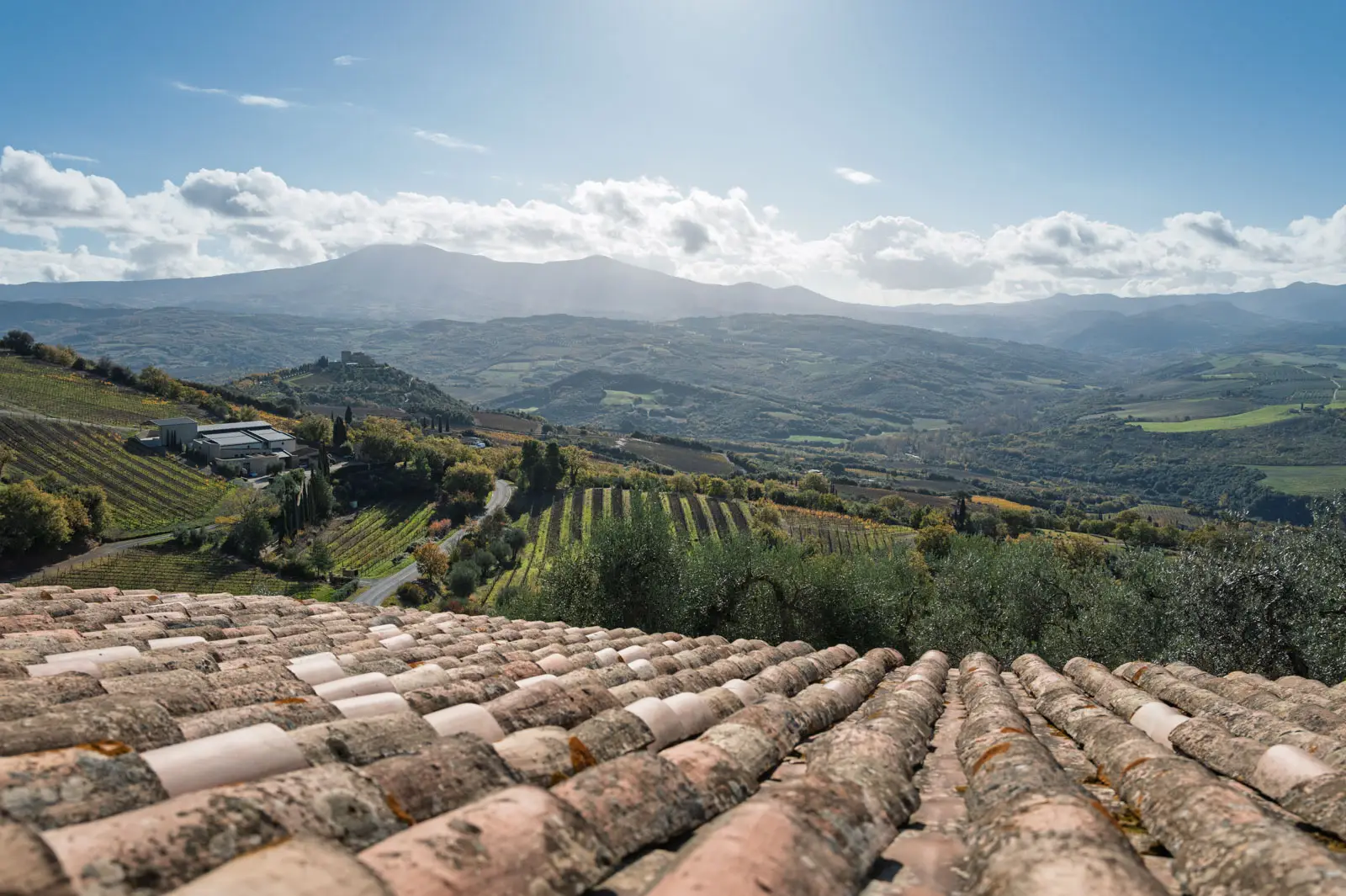
- A view of Mount Amiata from Poggio di Sotto
- Gemma Marcucci, proprietor of San Carlo
- 2021 Il Paradiso di Manfredi Brunello di Montalcino
- 2021 La Gerla Brunello di Montalcino
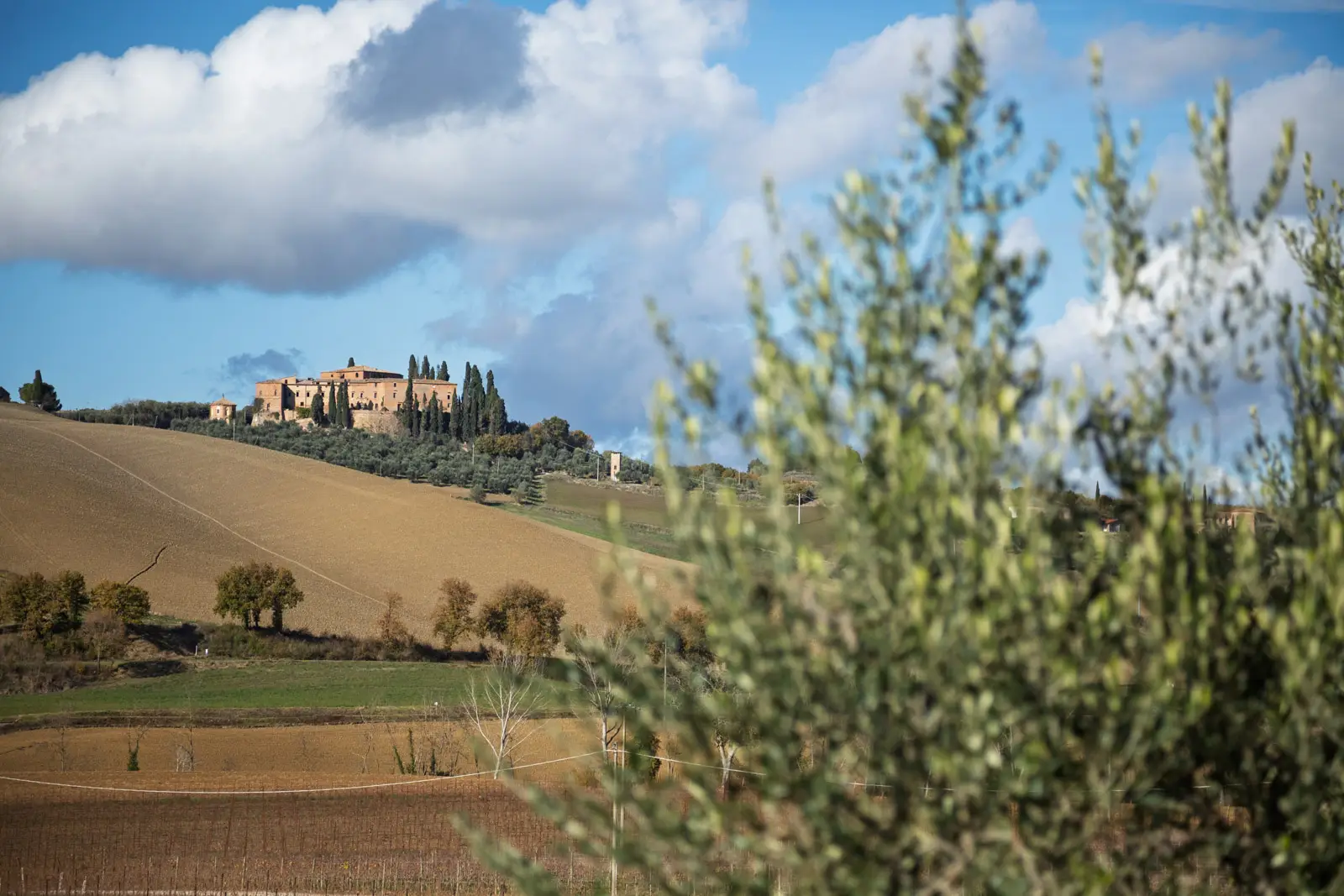
- Countryside view entering the Val d’Orcia
- Swirling Poggio di Sotto’s Brunello from 2010
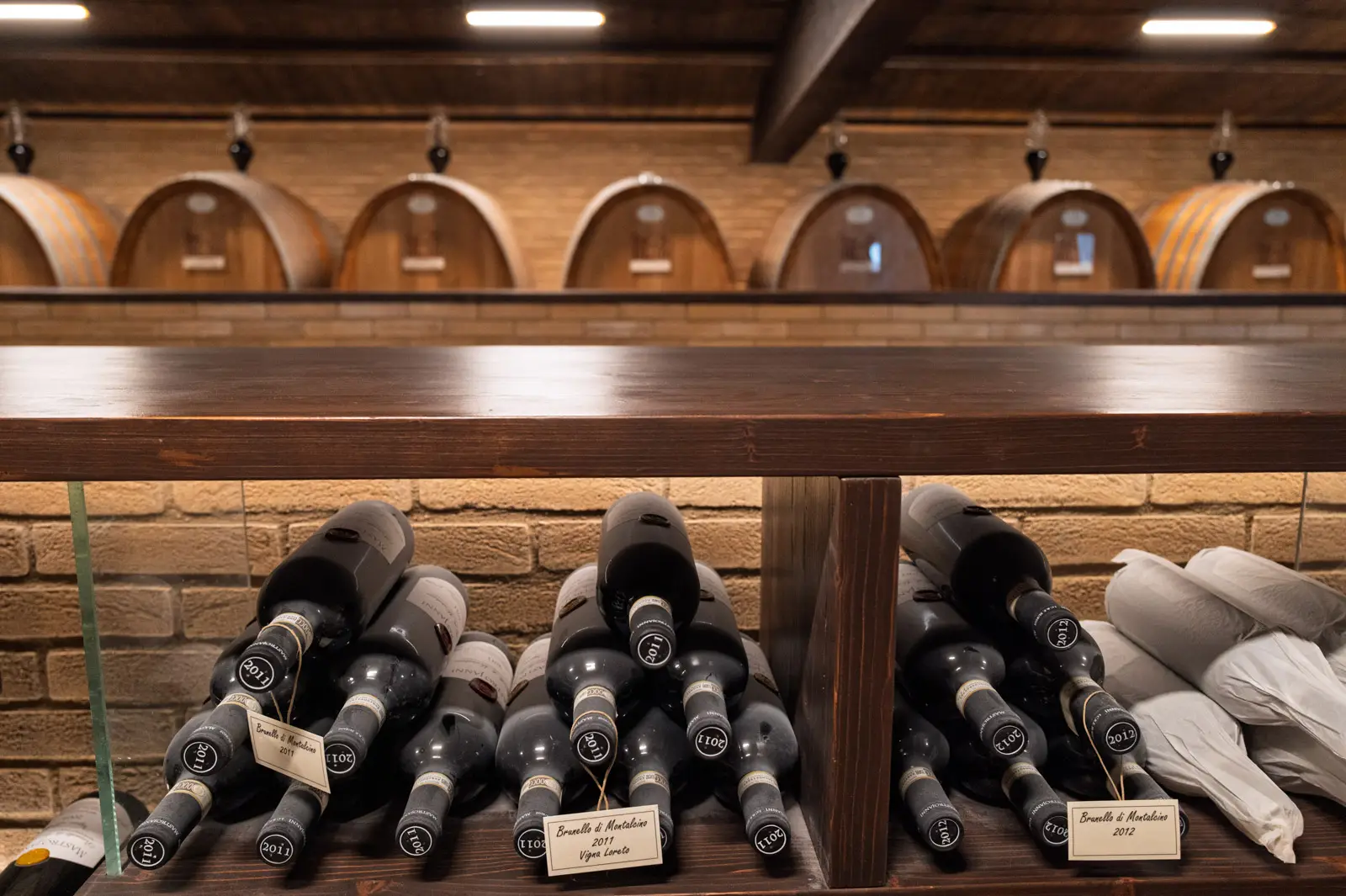
- The archive of wines at Mastrojanni
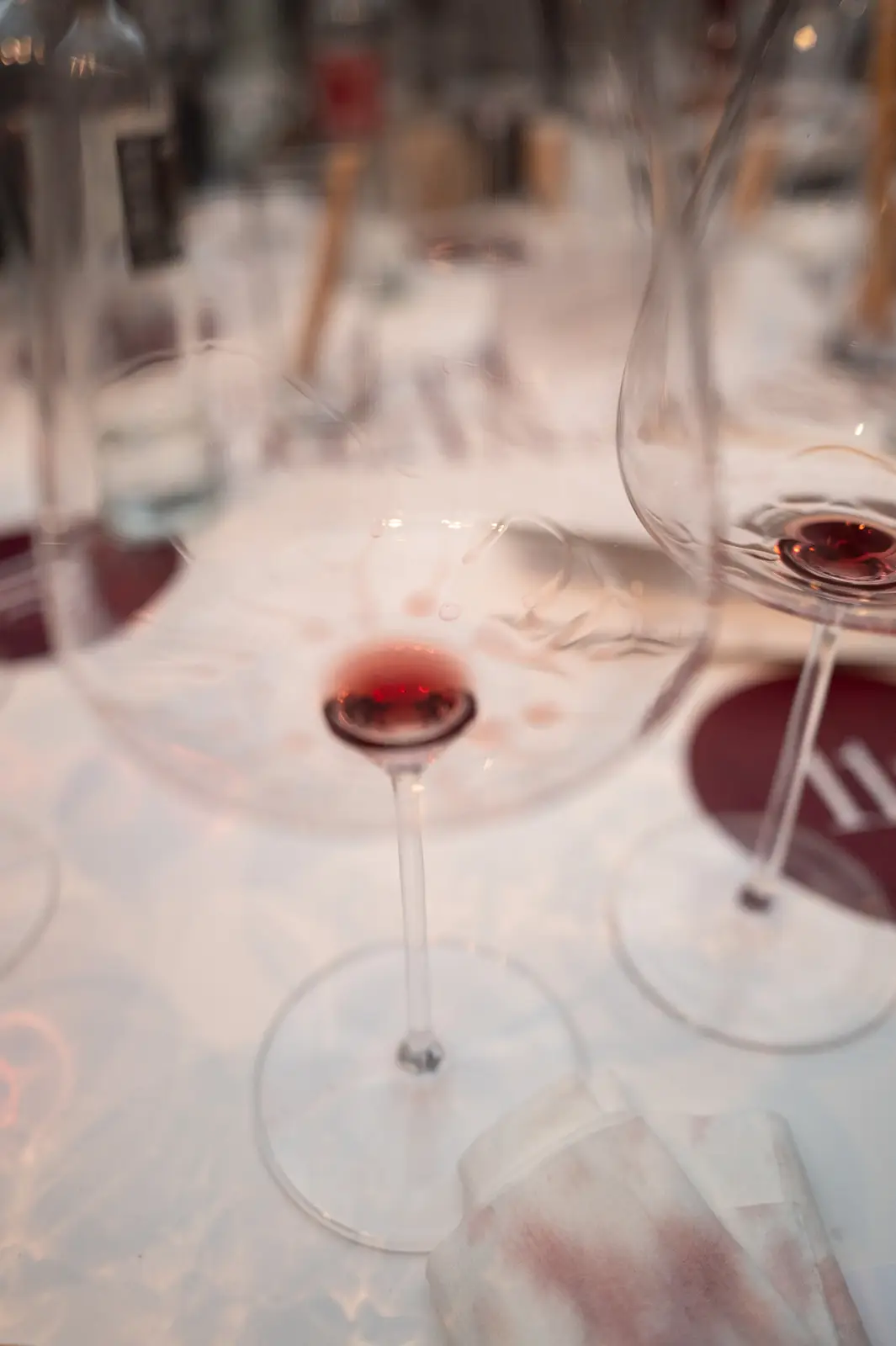
- Remnants of a wine assessment
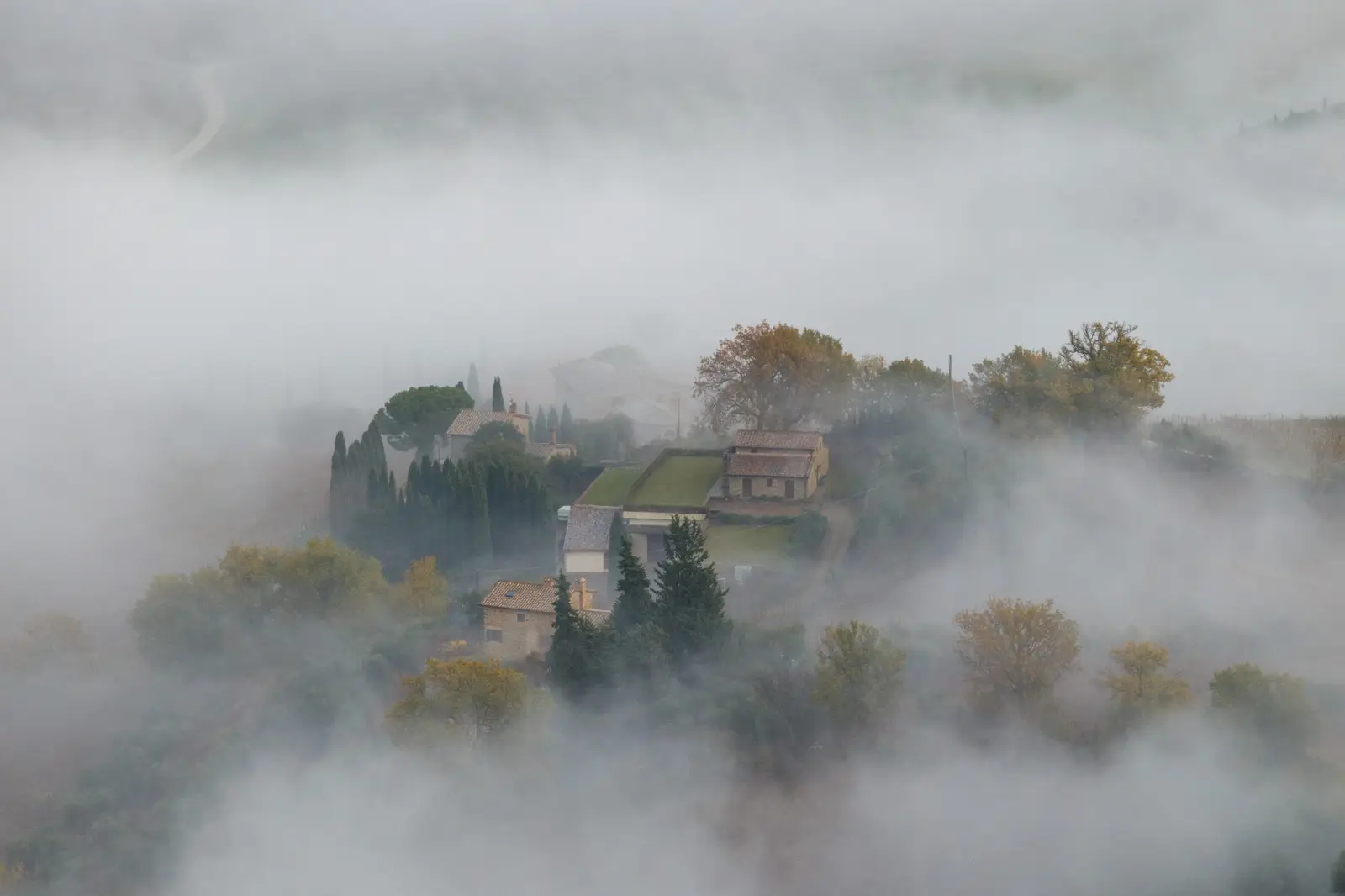
- Clouds parting below Montalcino after days of rain
Return to Wine List
Note: My participation in Benvenuto Brunello was the result of a press trip at the invitation of Consorzio Vino Brunello di Montalcino. Learn more about my editorial and travel policy.