As you head east from the Venice Marco Polo airport on the E70, there’s little to suggest that anything remarkable awaits just over the horizon. Each time I’ve done this journey, I’ve found my mind slipping into stupor. The scene is so flat, so imprisoned by high guardrails. At Palmanova, you pass a fortified village with an 18-sided barricade. The UNESCO World Heritage Site is perfectly symmetrical when seen from above, a Venetian snowflake fallen on the plains. Yet the autostrada zips on by without even a glimpse. If you don’t break free from this monotony, you might soon end up in Zagreb without realizing it.
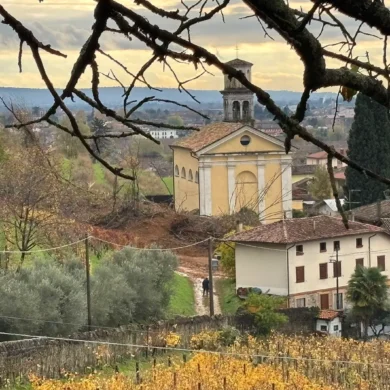
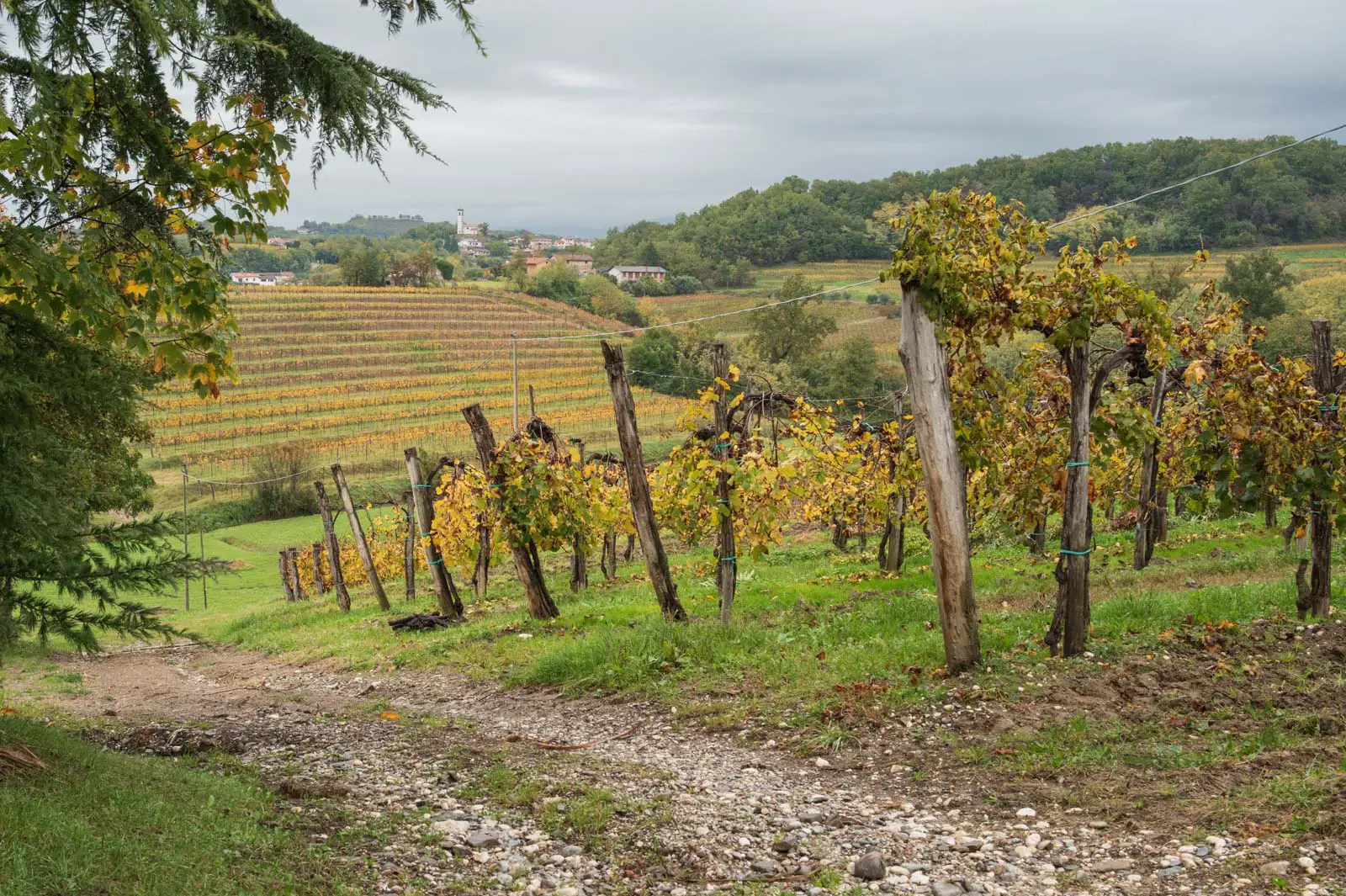
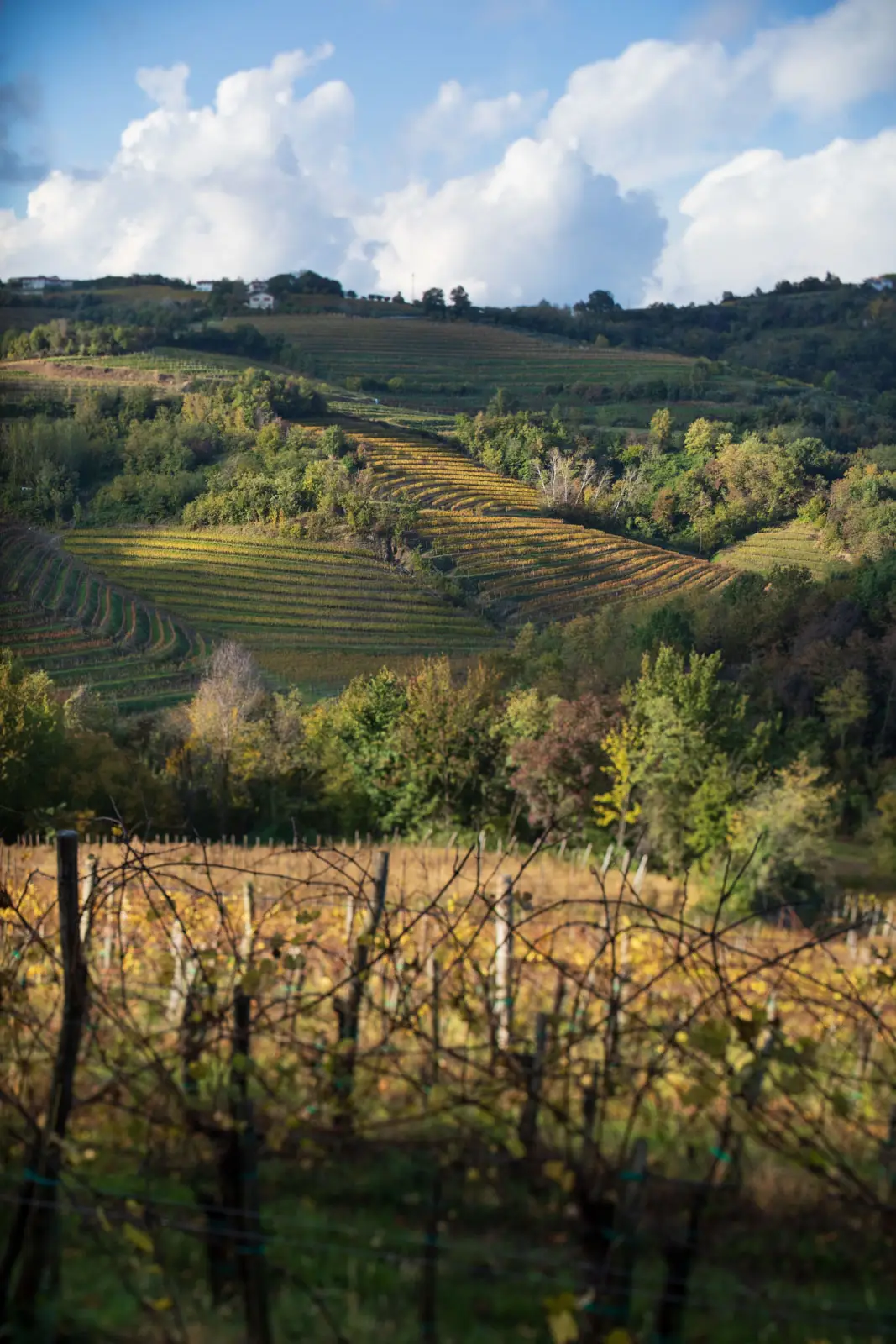
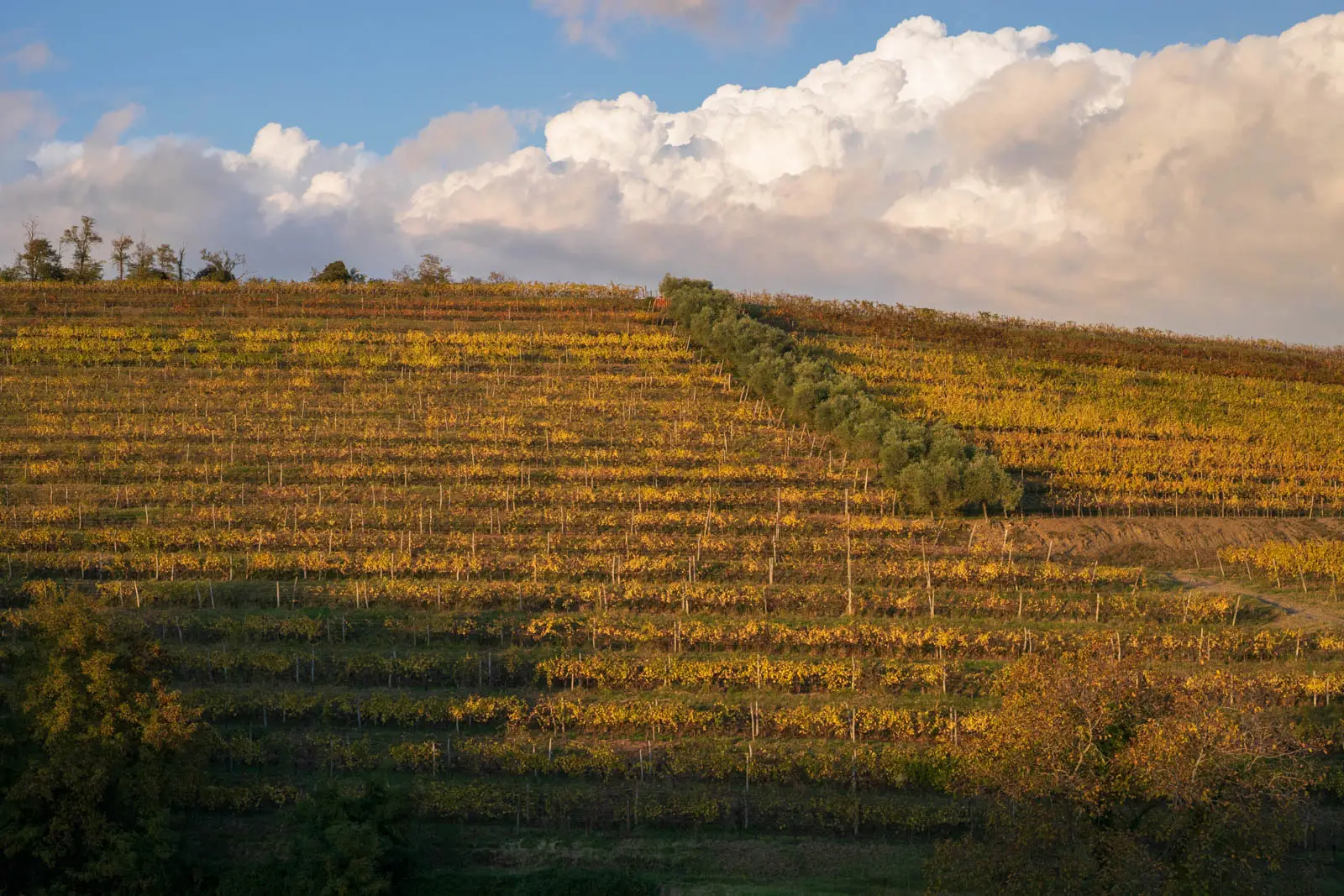
Fortunately, it is a mere hour of this. It goes by quickly. Exit once onto a spur highway, then exit again, and finally, something to look at: the hills of Collio — low, shaggy with wild trees, swathed in vines, crowned by churches, and backed by more hills of a similar demeanor: Slovenia’s Goriska Brda.
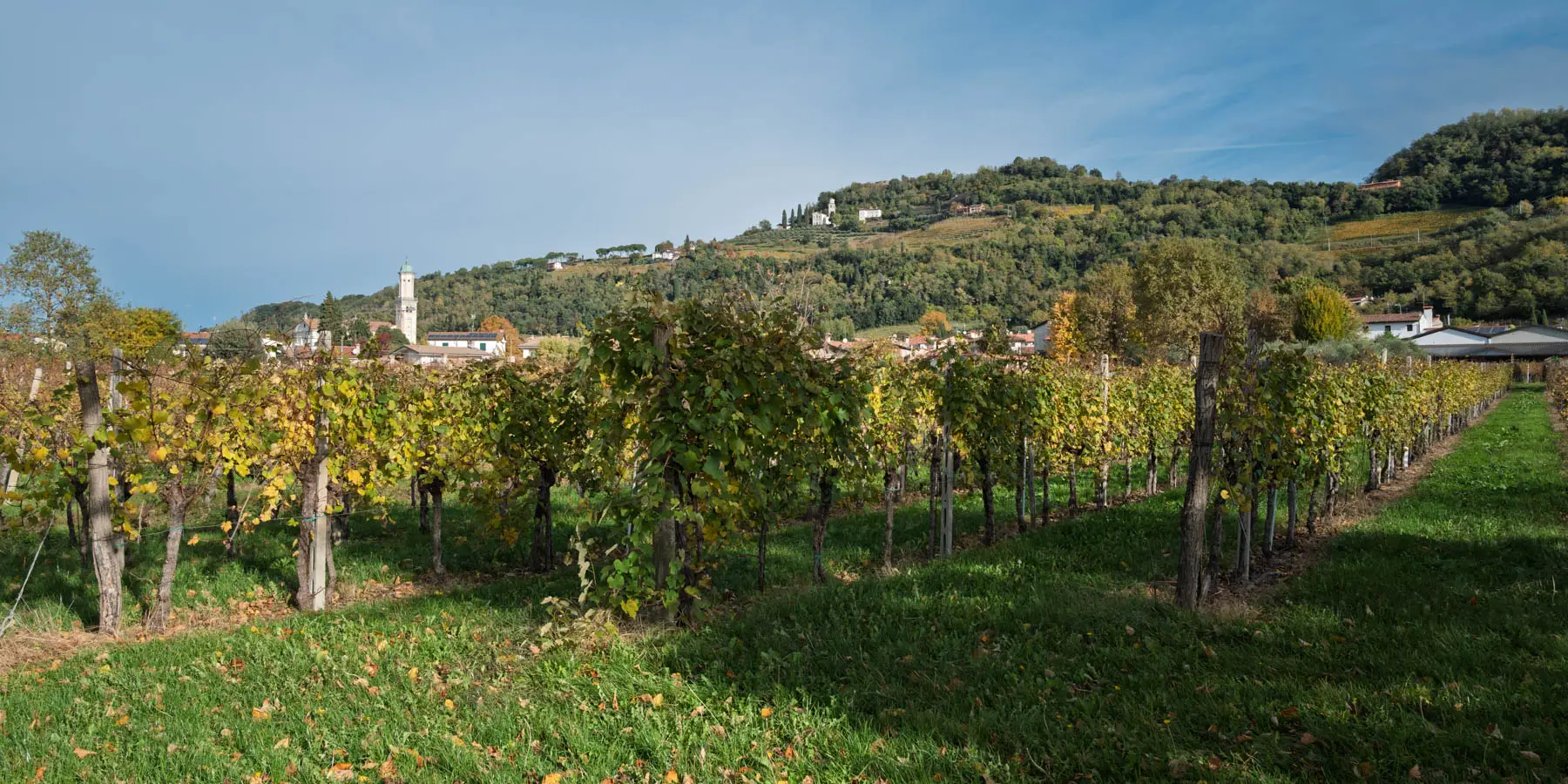
What goes unseen with the Collio is the magical convergence of elements that lead to exquisite wines. To the north are the gnarly Carnic and Julian Alps, from which originates the bitter bora wind. To the south lies the Gulf of Trieste, a shallow thumb of water connected to the Adriatic — a tempering force with its sea-tinged breezes pushing back.
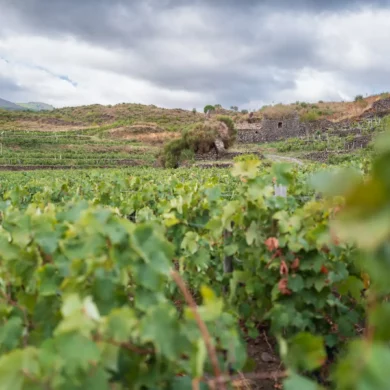
Underneath the scene, the third and perhaps most important element: the soil. Known locally as ponca, the Collio’s alternating bands of sandstone and seabed deposits (marl) foster the best vines. When their roots flex into this soil, they unlock minerals and nutrients. And when water follows this path, it slips away and probes deeper, prompting the roots to chase after it. This underground game of cat and mouse is important to the sensation of Collio’s wines. How? I’ve heard many theories, but scientific explanations connecting this soil’s chemistry to taste in the glass are still tenuous. What I do know — based on my experience tasting a wide assortment of Friulian wines — is that similar grapevines grown on more water-retentive, less mineral-rich soils lead to wines that lack the precise tension, blooming energy and caressing silkiness of wines hailing from vineyards rooted in ponca.
Regardless of variety, category or technique, this minerality is a fundamental identity to Collio.
At the Crossroads of West and East
But the modern wines of Collio are not just a product of the land — they are truly an emblem of the people and the turbulent history of the last three centuries.
In the late 18th century, this territory was part of the Habsburg Empire, with the city of Trieste serving as its one and only port. Venice presided over the nearby plains (which explain’s Palmanova’s fortification). But then Napoleon shuffled the Venetian deck in the early 1800s: invading and toppling one of Europe’s greatest Republics. Napoleon’s reign was short, ending in 1814 when he handed over the grand city and its domain to the Austrian Empire.
However, a rival Republic would emerge in an effort to unify the entire Italian Peninsula, and when it saw its chance to nab Venice, it didn’t hesitate. In 1866, Italy allied with Prussia against Austria, a precursor to the more bloody and brutal 20th century. To that end, the plan worked, but the tensions between the Republic and the Empire would boil over again in World War I, and Collio would be the frontline — the epicenter of the Isonzo Front.
This horrific series of battles denuded Collio’s hills, left an estimated 1.47 million people dead, and in its wake, severed the landscape in two with a new border. In Italy, the campaign of Italianization would attempt to strip those with Slavic and Germanic names of their identity while the region careened toward World War II. German occupation would be followed by liberation, but the new border drawn divided things further, including vineyards.
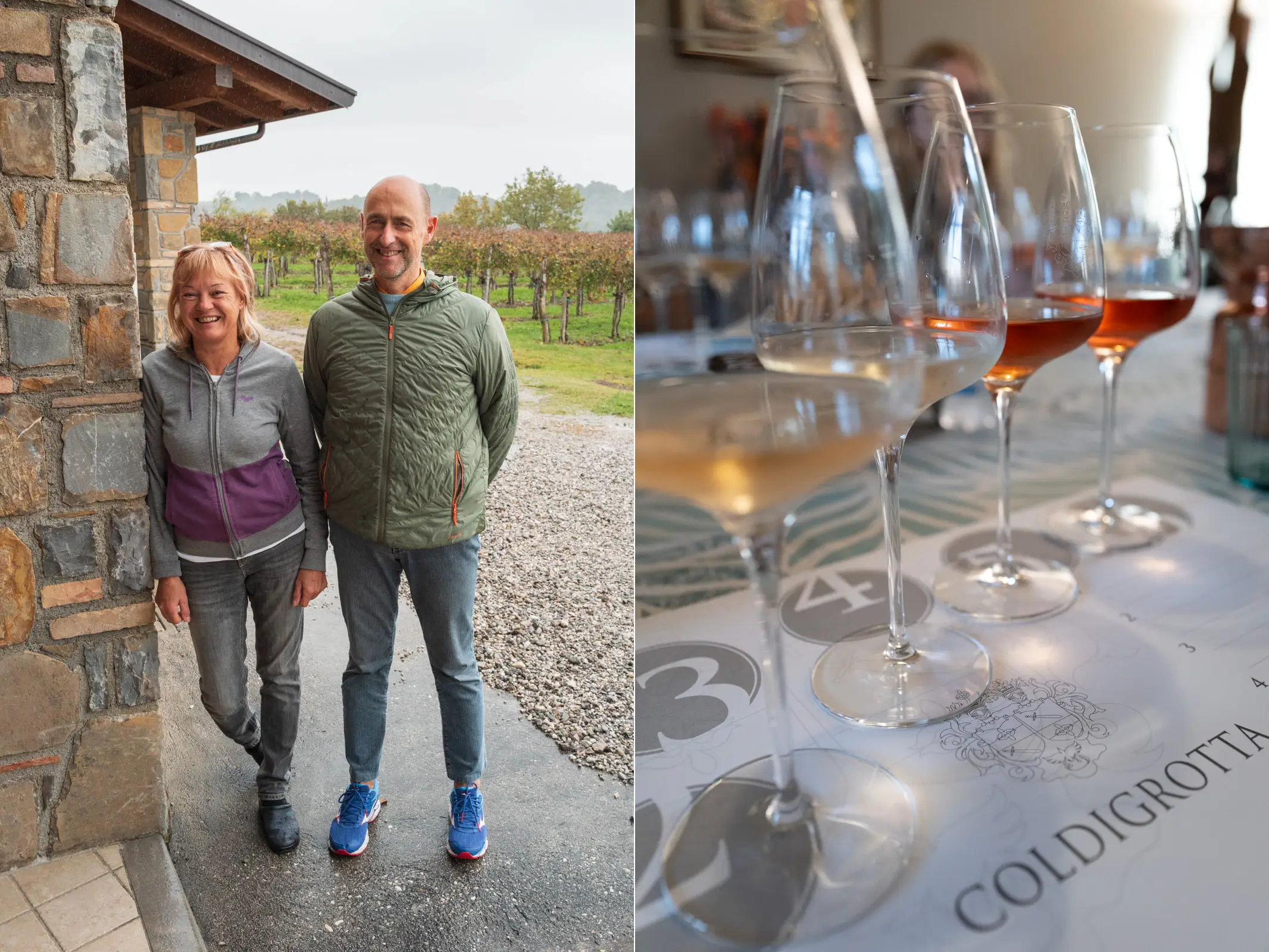
“[After World War II], the British soldiers placed red and white poles to mark the border,” Sebastian Salvini of the San Floriano del Collio family estate of Skok told me on my latest visit. “But at night, so the stories go, the locals would move them [to account for their holdings]. Some say that is why the border is still so zigzag.”
Those on the non-Italian side of the border would be relegated to life under Josip Broz Tito in Yugoslavia, while those within Italy had access to the recharging economy of Western Europe. As Yugoslavia began to dissolve into multiple states in 1991, Slovenia saw its chance for independence. The brief Ten-Day War achieved the objective, but the war farther south in Croatia, Bosnia and Herzegovina would be prolonged and catastrophic. Slovenia immediately began integrating its economy into the EU. By 2007, it formally joined the Schengen Area, which softened the border for the first time in ages. Today, in the vineyards of Collio and Brda, you can easily glide between the two states.
A New Territory with an Old Story
This tumultuous past set the stage for the wines crafted today. Conflict demands self-sufficiency, which can lead to periods of cultural isolation. In many ways, that explains why Collio has a dizzying array of native wine grapes. Varieties such as Pignolo, Ribolla Gialla, Picolit, Tocai Friulano and Malvasia Istriana have been here for centuries, and not only do they offer a distinctive spectrum of aromas, flavors, textures and even colors, they’ve rarely let the people down.
Meanwhile, a handful of French varieties have made Collio’s terroir their own over decades and even centuries. Chief among them: Merlot, Pinot Bianco, Pinot Grigio, Chardonnay and Sauvignon Blanc. Their presence is not a recent, short-term reaction to the Parker Era, as you sometimes find in Italy. Rather, many were first introduced in the late 18th century, with a second wave of plantings (specifically Sauvignon Blanc) coming after the devastation of phylloxera. During my time in the area, I have frequently found myself writing not your usual Pinot Grigio or not your usual Merlot in my tasting notes. They ring differently here, partly because of this long heritage, but also, potentially, because of their adaptation to conditions.
“We have really learned a lot about our soil and our identity,” winemaker Marko Primosic told me. Alongside his brother Boris, Marko has decades of experience presiding over his family estate in the far eastern edge of the Collio. Primosic likens the last 20 years in the region to a revolution. “We are like a new territory with an old story.”
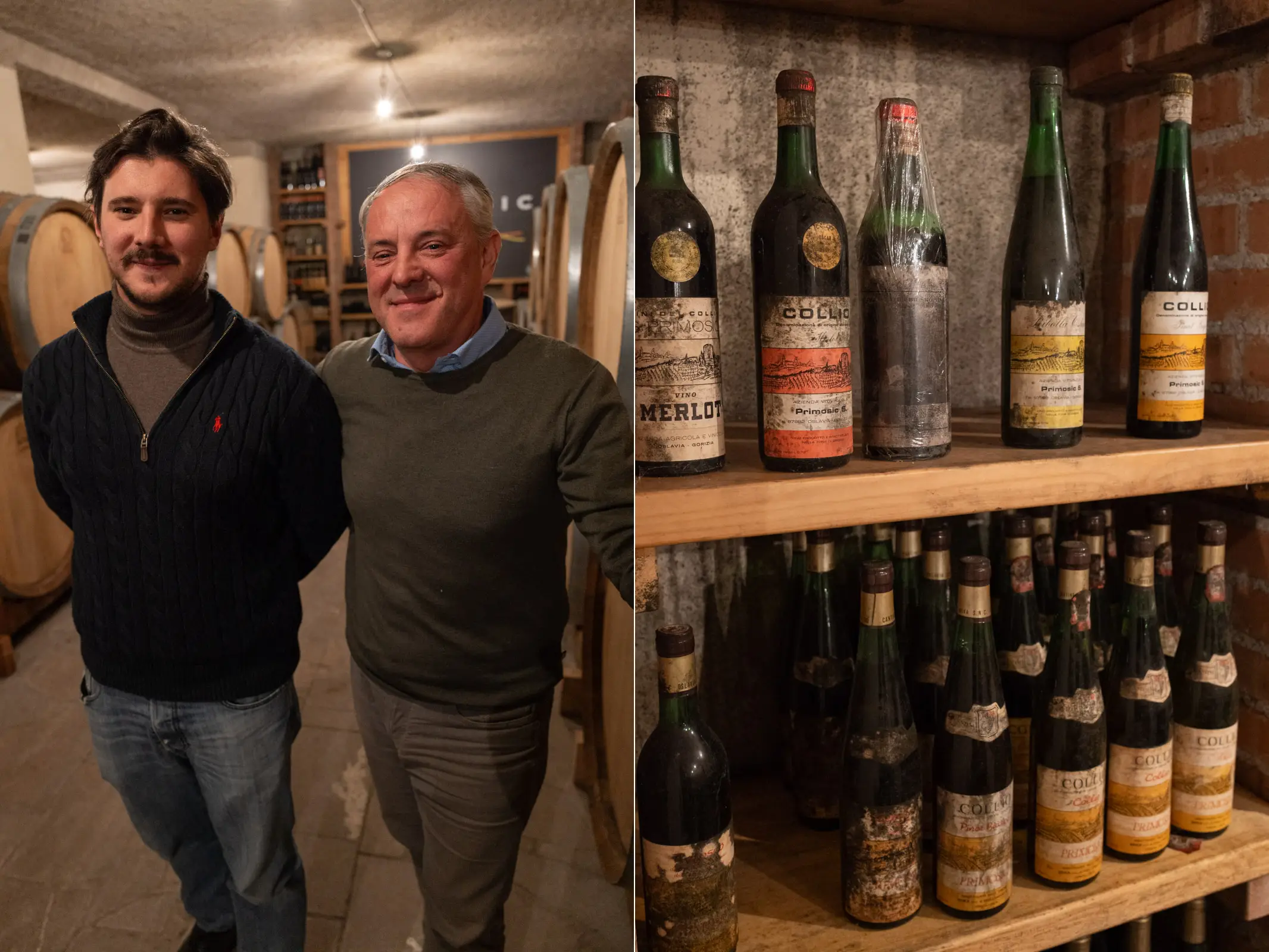
He explained what he called “the three eras” of the modern period.
“From the 1960s to the 1980s, the shift was from farmers to winemakers,” he said. He pointed to Veneto’s post-war industrial and educational prowess, particularly the influence of the famed enology school in Conegliano, as having a natural carry-over effect into Friuli. “Farmers became more technical in their winemaking,” he put it, which gave Collio producers an initial edge over its counterparts in Goriska Brda. Then from the 1980s to 2000s, it was the international influence of Burgundy that prompted higher vine density and more influence from oak.
The 2000s brought about a correction, with an embrace of indigenous varieties and the emergence of a new category of wines — orange wines. The practice of extended maceration has rustic roots in the area: the longer one macerated, the better one could preserve the wine over time. But in the modern era, producers have been able to refine the practice and the wines. Collio’s two villages of Oslavia and San Floriano del Collio are often considered the progenitor of this small, but growing category of wines globally.
Yet I find that the cultural influences often superseded all of these trends. It is the singular trait that makes this region and its wines feel so unique. You get a sense that the meticulousness is a lingering Austrian influence, while the desire to extract and preserve as much substance from the grape skins is perhaps Slovenian. And the pride of a hyper-local identity, even between neighboring villages? What could be more Italian?
Add to this a milieu of winemaking schools of thought — conventional versus natural; steel versus cement versus oak versus clay — and you have a dynamic region where seemingly anything can happen.
Hundreds of Stories
But it is often the individual stories that stay with me the longest.
At Paraschos in San Floriano del Collio, I met with second-generation winemaker Jannis Paraschos, who shares winemaking duties with his brother, Alexis. Their father, Evangelos, moved from Greece to Trieste in 1974. He worked as a pharmacist, and married into a family that owned an historic restaurant in Gorizia, which Evangelos would eventually manage. His wife’s family also owned vineyards in the Collio, which would come in handy as the tumultuous 1990s would rewire the economy of the city.
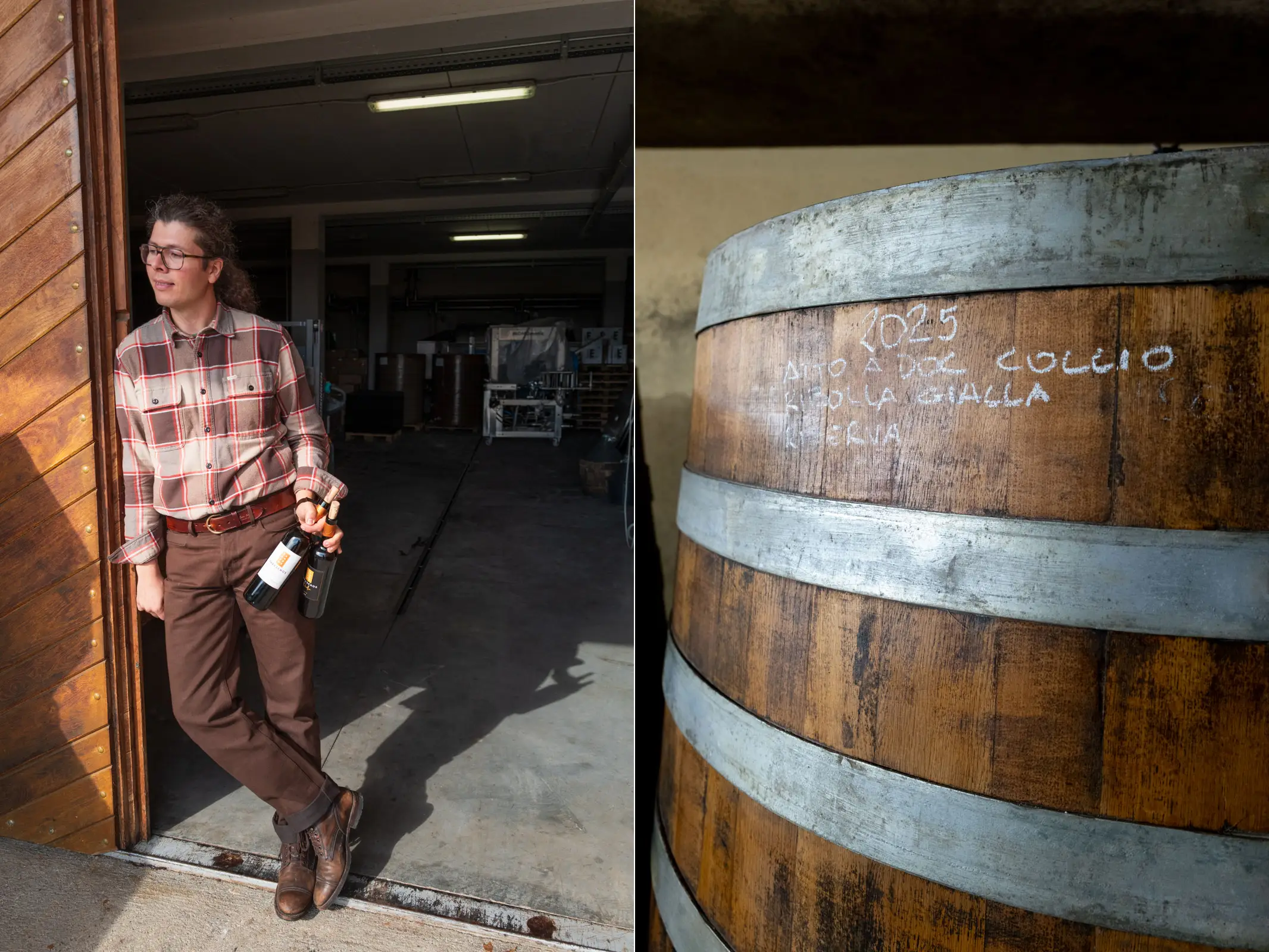
“The restaurant was too big for Gorizia,” Jannis said. Spanning 48 rooms with 200 seats, the restaurant was not only an artifact of the Habsburg mindset on dining, it was a place to do business, as Gorizia served as a gateway of trade between Eastern and Western Europe. Lunch and dinner business during the weekday had been the calling card. But “when my father started to hear about the opening of the borders, he began to assume that things were changing.”
Evangelos surrendered some vineyard land to build a cellar, and planned to either bestow the operation on his sons, or sell it off to retire. Alexis and Jannis dove in head first.
While the Greek letters adorning the labels may have you thinking about the last time you tasted an Assyrtiko, the inspiration behind their wines is 100% Collio. Friulano, Malvasia Istriana, Ribolla Gialla, Pinot Grigio and Merlot are the headliners, and the wines navigate the line between the region’s easy grace and wild, unpredictable riffs. Ever curious and cerebral, Jannis spends as much time talking about what he has learned from the global natural wine fairs he attends as he does his contemporaries in the Collio.
That balance between local and global feels emblematic wherever you go. This is a region with remarkable range and, like the ponca beneath its hills, many layers.
Read More About Collio
- Tasting Report: 20 Wines to Seek Out Now (coming soon)
- Collio’s Rising Star: Producer Profile (coming soon)
- First-Taste Guide to Friulano
- The Tragedy at Borgo del Tiglio (recent news)
Want to Join Me In Collio?
I am thinking about leading a small group to the region in the coming years: producer visits, excellent food, vineyard walks and high-end accommodations. I am researching how to make the logistics and financials work.
Interested? Help me gauge interest and fine-tune the programming by completing this form.
Note: My visit to Collio was part of a press trip surrounding the DOC’s new anteprima event, Collio Evolution. Learn more about my editorial policy.