It is a wet April evening, 2022, and I am with a friend in Fiesole. Grand villas and gardens, soggy in the fading light, hang from the mountain face. As we walk to dinner at a place called Coquinarius, we workshop a few American-style names for this “suburb” of Florence, settling on “The Renaissance at Marble Heights.”
We’ve just concluded one of my editorial research trips, and there is a celebratory mood in the air, mostly because we aced our COVID test at a pharmacy and can go back home. Italy has reset our anxiety-addled spirits, especially for my friend, who manages a 100-plus bed hospital.
For my tastes, Podversic’s wines occupy the Goldilocks part of the spectrum between orange and white, between macerated and not. I have a hard time categorizing them. Their non-conformity is part of their beauty.
Coquinarius’ entry way is decorated with wine bottles — benchmarks from across Italy that whet my Sangiovese-stained appetite as we stride toward our table. Tuscany has been wonderful, but tonight we need something different. I am thinking Friuli. Perhaps something from Collio.
Yes, that ought to freshen things up.
The wine I select is made by Damijan Podversic, his 2017 “Kaplja,” a blend of Malvasia, Chardonnay and Friuli’s local hero, Tocai Friulano. It eventually arrives at our table looking like it’s been pulled from a modern art gallery. Damijan’s name in a scrawling hand, slashes of converging black-and-white lines, a zipper of corduroy that I quickly decipher as vineyard rows.
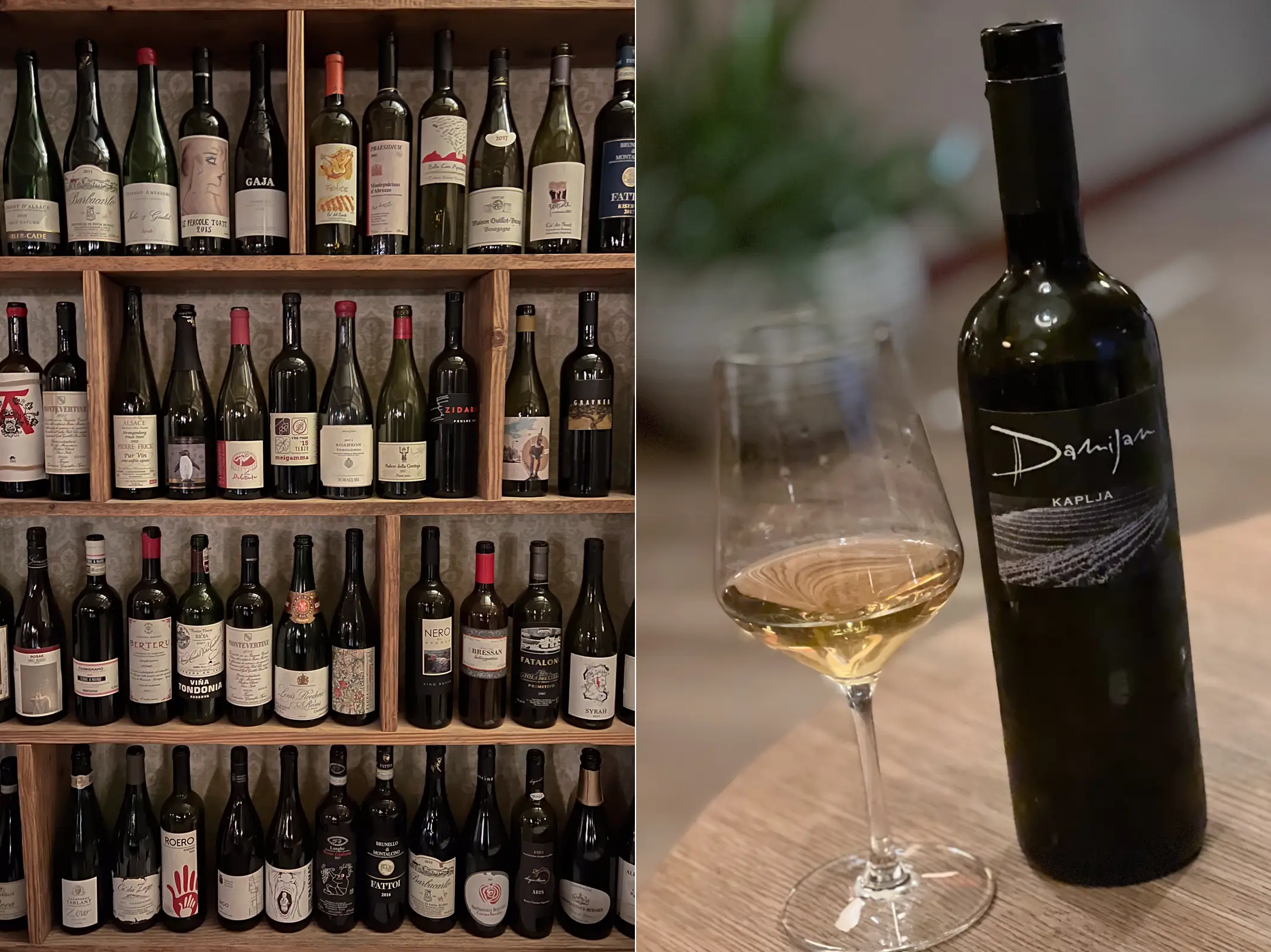
And then the profusion of aromas hits. Peaches, pineapples, violets, a bakery at 5am. It is light as can be on the palate; a sip that floats, lingers, doesn’t assault. What a changeup.
My friend doesn’t know what’s hit him. His brow is pinched, a face he only makes when something surprises him (and he’s a doctor who has seen everything).
“Damn, we’re doing places tonight,” he finally says. In moments like these, wine plants the seed, and the idea that springs forth can be trained and directed, but it is too vital, voracious and unrelenting to stop: I want to go visit this man named Damijan.
From Father to Daughter
Friuli has an altogether different mood than the rest of Italy. Three things account for this: the imprint of Slavic culture, the maddening wind and the ubiquitous rain. On some days, the bora wind howls from the north bearing an icy sting from the Alps. It is the kind of wind that hardens things: tree trunks, vine roots, ideologies. It can be said that the only good thing about the wind is that is makes viticulture possible.
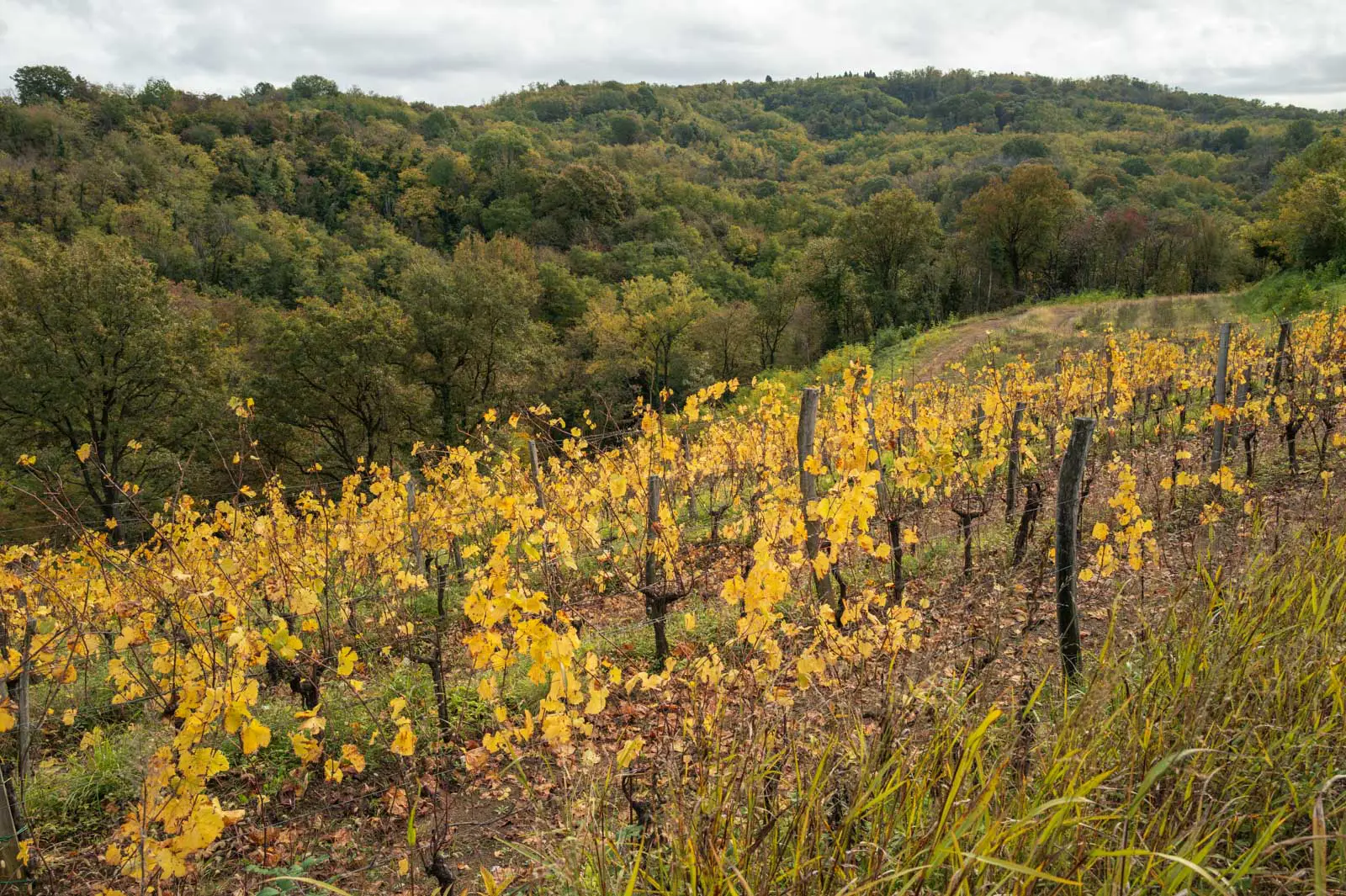
Yet as a traveler, I find that it is the effect of precipitation that leaves the most lasting impression. Visit in fall when the low ceiling of clouds tend to be thick as the days shorten, and you might find that no amount of espresso is sufficient. You will also notice that the only thing more saturated than the ground is the vivid yellows and indomitable greens of the season. Friuli’s spectrum is unmatched.
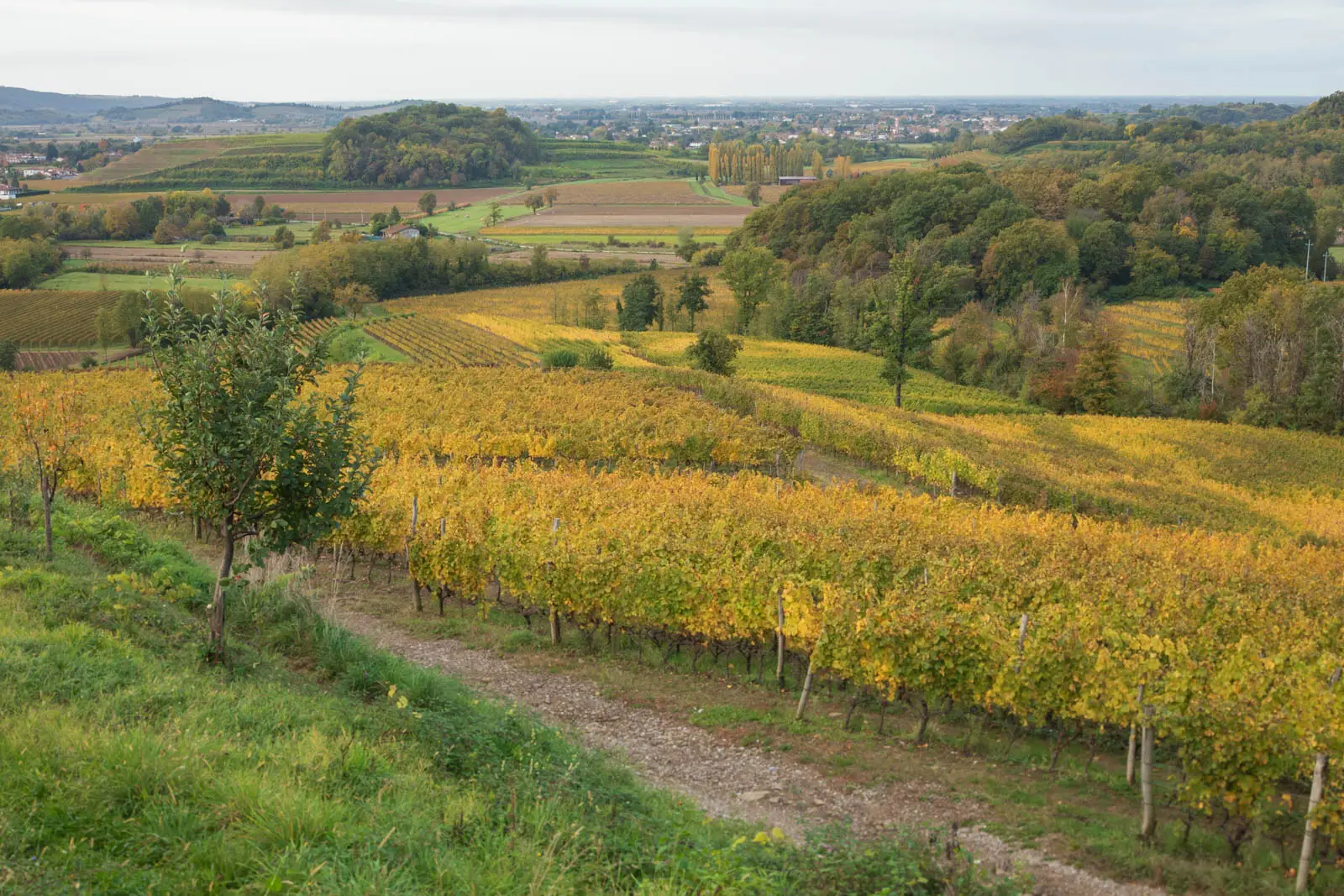
I am passing through a tunnel of these colors, rambling down a rugged road the width of a single car to a winery known for its polished product. Based on their taste, the wines of Damijan Podversic reside on a different frequency than those of his more famous peers. They’re not as powerful and show-stopping as Gravner. Nor are they as whimsical and freeform as Radikon.
But they are also not as classically styled as Borgo del Tiglio or Miani, nor as buttoned-up as Livio Felluga. For my tastes, Podversic’s wines occupy the Goldilocks part of the spectrum between orange and white, between macerated and not. I have a hard time categorizing them. Their non-conformity is part of their beauty.
I am with two other visitors, and as our van nears the winery, we come to a halt. Another van is approaching, heading in the opposite direction, and in seeing us, has paused, flown into reverse, and expertly backed up as if the road’s angles were memorized. Passing in the winery’s parking lot, I realize that the driver is none other than Damijan Podversic himself. He smiles and waves. And then drives off.
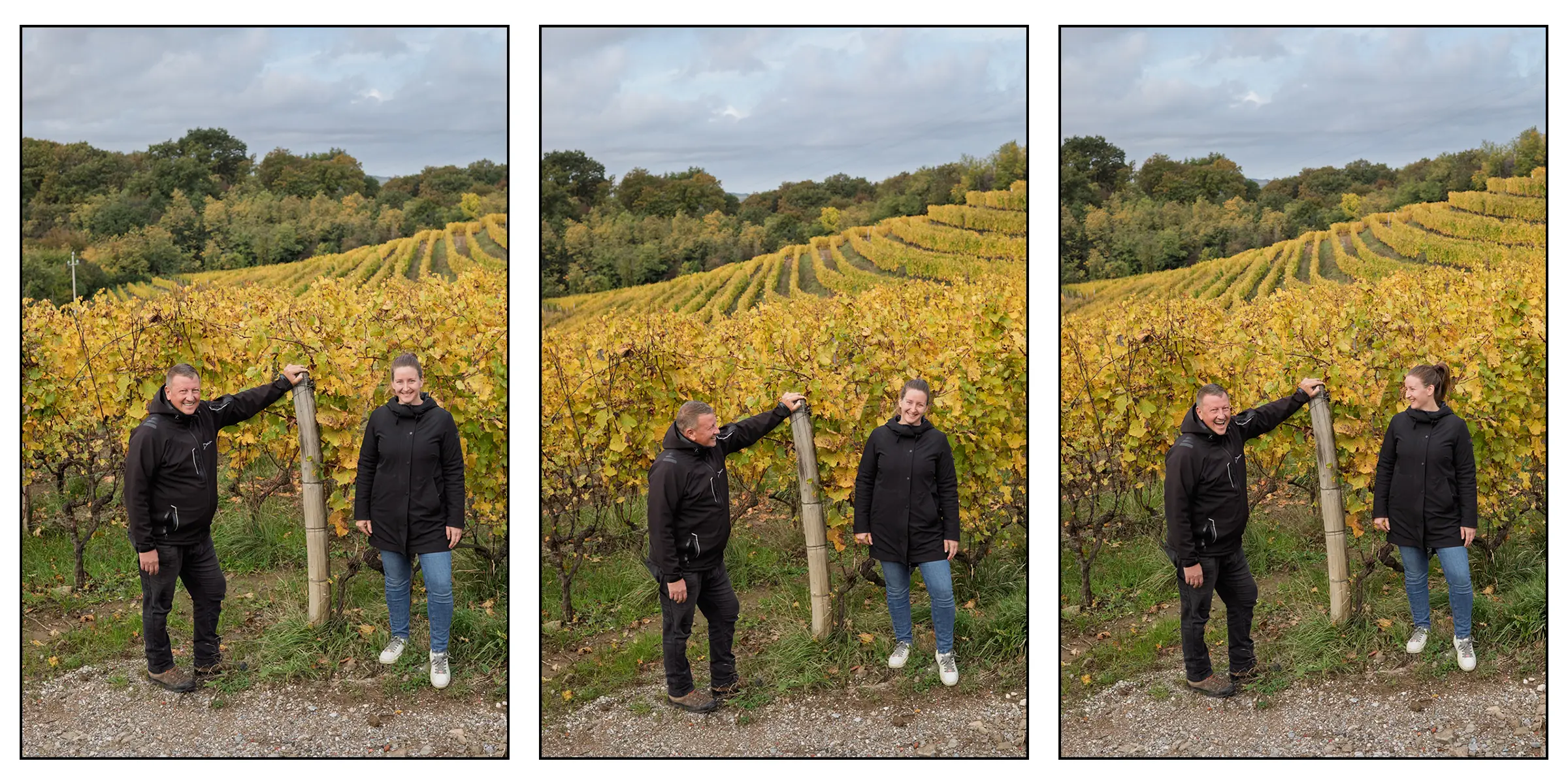
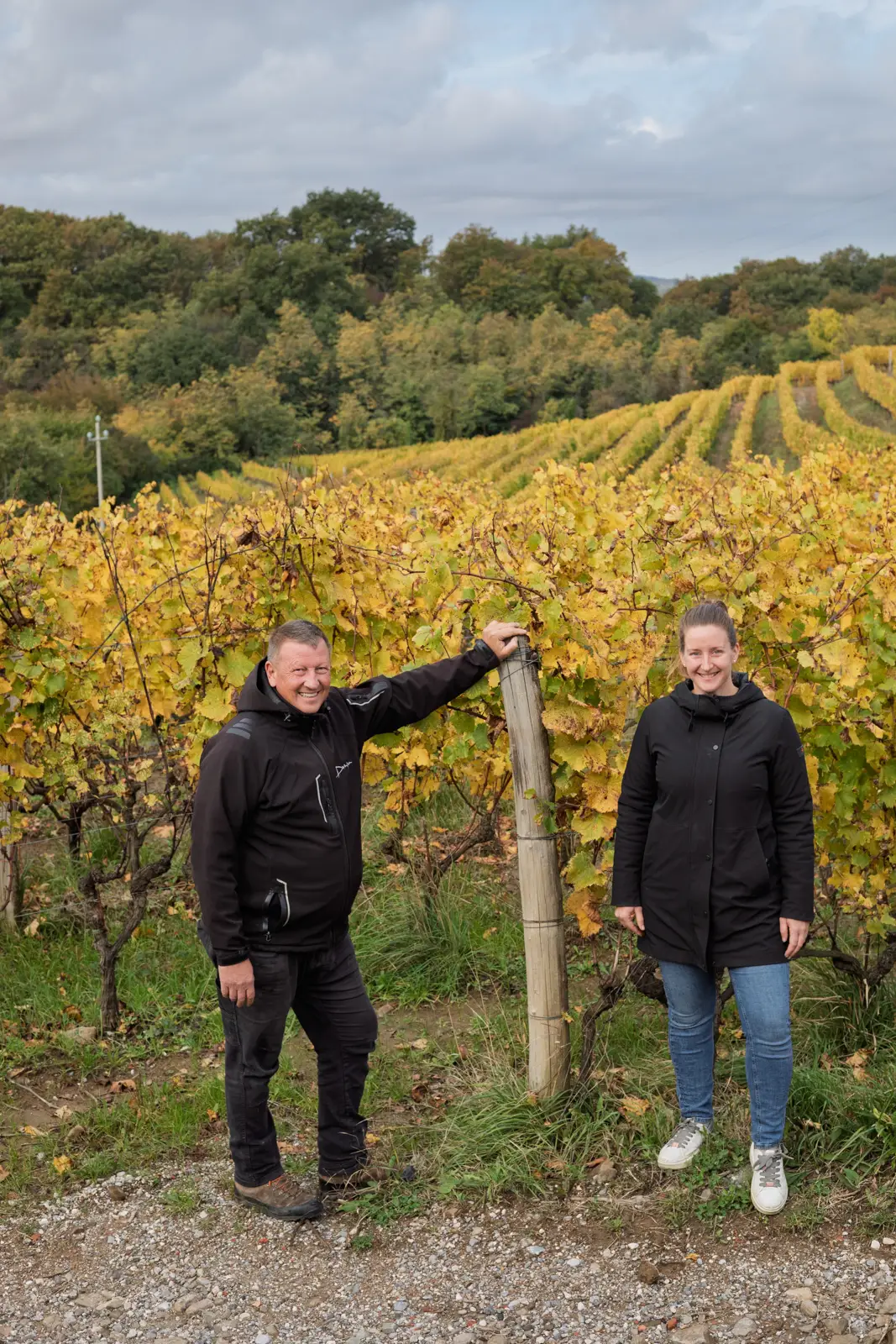
Unbeknownst to me, Damijan will be fully stepping aside at the end of 2026, handing the reins of the operation to his daughter, Tamara, age 31. She stands at the winery threshold waiting for us, a vision of calm confidence in a black coat that can handle any amount of bora. Perhaps Dad has gone into town for an espresso and a chat with the locals. Perhaps he is just getting the hell out of the way.
Look, I am a father of two daughters. I want to see them flourish, and I have a tendency to gab. I suddenly understand exactly what’s happening.
A Milieu of Influences
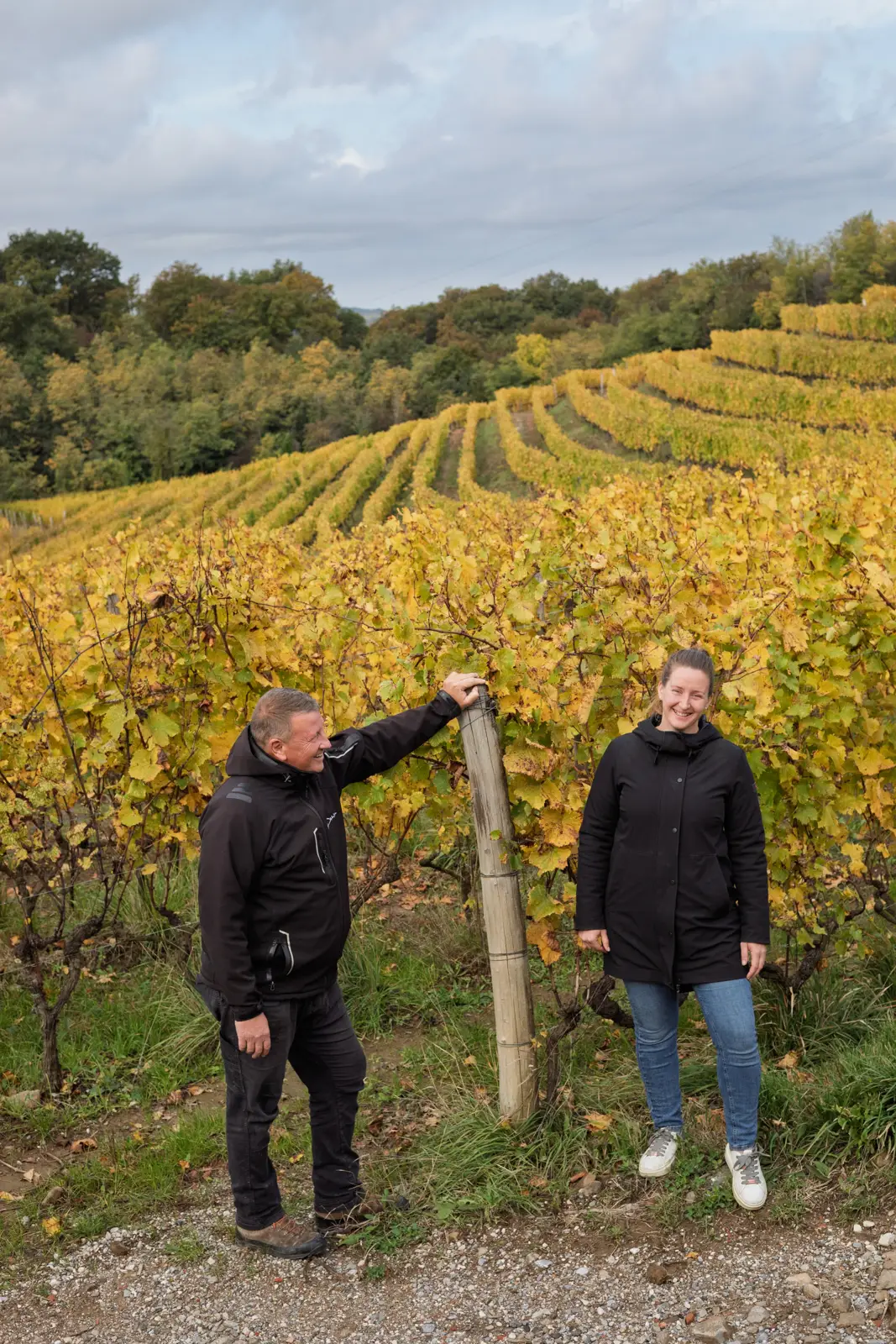
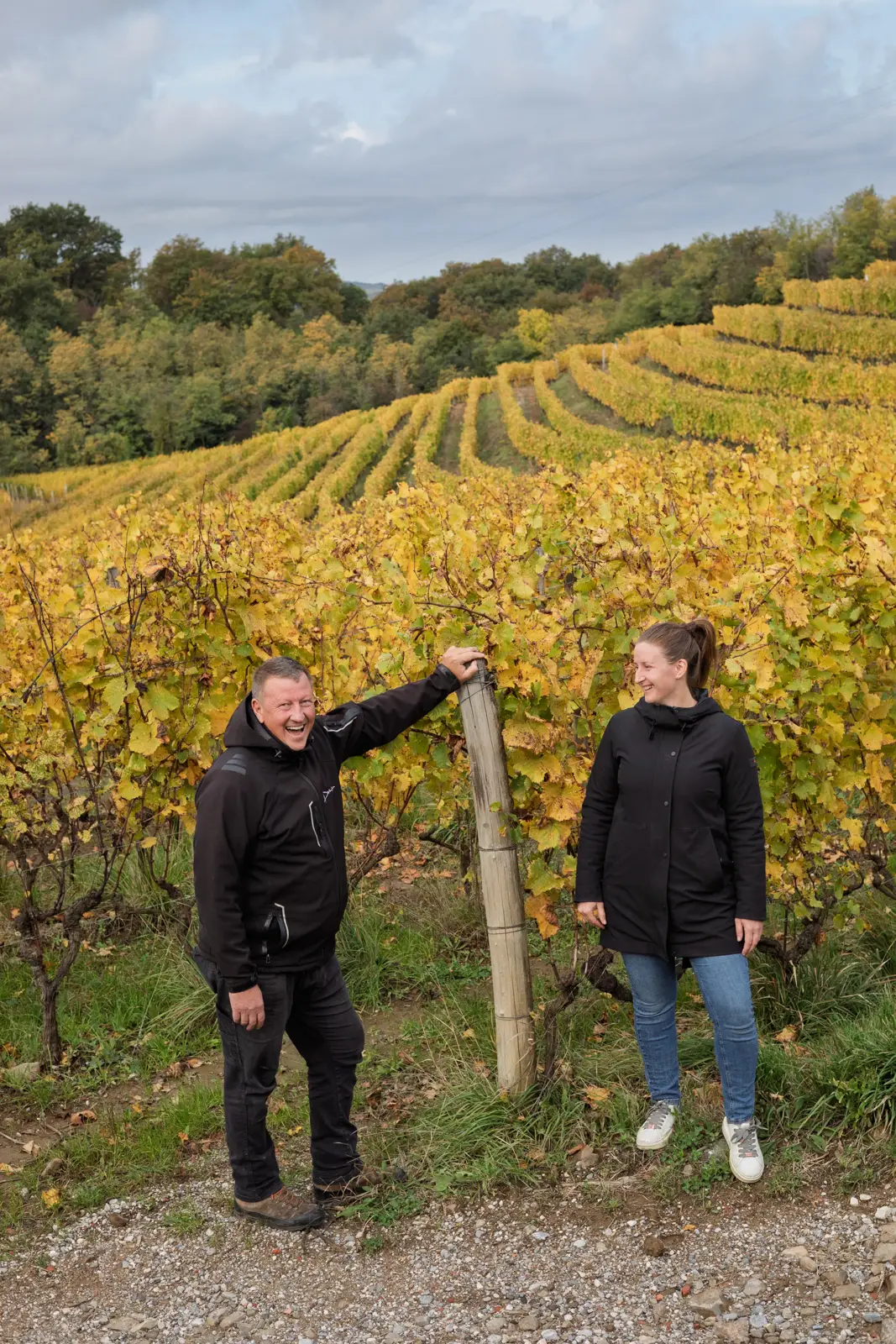
Stretching out before us like a halted wave of green and yellow, are the family’s vines: Ribolla Gialla, Tocai Friulano, Malvasia Istriana and some smaller plantings of Chardonnay, Pinot Grigio, Merlot and Cabernet Sauvignon. Over the next ninety minutes, Tamara will demonstrate her acumen for these grapes and their behavioral patterns with a barrel-side masterclass. But first, we get oriented with the vineyards and learn about her father’s journey from figlio dell’oste (son of an innkeeper) to Collio icon.
“Franza, my grandpa, was still in the generation where wine was considered like a piece of bread, so an element for the body,” Tamara says. Vineyards were solely for supplying wine for the family business, an osteria named Ronco Bianic. “Wine was calories to him, but for my father, wine was about quality.”
The two did not see eye-to-eye on the family’s vineyards, to the extent that if Damijan wanted to make wine, he’d have to go elsewhere. So in 1988, he established a small négociant business and started renting a winemaking facility that would serve him well into the 2000s. And by 1994, he started to question whether the international grapes that had stolen the spotlight locally were really worthy of it. When he purchased his first vineyard on Monte Calvario — a rugged and rough plot which had been abandoned, but is now the envy of many producers — Franza advised him that “if you are wise, you will plant Sauvignon [Blanc],” noted Tamara.
“But instead, my father said ‘I will plant Tocai and Malvasia, because I know what I’m doing now.’”
Podversic was also hanging out with a cadre of local winemakers who were challenging not only the dogma of international wine, but the hardened ideologies of the local economy. The cadre’s undisputed leader was Josko Gravner as well as his close accomplice, Stanko Radikon. Today, they are celebrated globally as the two most important pioneers of vini macerati, better known as “orange wines.”
By extending the maceration of white grapes and staining them amber, this group of winemakers used an ancient technique to forge something compelling: a wine that was at once traditional yet modern, refined yet massively expressive. But they were ahead of their time and nearly universally maligned by the press at first. And since they were rich, dark and tannic, they didn’t comply with the Collio DOC’s rules, which prized the crisp and classic white wine style. So they were often filed under the rather generic moniker of Venezia Giulia IGT.
Podversic was the youngest winemaker in the group — “their mascot,” as Tamara called him. “He was lucky to be at the table hearing what they were talking about,” she says. In particular, Damijan’s proximity to Gravner has created a mythology all its own. It is a key selling point of his wines anytime you read about them in the media. But Tamara is quick to point out other influences. “[Josko Gravner] was one of the three teachers that was quite important to my father,” she says. “But one of his first teachers was actually Mario Schiopetto.”
Hearing this made my ears perk up. Schiopetto revolutionized Friuli’s white wines in the 1960s and 1970s by introducing temperature-controlled stainless-steel fermentation. He effectively put Collio on the map for his style of wine, and the region followed. Yet it was the style of wine that Josko Gravner vehemently opposed.
“My father was a kid when Mario was the leader,” Tamara says. “But Mario understood the potential of the territory, which was important.”
Damijan was open to other styles, too, and he soon found inspiration from another compass point: Nicola Manferrari of Borgo del Tiglio. Manferrari’s oak-barrel fermentation of Collio’s native grapes became a benchmark for those inclined to the finesse and expansive textures of Burgundian white wines. They were an exciting fusion of Friulian ingredients and the artful use of barrel aging.
And over time, Collio has come to reflect its viticultural and stylistic diversity more and more, which I see as a promising sign of vitality within the community. The consortium that governs the appellation has recently created a category to allow for vini macerati. While it may not be fully adopted by the icons, it has been embraced by Podversic.
As we walk around the building, I open the app I use to keep track of my tasting notes, and type Damijan’s name in the search bar. I read through the various wines of his I’ve been tracking and how I’ve described them. These two names — Schiopetto and Manferrari — suddenly look like the last two pieces fitting into a puzzle. I can’t help but write in my note pad: Collio’s ultimate wines?
“I’m lucky now that I was born in a beautiful place to a great family,” Tamara says as we enter the fermentation cellar. “They are giving me an understanding of generational change. To let me express myself, to let me choose in the vineyard. My father is still young. He is only from 1967, but he has said that 2026 will be his last signature. Still, it is great to have a shoulder [to lean on] like his.”
A quick interlude for an invitation …
Become a Member
Unlock savings to the Wine Scholar Guild, travel planning, wine clubs and get full access to Opening a Bottle’s tasting reports (example) and curated profiles on the best winemakers in Europe. Membership pays for itself when you utilize discounts.
Back to the story …
Tamara Makes Her Mark
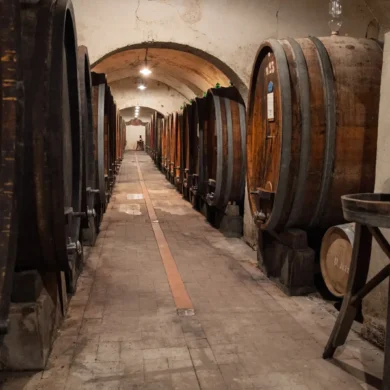
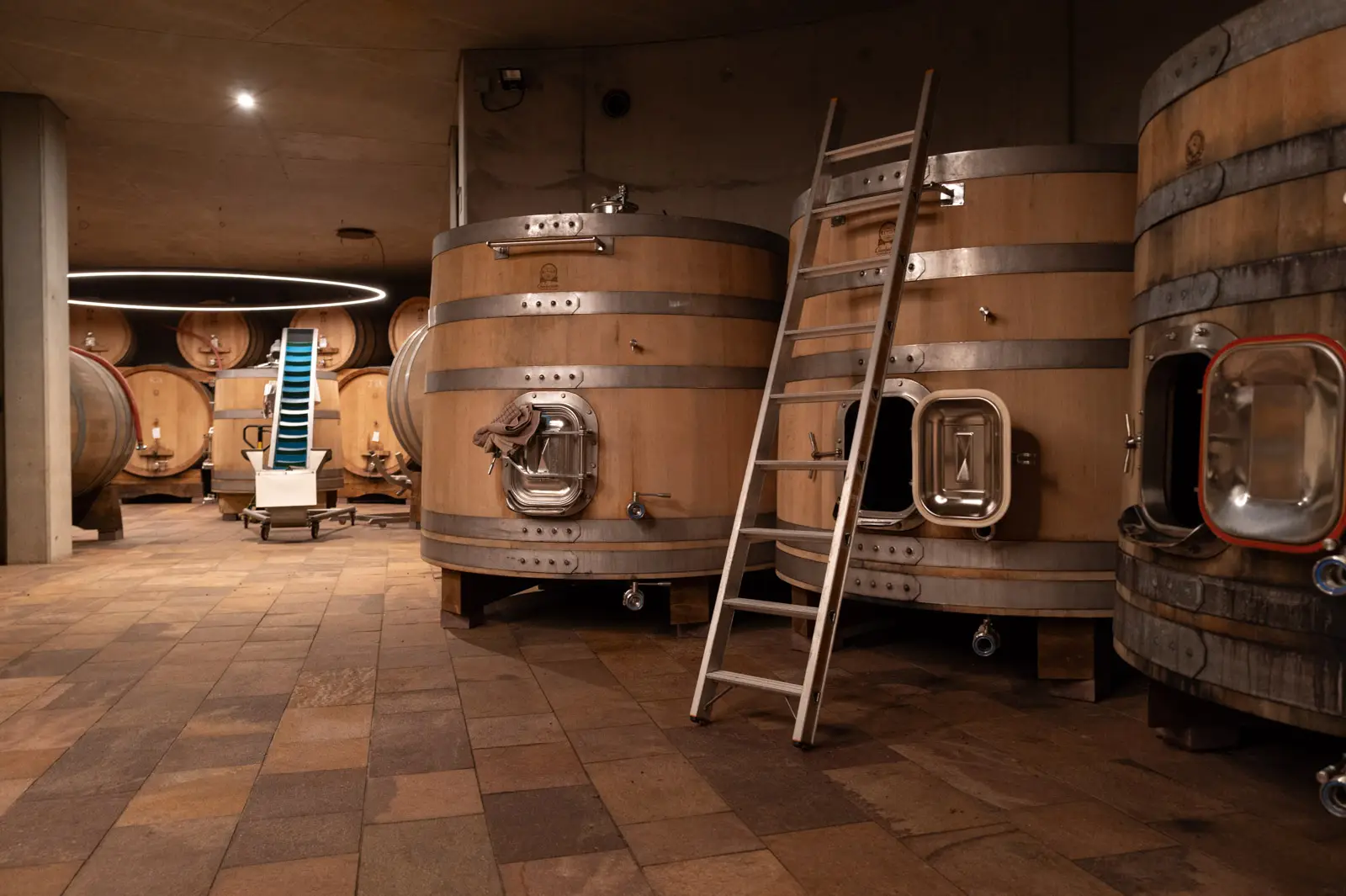
The scene inside mirrors this melding of modern and traditional. It is a gray concrete bunker with tile floors and pendant lights; a cold place that would feel like an unfinished basement if it weren’t for the glowing warm tones and textures of the winery’s oak vats and casks.
“If you find a Friulano that is not aromatic, something is wrong.”
Tamara Podversic
Winemaker
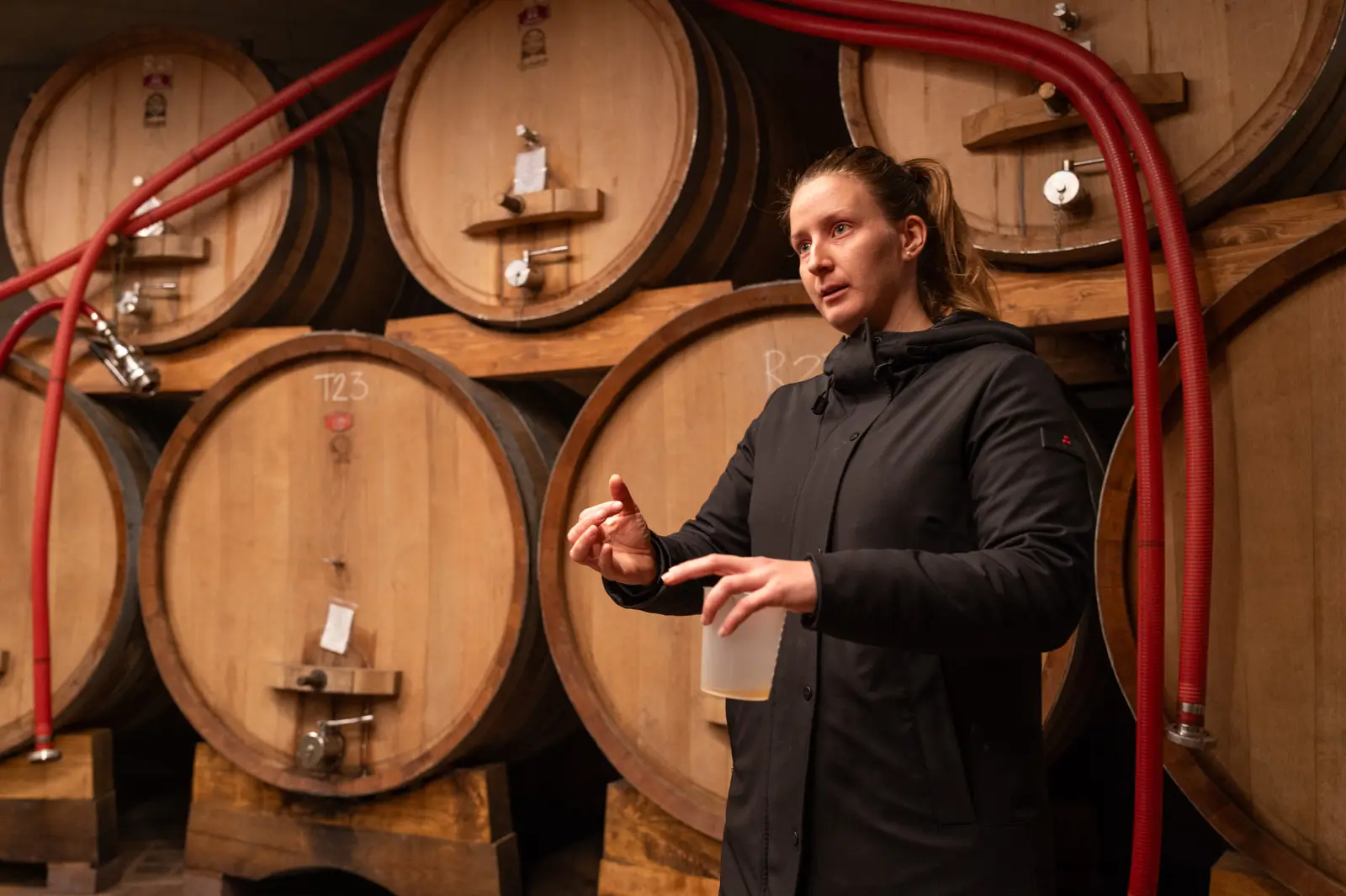
The cellar was conceived and financed by Damijan for his unique needs, but it is now clearly inhabited by Tamara. After she staged in Burgundy at Domaine Lafarge and Domaine Chandon de Briailles in 2020 (“it was important to open my mind and learn a new language”), she returned to Collio and has steadily taken over the operations. She moves deliberately from barrel to barrel — every item in the cellar seemingly catalogued to its place — and speaks with the confidence of a tenured professor.
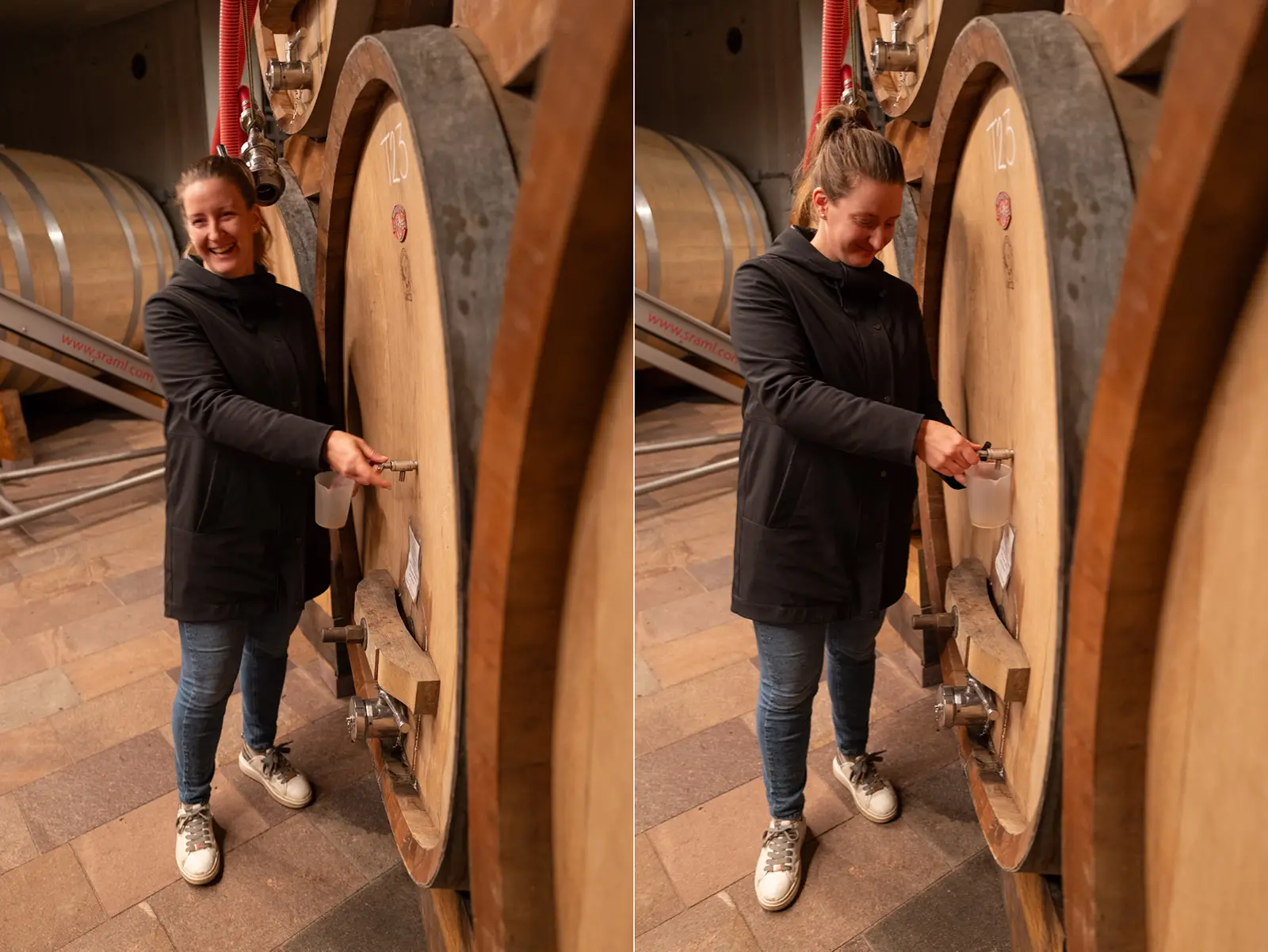
Tamara begins with a barrel sample of Friulano, which will become the 2023 “Nekaj” Collio Friulano. “If you find a Friulano that is not aromatic,” she says, allowing the pale liquid to slide from thief to glass. “Something is wrong.”
For contrast, she pours from another barrel of the same wine, same vintage, but with 25 percent stem inclusion, a technique she picked up while working in Savigny-les-Beaune. She feels the stems heighten Friulano’s expression. “[Stem-inclusion] is like a trampoline for the retronasal aromatics,” she says directly, adding that she plans to blend the two barrels together. I take a sip and am immediately enchanted by memories of pear and apricot, blueberries and spice. I then try to recall another winemaker who explained their decision-making based on the objectives of orthonasal versus retronasal aromas (and draw a blank).
“We are so lucky that we can work with more than one variety,” she says as we move to the 2023 Malvasia. “It is the beauty of Collio, to have the possibility to work with Tocai Friulano, Malvasia Istriana and Ribolla Gialla.”
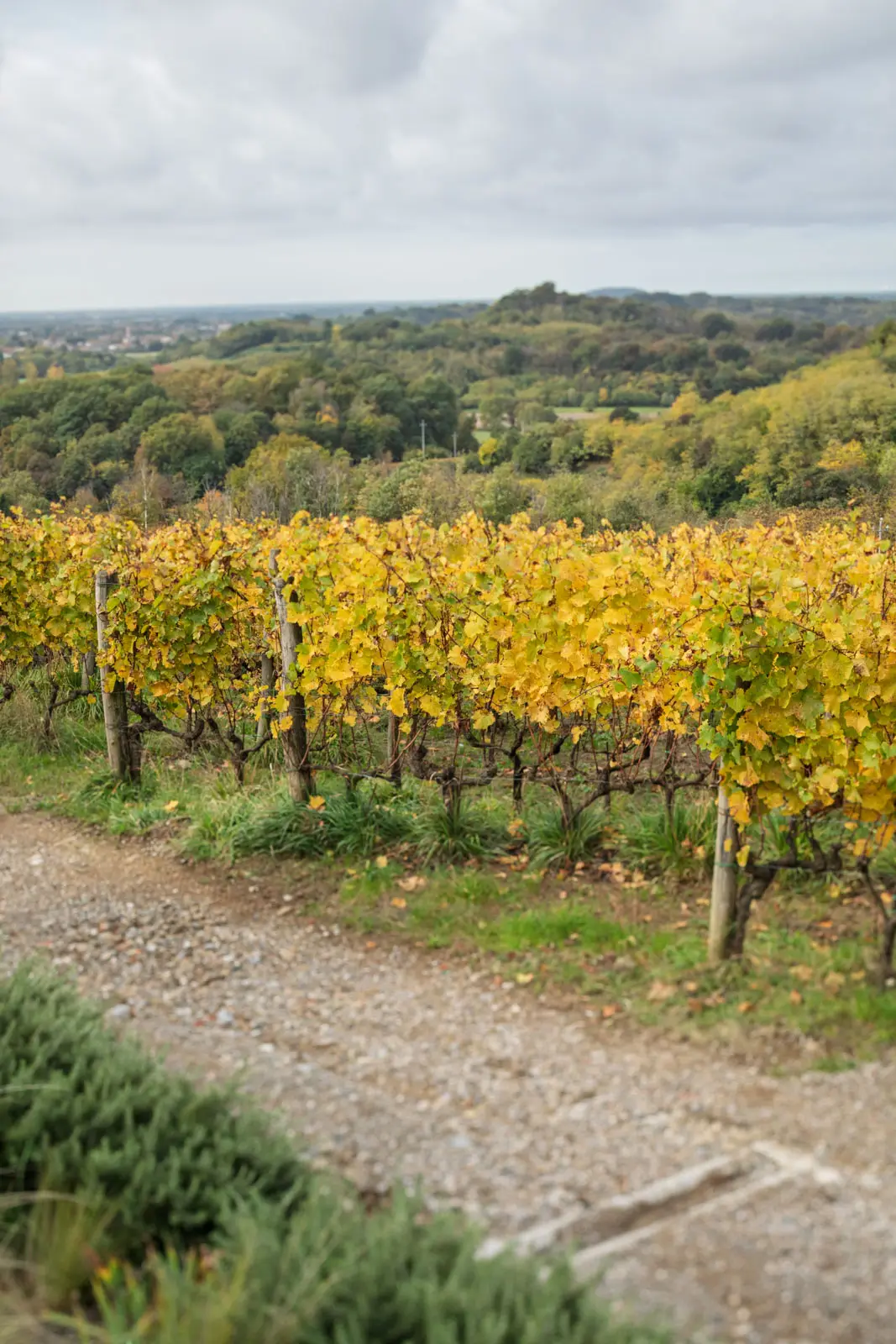
After a taste of the wine — which is radiant yet elegant, tropical yet faintly nutty — I express to her my avoidance of Malvasia in its many forms. “I often find it exhausting,” I confess, watching her face become crestfallen at my comment. “But this,” I quickly add. “This I could have several bottles of. Is there a secret to working with Malvasia?”
“It is true that if I open our 2021 Malvasia, which was quite a warm vintage, you will experience a force that is very different,” she says. Malvasia tends to be meaty and dense, which is unusual for a white wine grape. Its alcohol levels can also soar. But Tamara admires the fruit’s perseverance.
“If you wait one extra day with Friulano, it will break apart,” she says. And then, a subtle shift: she began to refer to Malvasia Istriana with a feminine pronoun, personifying its survival instinct in the vineyard. “But Malvasia, if the skin breaks, she will heal herself with botrytis, preventing any rot from the inside. And it won’t take over. You just see tiny spots. She is incredible.”
But just because Malvasia is a survivor doesn’t mean she isn’t fickle. “She” must face the Adriatic, Tamara says, because of the seaside breezes which provide a necessary counterbalance. And ponca soil, the region’s iconic Flysch which fosters a directness to the acidity of each vine’s fruit, is essential. Without it, the wines feel heavy.
“The Only Thing You Cannot Buy is Time”
At last, we come to Ribolla Gialla, a dynamic local grape with the biggest personality of all. When vinified without maceration, it is often austere and reserved — sometimes, so much so that it seems muddled. But give it time on the skins and the grape explodes with personality. I find it most compelling when Ribolla Gialla can play the part of a trickster, its vivid color daring you to think of citrus when it is actually speaking of berries and dark flowers.
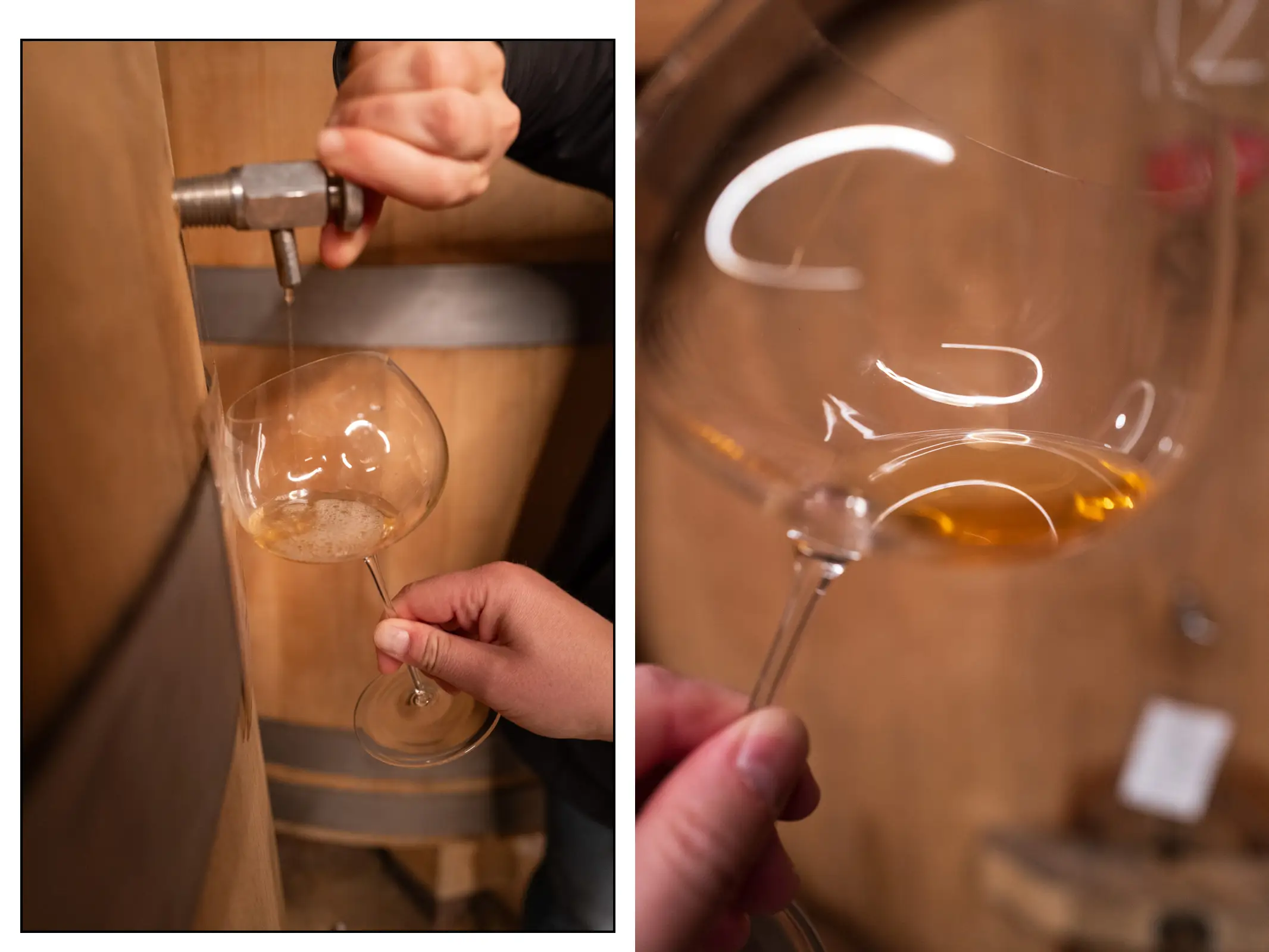
Tamara has strong feelings on what to call her carrot-colored Ribolla: “It is a white wine from Collio,” she says. “Because it is a white variety.” She understands that those who sell her wines sometimes have to frame the drinker’s expectations more than perhaps that humble description allows, but she is adamant that what comes from the vineyard should be the headline.
“Nowadays, there is always the problem in the world of wine that we divide the vineyard from the cellar. They should never be divided, for wine is a communication between the two.”
Tamara Podversic
Winemaker
“Nowadays, there is always the problem in the world of wine that we divide the vineyard from the cellar. They should never be divided, for wine is a communication between the two.” She likens the length of maceration to an artist’s choice of medium — canvas or film. One is not better than the other, they are a choice of expression.
That “choice of expression” for Ribolla Gialla among Gravner, Radikon and her father was not always accepted. She recalls being a child and joining her father when visitors came to the cellar, and how much explaining he would have to do on behalf of the wine’s color, explosive aromas, and weighty, tannic structure. “But the bottles would always end up empty,” she notes with a sly smile.
Today, acceptance of macerated white wines has caused an unintended effect: copycats with sloppy results. “People talk about improvisation. I cannot accept this,” she says. “When you work so hard every day, all year, and then to improvise in the cellar? It is unacceptable. There’s already been 8,000 years of viticulture. What more do you want to invent?”
She draws a sample of the 2023 Ribolla Gialla from a hulking oak barrel. The vibrant color seems to scream for attention, but the lilting aromas are far too elegant to suggest that her wine is insecure and seeking validation. It is a symphony in aromatic form: the fruit acting like flower, the flower exuding zest, the feeling of it all like stepping out into fresh air.
“The only thing you cannot buy in the wine world is time,” she says. “The beauty of this job is seeing the vineyards become older and older, to have more potential each year. That is what inspires me.”
The Ribolla Gialla cycles across my palate and I don’t want to let go of it. I’m listening, I’m tasting, I’m analyzing, I’m putting words to it — a task that usually short-circuits my compartmentalized brain. But not today. That is the magic of this wine, of all of Damijan and Tamara’s wines: they work on multiple frequencies without any static. I can make perfect sense of each sip despite their immense complexity.
“To think that I will do the best vintage today, is a stupidity,” she adds. “Because the next year could be even better.”
Should You Go
The Podversic family offers tours at their Collio winery. If you’re interested in visiting, I’m happy to help with arrangements and itinerary planning for Friuli-Venezia Giulia, one of the great hidden gems of Italy. Members of Opening a Bottle can earn a $100 credit toward travel planning services. Learn more below.
Note: My visit to Podversic was part of a press trip orchestrated and paid for by the Collio DOC with funding from the European Union. All editorial decisions remain at my discretion. Learn more about my editorial policy.