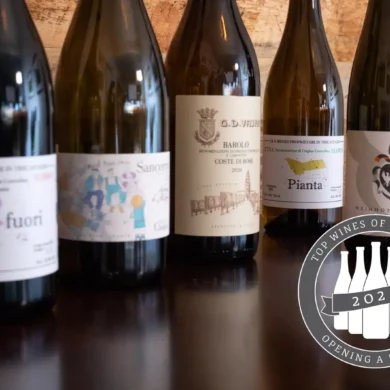
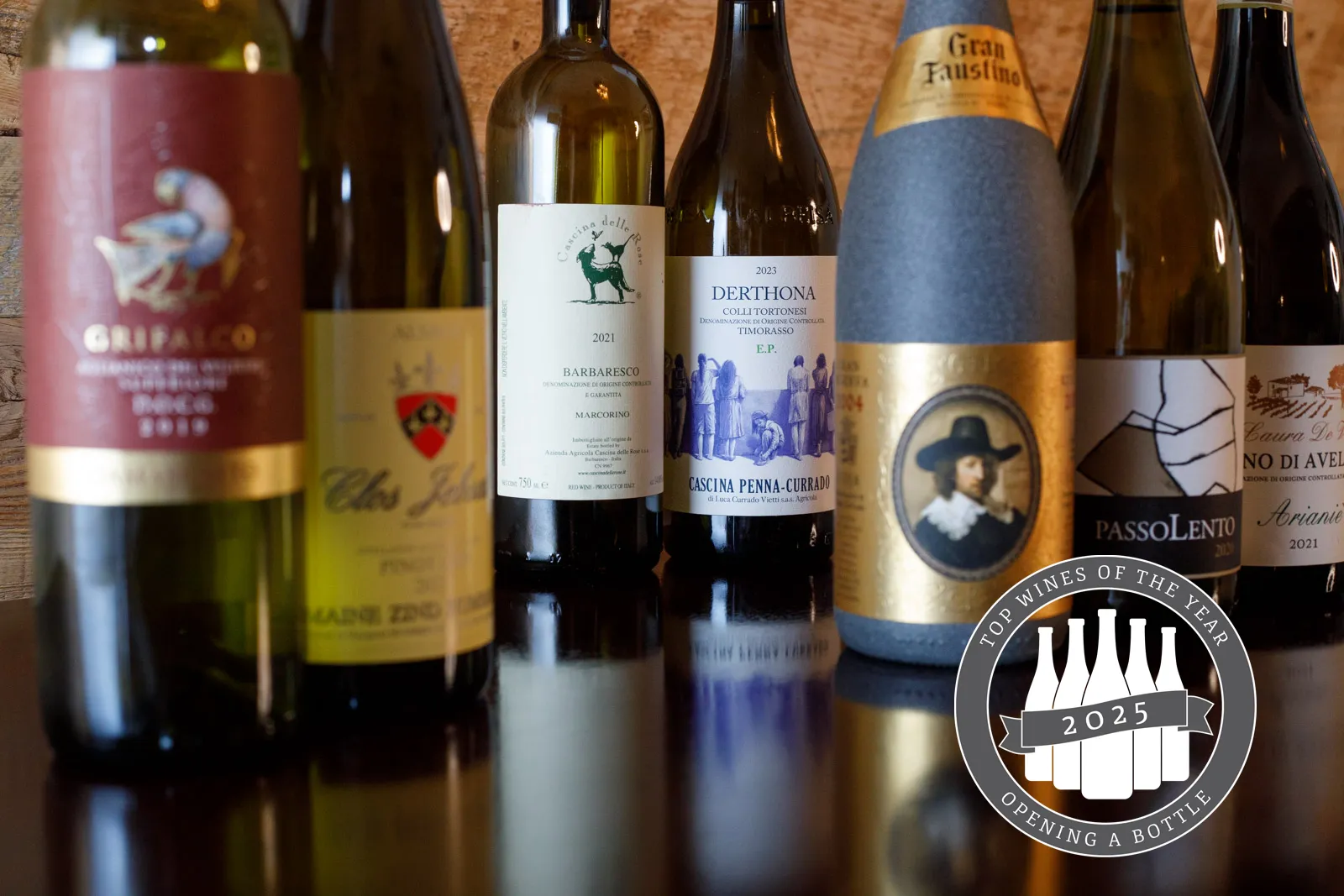
Alright. Let’s do this: my annual exercise in which I imagine a mixed case of the most compelling wines I sampled throughout 2025.
This year, the case leans heavily towards one nation: Italy. How could it not, since the arduous task of writing, revising, editing, proofreading, publishing and promoting my first book centered entirely on this one wine nation? While much of what informed the book came before 2025, there were some formative moments early in the year that stayed with me (see wines No. 2, 3 and 10). There were also a few wines whose intrinsic qualities were reaffirmed while promoting the book (see wines No. 4 and 9), and of course, a few that I would have squeezed into the book in some way had we only met sooner (wine No. 1 and No. 6).
Along the way I managed to study for — and pass — the exam for the Spanish Wine Scholar, which renewed my curiosity for Rioja (No. 7), Cataluña and particularly Galicia with its satisfying Albariño and thought-provoking Mencia (No. 12). But even then, I was tasting and sampling Italian wines left and right. Plus, the Italians keep inviting me back for more. In one instance, I took a pause in the town square of Gorizia on the northeastern edge of Italy and wet my whistle with the one and only Slovenian wine I tasted this year. Lo and behold, it was one of the year’s best (No. 8).
As for France, my second love, it really wasn’t on the radar much this year. But it did sneak onto the list thanks to one of its legendary Alsatian families (No. 11). We’ll resume our courtship in 2026 with some Mâconnais and Vouvray.
Note: Rankings within the Top 12 are loose. In my opinion, this year was essentially a four-way tie for the top spot.
A Quick Preview of 2026
I have big plans for 2026, and I want to invite you along for the ride. I’ll soon be publishing my annual report and photo essay on Brunello di Montalcino and its new vintages, as well as producer profiles and notes from one of Italy’s best-kept secrets for white wine: Collio. Coming next week for subscribers only: the Top Photos of 2025, a new feature.
Plus, I’ll be headed to Florence for the Chianti Classico Collection as well as Alto Adige and Austria, all within the first six months of the year.
To do this work, I need support. Your subscription unlocks the paywall, fosters a community of wine lovers who prize story over scores, and helps to expand the coverage to areas beyond Italy. Because of the photography, my costs and labor are significantly higher than other wine publications and Substacks. Please consider a subscription to support my unique role as a storyteller in the wine world.
Winemaker of the Year: Cascina Penna Currado
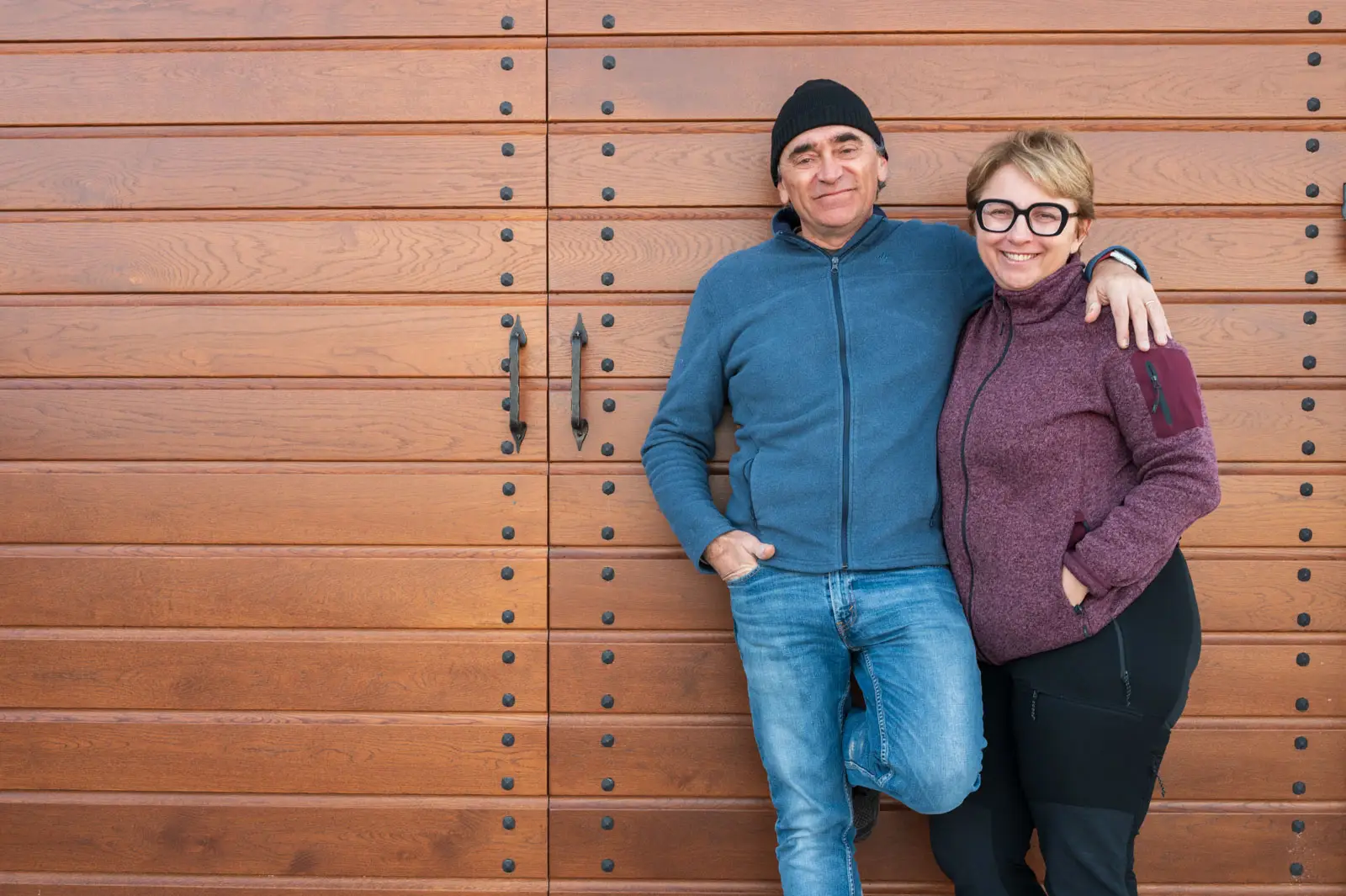
Starting with last year’s list, I am taking this opportunity to pay tribute to the winemaker who had the biggest impact on my wine-drinking journey this year. There is no cheesy trophy, no placard or sticker to be adhered to bottles. In short, this is not a commercial honor. Just a humble “thank you” to the producer who most profoundly taught me something new about wine, my sense of taste, and where we are all headed on this journey.
Last year, it was the thoughtful Ciro Biondi on Mount Etna’s southeastern slope, a man I had wanted to meet for many years. This year, it is actually a pair of old friends: Luca Currado Vietti and Elena Penna Currado at Cascina Penna Currado in Serralunga d’Alba. For me, what Luca and Elena have in common with Ciro is deeply personal: they anchor two of the most significant chapters in my new book, Opening a Bottle: Italy, and their approach to winemaking shares a similar soulfulness, even though they come from complete opposite corners of “the boot.”
Luca and Elena showed me that the lore of a multi-generational winemaking family doesn’t always have to follow a predictable script.
If you’ve been reading Opening a Bottle from the beginning (circa 2014), you might be tired of seeing Luca and Elena on these pages. I get it. I’ve probably written about them far too often.
But what they’ve achieved in less than two years with their new winery, Cascina Penna Currado, is nothing short of astounding. They showed me that the lore of a multi-generational winemaking family doesn’t always have to follow a predictable script.
Some quick background: Luca is the former winemaker of the iconic Barolo estate, Vietti. In 2016, his family sold the estate to an American family with deep pockets, which not only set off alarm bells among Barolo purists, it kicked started an incredible run of vintages for Luca, who made the most of the capital influx. Prime vineyard plots were acquired, new wines were produced, and techniques were refined. The accolades and demand increased.
But in January 2023, Luca and Elena suddenly resigned. No one knew for sure what their next move would be, but they soon started making appearances in vineyards around the region. Hey, what are they up to now? their peers pondered as they drove by. We now know.
It is a long story best reserved for the printed pages of my book, where their unique brand of charm and craziness can be told at length. It is why I asked them if they could open their door to me for a visit in early February, and be the final chapter my book truly needed. They not only showed me the new vineyards they’re tending to (which have a certain kind of climate resilience), but they also revealed a flight of introductory wines that are nothing short of sensational.
I had just come off a series of intensive days tasting the new vintages of Barolo and Barbaresco. Diving into their Dolcetto, Barbera, Langhe Nebbiolo and Nebbiolo d’Alba wines was not only a refreshing exercise, it affirmed that even their “lesser” wines are better than 99.9% of the wines in the world. Luca and Elena always amaze me with their soulful craft. It just gets better and better. Their forthcoming Barolo wines are going to be something special. But I also came away from the day realizing how Elena has become one hell of a winemaker herself. Cascina Penna Currado is, in many ways, her stepping to the forefront and showing us all she’s absorbed and learned and felt. This is best captured in her baby, the dazzling Timorasso from Colli Tortonesi that bears her initials as the vanity name.
There was one other visit this year that truly rocked the foundations of my appreciation for wine: a morning spent at Damijan Podversic in the Collio, barrel tasting with the insightful heir to the winemaking legacy there, Tamara Podversic. But I am saving that story for another day, because the images from it deserve their own article.
What a moment this is for the continuing renaissance of Italian white wine.
2025: The Year I Published a Book
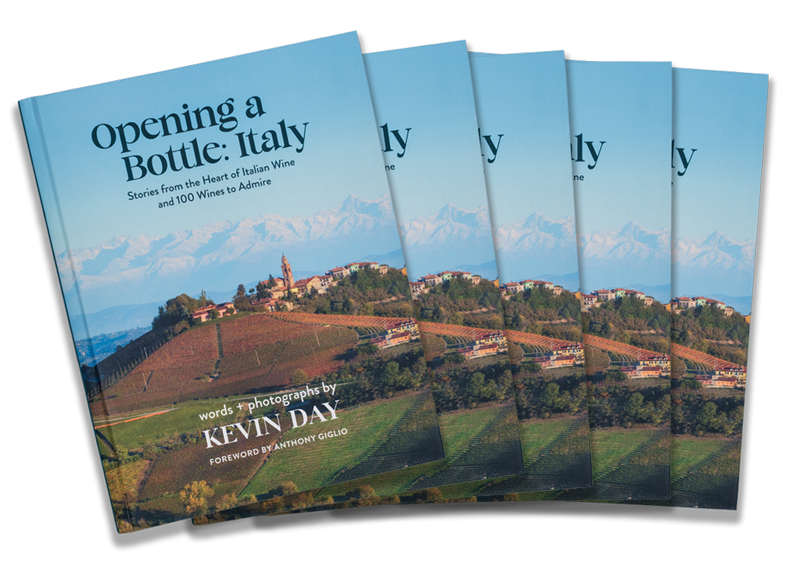
Opening a Bottle: Italy was recently selected by Forbes Magazine writer Jessica Dupuy as one of the year’s 9 essential new wine and spirits books.
Add this visually rich, thoughtfully written book to your wine library.
- 169 original color photos
- 18 story chapters detailing the importance of biodiversity, labor and family in Italian wine
- 100 Wines to Admire from Sicily to Valle d’Aosta
- Foreword by Anthony Giglio of Food & Wine Magazine
Available via BookBaby and eBook. We still have a few signed copies to mail as well.
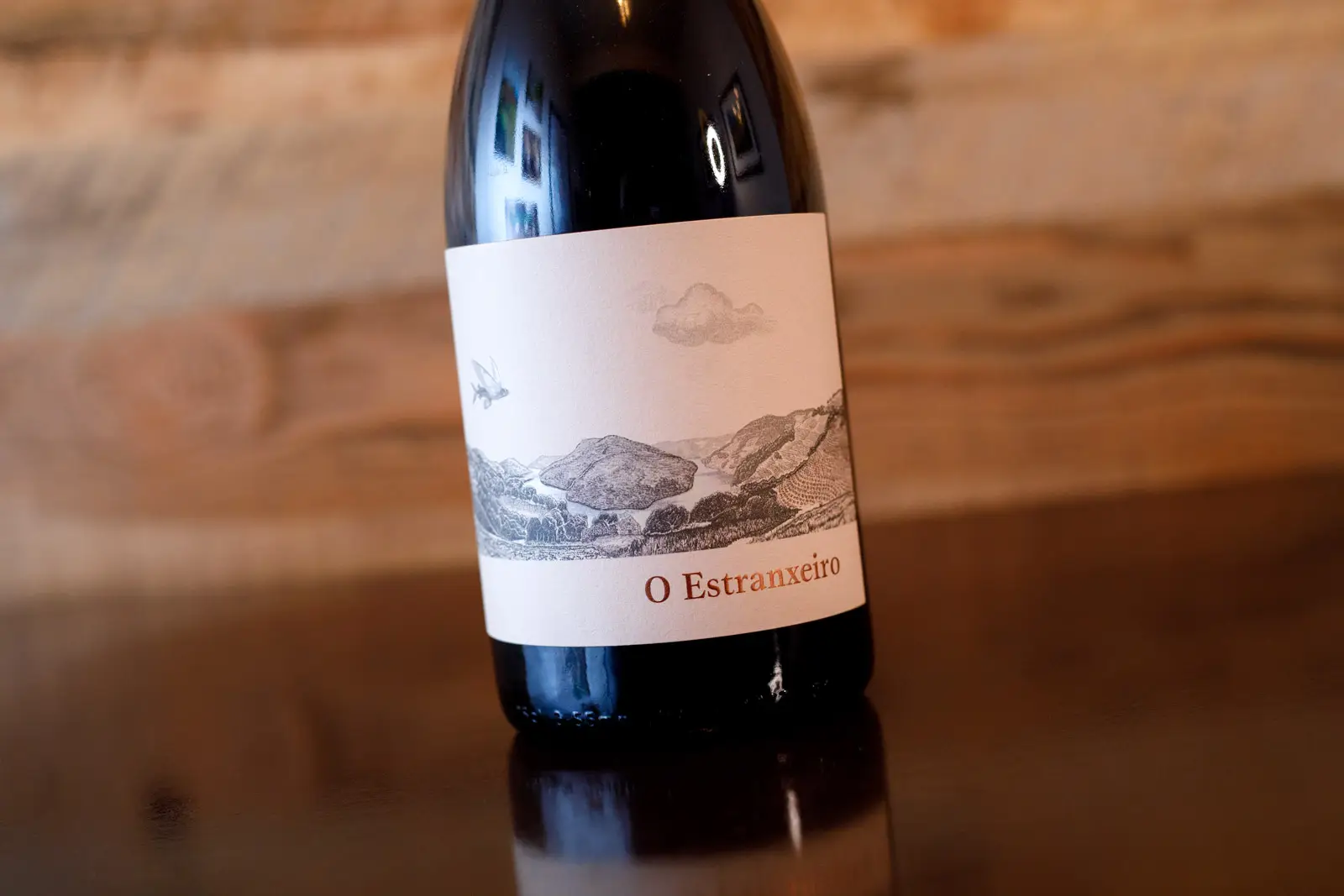
- 2021 Quinta do Estranxeiro “O Estranxeiro” Ribeira Sacra Summum
The Lean-Lined Red
My Top 12 case of wine always has a slot for this kind of wine, and it is usually filled by a Pinot Noir, Beaujolais Cru, an Etna Rosso or something more esoteric like Petit Rouge from Valle d’Aosta. This year, I am turning to the heroic vineyards of Galicia and the Ribeira Sacra DO, where the Mencia grape reigns supreme. This grape yields a highly aromatic wine redolent of red fruits, flowers and spice, which in the 2021 “O Extranxeiro” came across to me very distinctly as pomegranate, smoke and clove. It was the ethereal weight of this wine that left the most indelible mark. The wine is the work of husband-and-wife team Eulogio Pomares and Rebeca Montero, whose category defining work at Bodegas Zárate in Rias Baixas has helped advance Albariño’s reputation worldwide. This persistent, romantic wine is helping to do the same for Mencia.
American Importer: Rare Wine Co., Polaner Selections
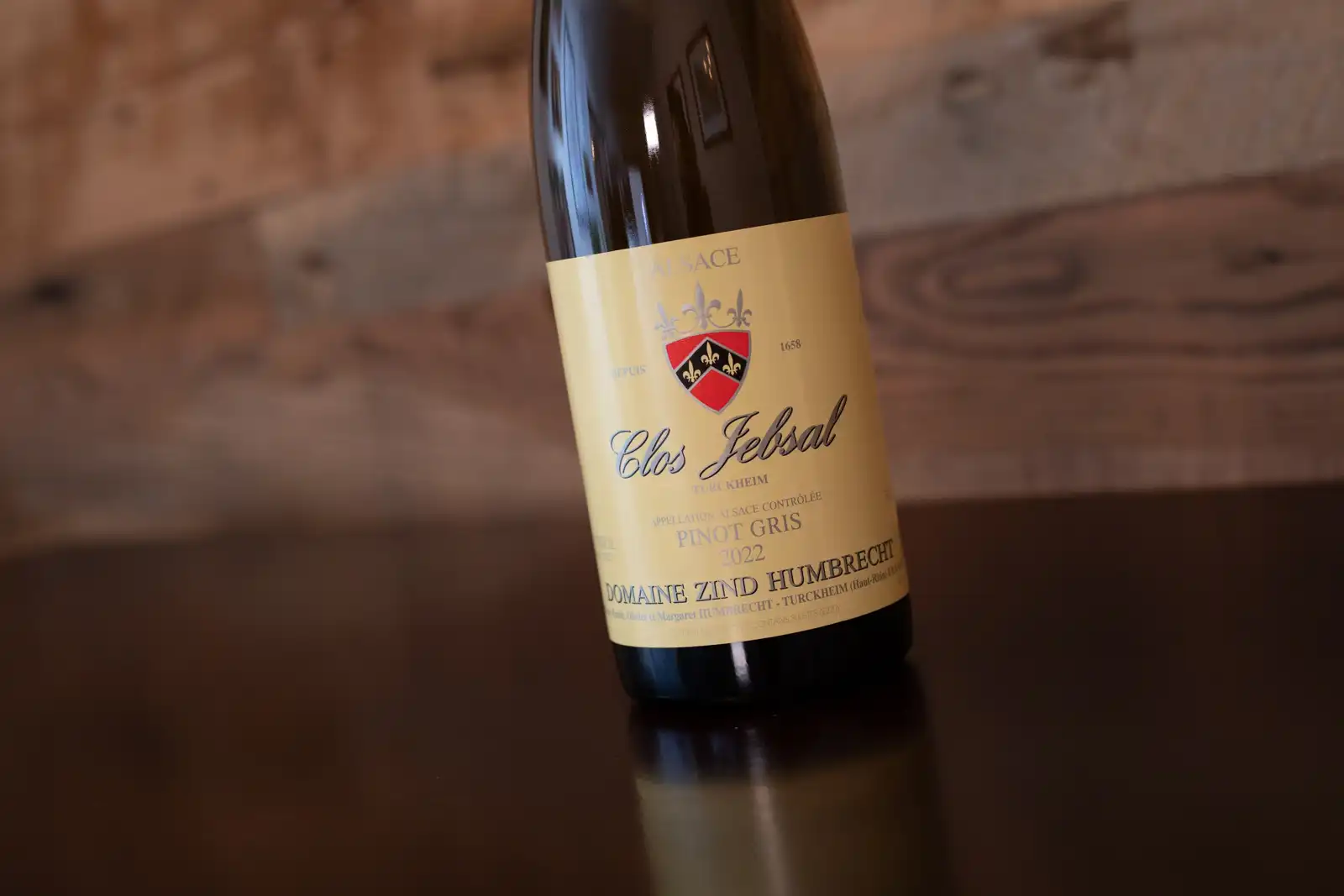
- 2023 Domaine Zind-Humbrecht “Clos Jebsal” Alsace Pinot Gris
The Revitalizer
In July, I wrote about this wine and how it rekindled my flame for wine writing after the mentally and emotionally taxing experience of writing a book on Italian wine. For weeks in June, everything I tasted seemed ho hum. Self doubt crept in: Will I be able to continue doing this?
Leave it to the Humbrecht family to give me a pep talk. “Clos Jebsal” is a wild ride from start to finish, offering complexity and depth on the nose, and shape-shifting flavors and textures on the palate. The lieu-dit vineyard that lends fruit to this wine is in Turckheim, a quintessential Alsatian village on the outskirts of Colmar. In 1983, Léonard Humbrecht cobbled together the many microplots of the Jebsal, owned mostly by small growers. The greatness of the site was hiding in plain sight. Today, it is considered hallowed ground for Pinot Gris, and the 2022 demonstrates why perfectly.
- 2023 Marcarini “Boschi di Berri” Dolcetto d’Alba
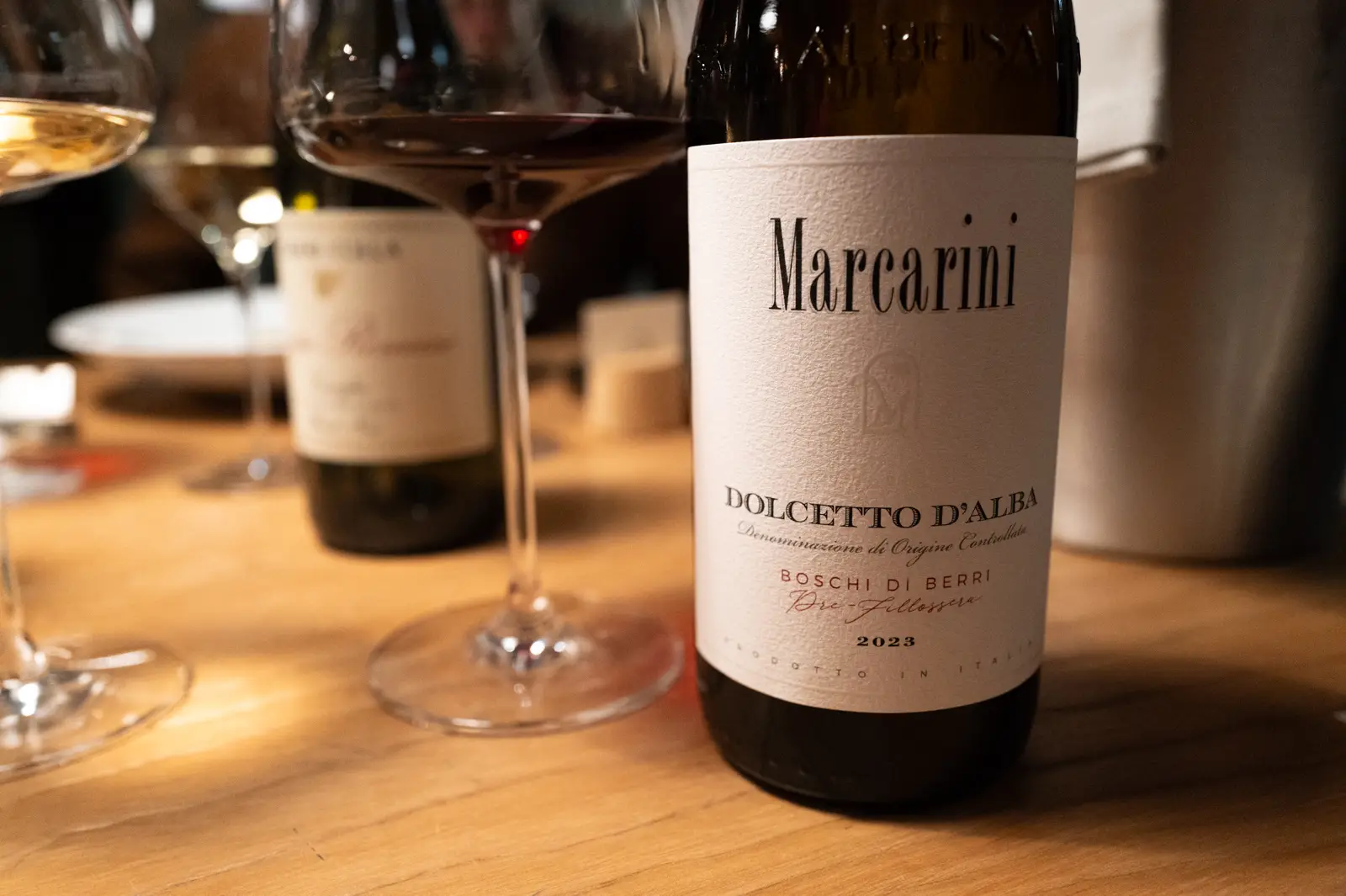
The (Elevated) Everyday Wine
In Piedmont, the devastation of the late 19th century phylloxera plague was nearly total. But within a singular plot underneath the Belvedere of La Morra, a series of Barbera and Dolcetto vines survived the plague because of loose sandy soil and high altitude — traits that disrupt the lifecycle of phylloxera. With their original roots intact, this plot has preserved the ancestry of two fundamentally piemontese grapes. Azienda Agricola Cogno claims the Barbera, giving us the exceptional “Pre-Phylloxera” Barbera d’Alba. Meanwhile, the Marchetti family of La Morra’s Marcarini estate own the Dolcetto, which gives us the soulful, mineral and complex “Boschi di Berri,” which I was introduced to for the first time in Alba this past January.
Dolcetto is the fine wine no one seems to celebrate, at least not outside of Piedmont. That’s just as well for growers and producers who love its quenching acidity, playful fruit and versatility to cuisine and occasion. I’ve asked so many producers over the years “why don’t you give up on this difficult and poor-selling grape?” But that’s like asking a Toronto Maple Leafs fan to choose another team after 58 years without a Stanley Cup. “How could I?” they respond. The Marchetti family has what is perhaps the most structured Dolcetto around, and I’m confident that if more people could taste it, the tide would finally turn for this charming ambassador of everyday life in the Langhe. (If only I could say the same thing for the Maple Leafs).
American Importer: Empson USA
- 2021 Laura de Vito “Arianè” Fiano di Avellino
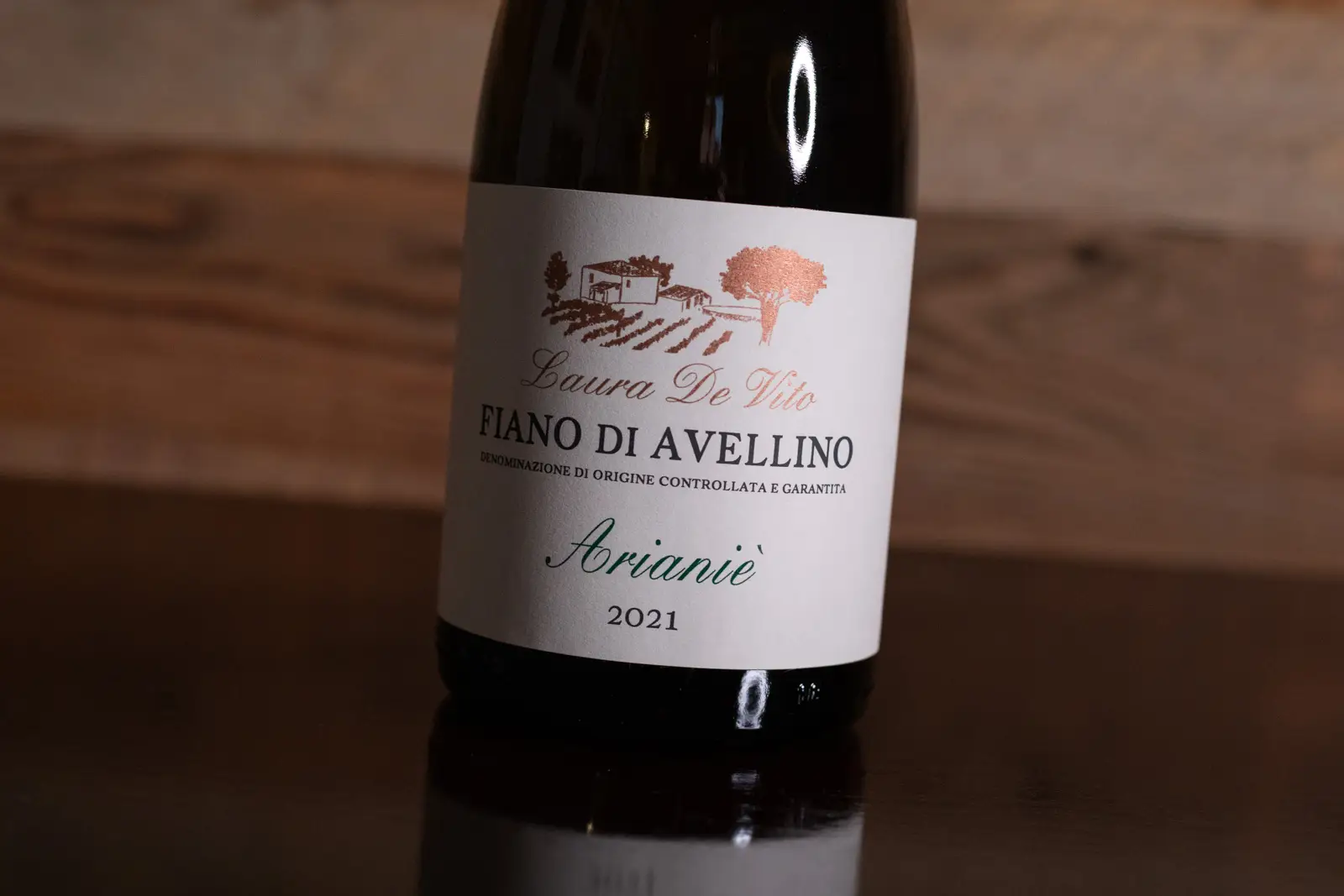
The Bottle of Sunshine
Every book on Italian wine starts in the north and works its way south. I wanted to address this unnecessary bias in my book, so the 100 Wines to Admire section which comprises the second half of the book begins in Sicily and works its way north to Piedmont and Valle d’Aosta. The point is not to say that Southern Italian wines are better; but rather, to say that they warrant equal attention. What continues to give me the utmost confidence in Southern Italian wine is the spectrum of white wines produced in the south, especially Etna Bianco from Sicily and Fiano di Avellino from Campania.
What I like most about Laura de Vito is her commitment to single-vineyard Fiano, which shows how bendable this brilliant, radiant and complex grape can be. “Arianiè” gives drinkers a lot of details to cherish, thanks to three co-mingled soils in the vineyard: volcanic, sand and limestone. The briny character, the precise pear fruit, the whispers of peppercorn and almond, feel novel and thrilling, yet classically structured at the same time.
American Importer: Oliver McCrum
Wine Industry Group Subscriptions
- Five different log-ins for staff.
- Your own brand page to connect with our readers and aggregate articles in one place.
- The ability to make a paywall article free to the public.
- Discounts on royalty-free photography
- Reward the hard work that goes into this publication.
- 2022 Movia Goriska Brda Sauvignon
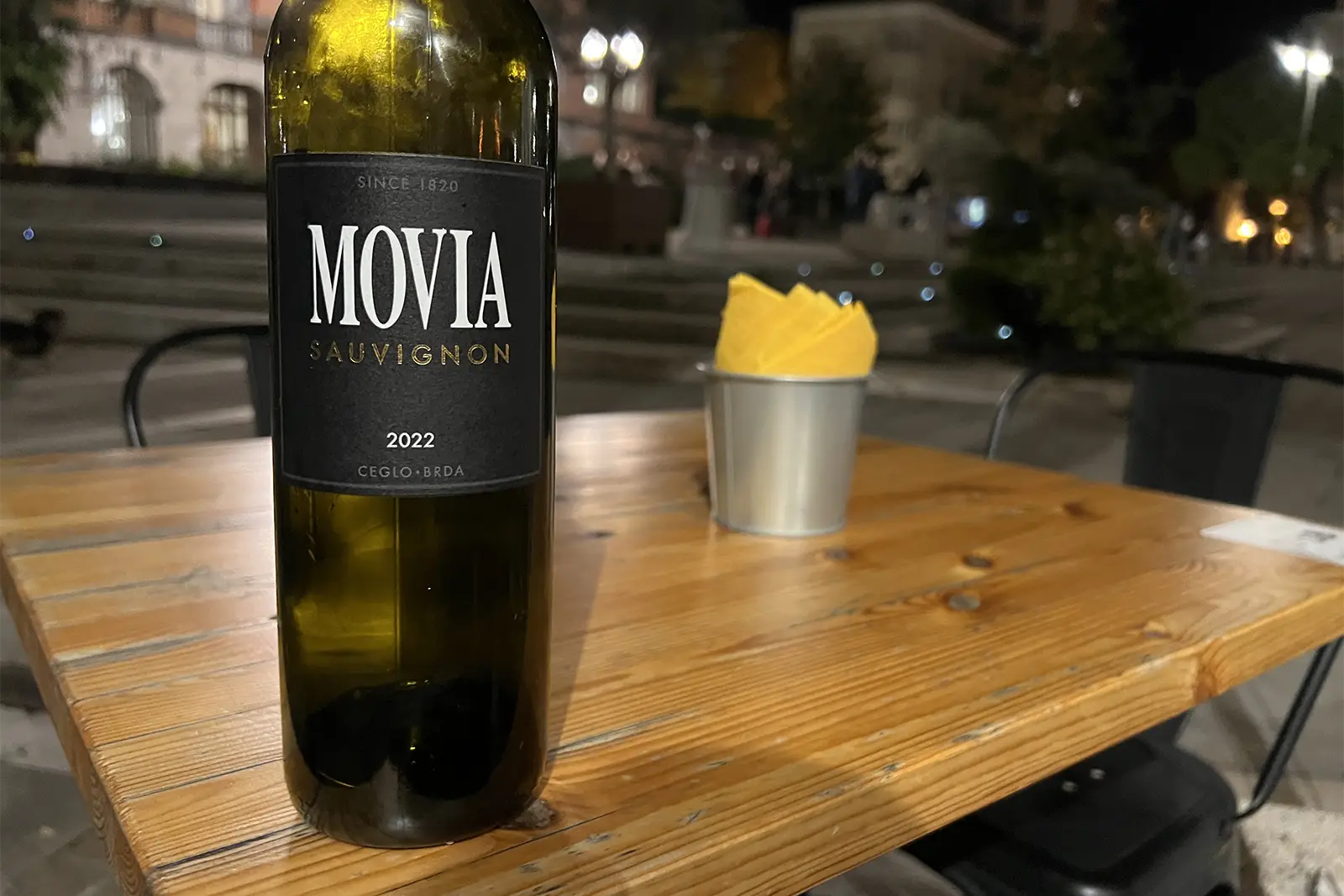
The Flavor Bomb
For three years in a row now, I’ve somehow included a Sauvignon Blanc in the year’s Top 12. This has not been by design.
Two years ago, Weingut Tement from Austria’s Steiermark region came in at No. 1. Last year, it was a Sancerre that I claimed was “as exciting and versatile as Shohei Ohtani” (it was a prolonged baseball analogy. Then Shohei went out and did this and I feel like I may have overextended on that analogy). This year, SB has returned with yet another thrilling example from Slovenia’s Goriska Brda region: a stunning display of sour peach meeting salty persistence.
So what’s with all the love for Sauvignon Blanc? After all, wines from this grape are often maligned for being predictable, anonymous, or just obnoxiously needy with all those forceful aromas. For me, what explains this winning streak is that none of these wines play the familiar Sauv Blanc hand. Sauvignon Blanc is intensely flavorful. It can’t help it. But when hailing from an ideal terroir and given the right amount of care in the winery, those flavors can shift from disjointed to symphonic, needy to confident.
Movia’s winemaker, Aleš Kristančič, has long been seen as a benchmark producer in Slovenia. His traditional-method sparkling wine named “Puro” has to be disgorged to be enjoyed, usually in a bath of water. No such special instructions apply to this wine: just an aptitude for intense flavors and an occasion to truly soak them all in.
American Importer: Ethica Wines
- 2004 Bodegas Faustino “Gran Faustino I” Rioja Gran Reserva
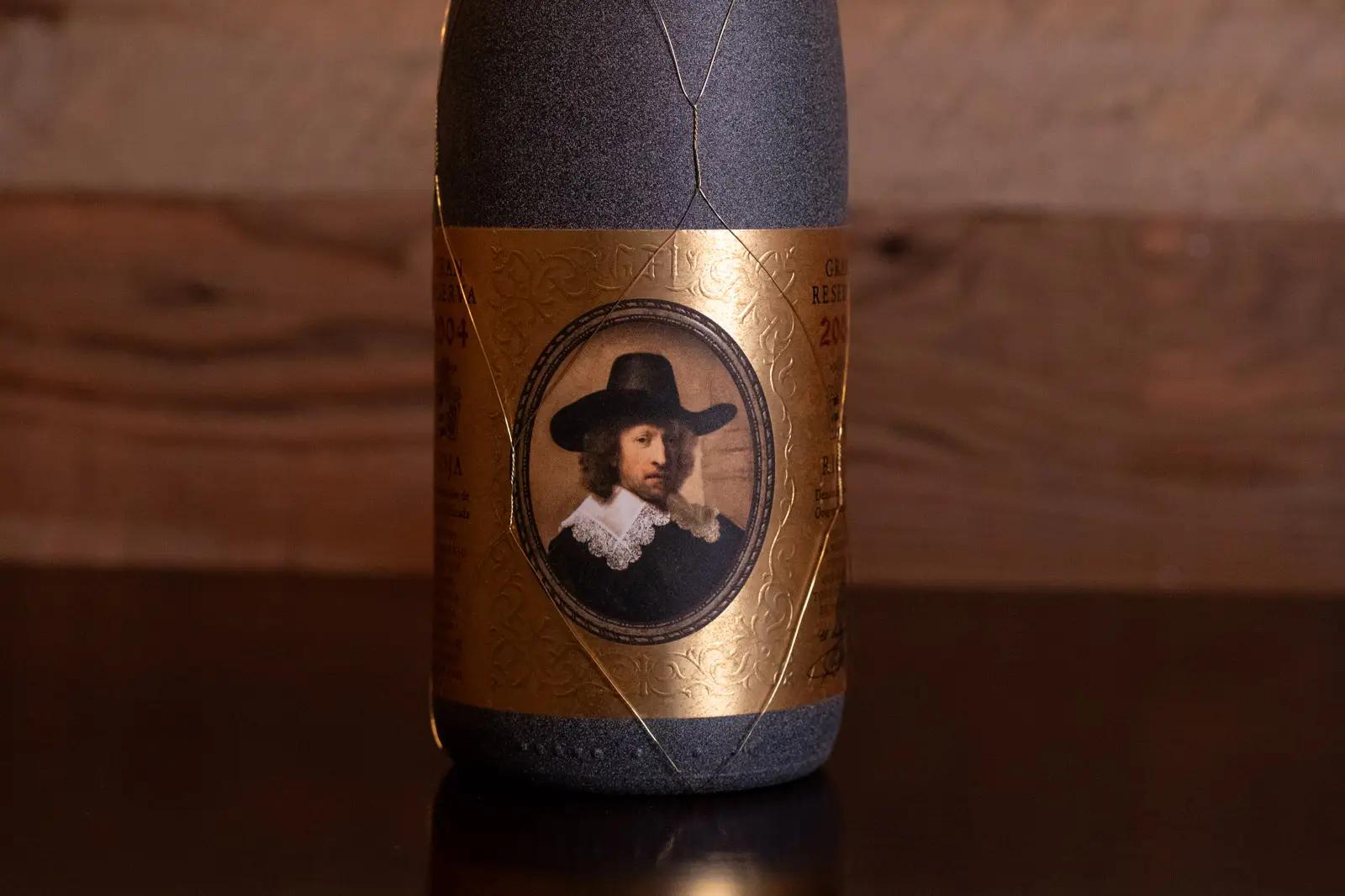
The Timeless Wonder …
This year, I began offering wine cellar consultation services to my readers. Naturally, this new line of work had me thinking philosophically about the practice of aging wine in the modern era. So many incredible wines are now built for age, yet fewer and fewer people bother with this practice, especially wine lovers my age (mid-40s) and younger. For many of us, this practice is either too expensive, impractical, or — maybe more on the nose — we just grew up in an age of immediate gratification. Buy it, open it, drink it, move on.
Yet none of that is an excuse for skipping over the Rioja Gran Reserva category of wines, which are sometimes held back at the winery well beyond the required 60 months of aging. This allows you a glimpse of the glory while still following the mantra of “buy it, open it, drink it and move on.” Best of all: the price of Rioja Gran Reserva is often well below similarly aged wines from Châteauneuf-du-Pape, Barolo, Chianti Classico and Brunello di Montalcino.
Bodegas Faustino’s newly released 2004 “Gran Faustino I” Rioja Gran Reserva commemorates the estate’s 40th anniversary of producing a wine at this category level. Yes, you read that right: 2004, the same year in which the Motorola Razr and iPod Mini debuted. Fortunately, what they were producing in Rioja that year was built to last. It was a fantastic vintage marked by balanced ripening and durable fruit. The Martinez family chose to isolate the best barrels for a limited release at a later date, ultimately choosing this year for its public debut. Marked by an extraordinary sense of vitality and purpose, this was one of the most memorable aged wines I’ve had in years, with dried fruit, espresso-like bitterness, sanguine savory traits and velvet tannins.
And how much cellar obsessing was required on my part? Zero.
American Importer: Winebow
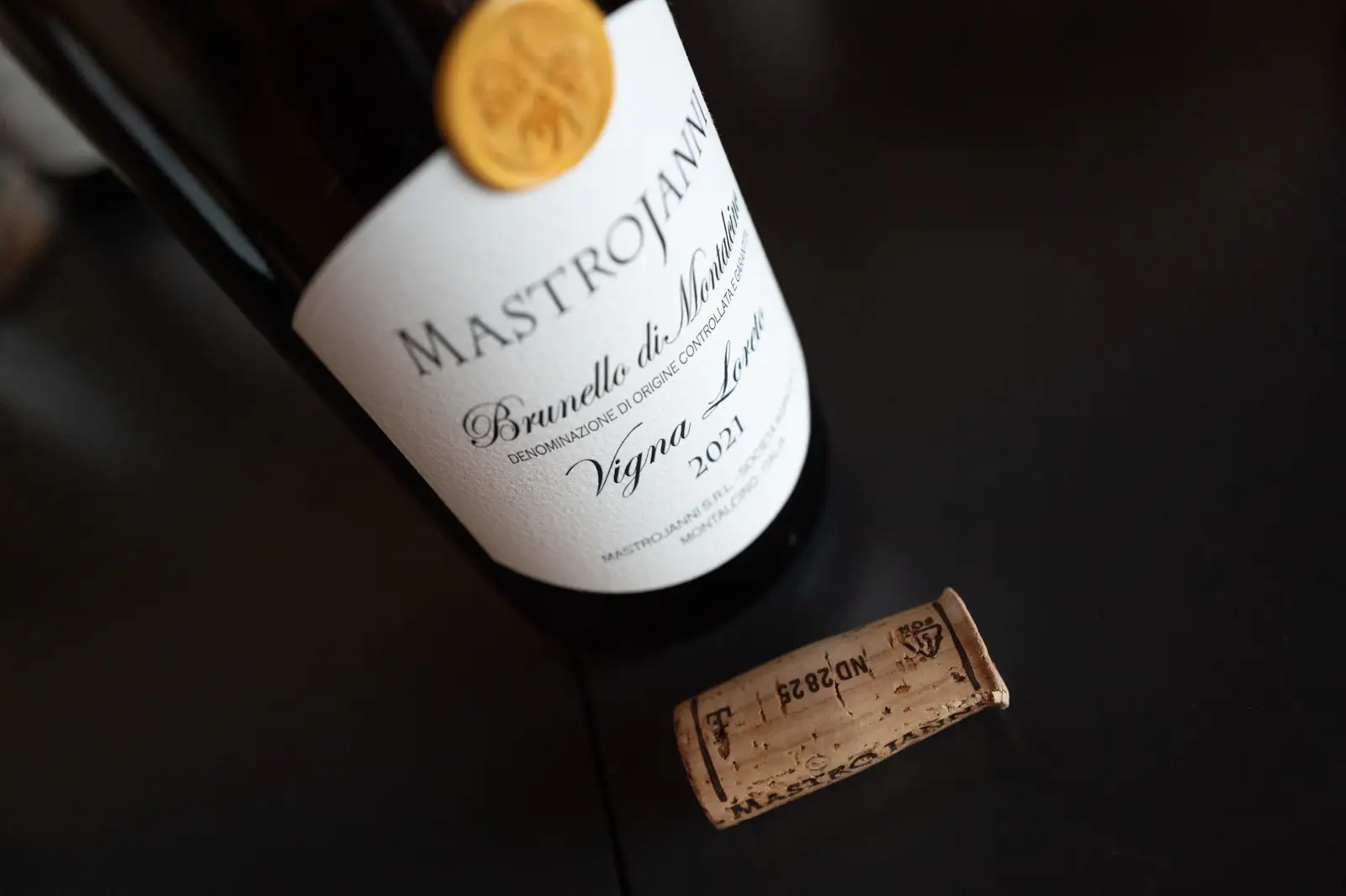
- 2021 Mastrojanni “Vigna Loreto” Brunello di Montalcino
… And the One for the Ages
The grandeur of the Brunello di Montalcino landscape really hits home in Castelnuovo dell’Abate, in the southern end of the DOCG zone. Every view seems angled at the great dormant volcano, Monte Amiata, and the meandering Orcia River sets a tempo that should be abided at all costs. This is where some of Italy’s finest red wines are fostered, at esteemed estates like Stella di Campalto, Poggio di Sotto and Mastrojanni. The latter two I visited on November 21, a day punctuated by two wines: a magisterial taste of the 2010 Poggio di Sotto Brunello di Montalcino Riserva at its presumed apex, and an invigorating few sips of the new 2021 “Vigna Loreto” from Mastrojanni. The former was a unicorn, the latter is a new release that you should be able to find in the New Year (although, only 6,000 bottles of the single-vineyard “Vigna Loreto” were produced. Get it while you can).
What I loved about this wine was its symphony of fruit, something that stands out in the cherries-and-citrus dominated world of Sangiovese. After making note of this complexity, winemaker Giulia Härri agreed, saying that at fermentation, the grapes from Vigna Loreto — just below the winery and facing southeast — always emit an aroma similar to white peach. “It is thrilling for me to detect that note again years later in the wine.” But don’t let this fruity narrative mislead you on what else “Vigna Loreto” offers in the glass: with profound elegance it waltzes across the palate with already perfect tannins and silky acidity.
American Importer: Multiple regional importers
Gift Subscriptions
Do you have a wine lover on your gift list, but don’t know which wine to buy them? Feed their endless curiosity for wine with a subscription to Opening a Bottle instead.
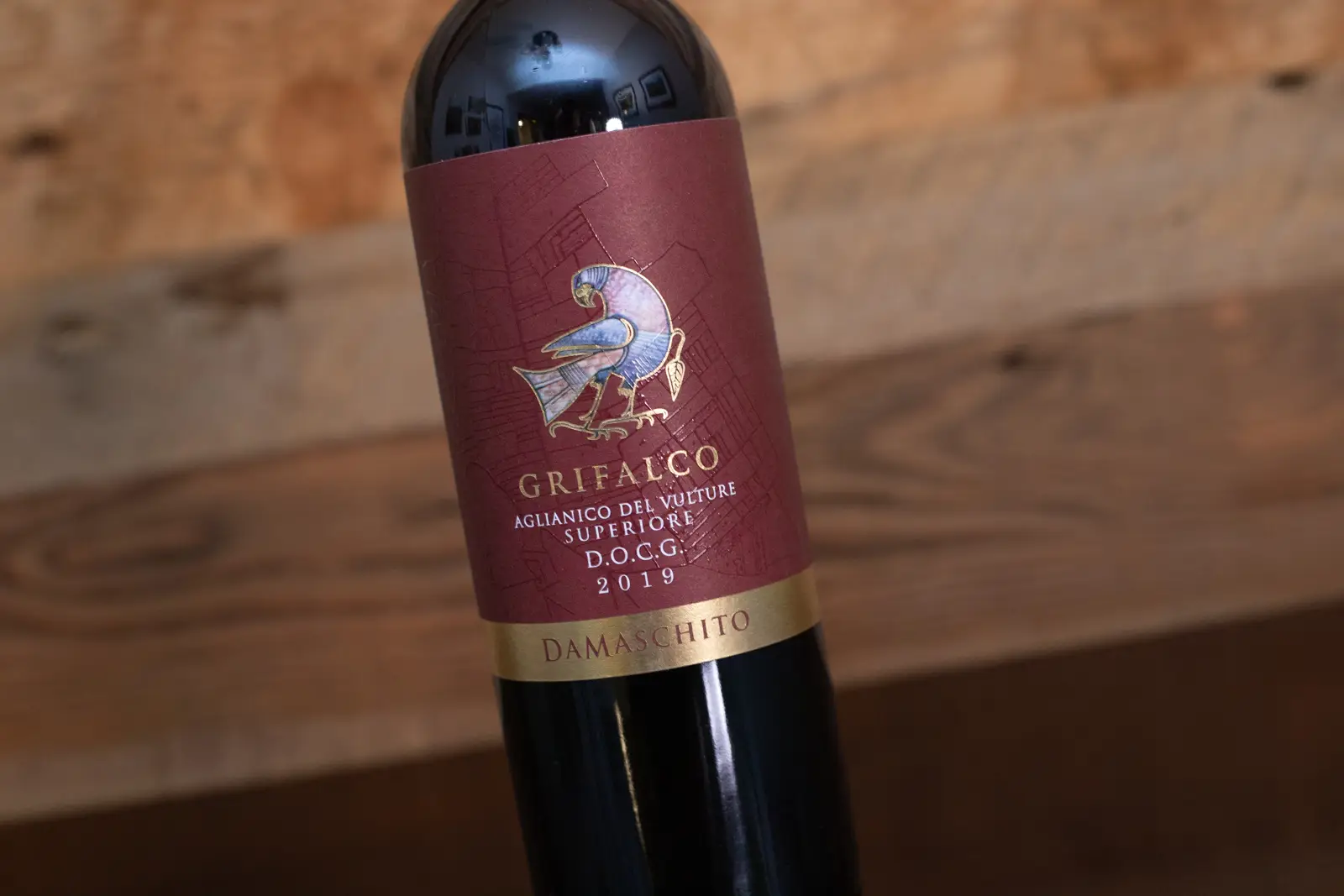
- 2019 Grifalco “DaMaschito” Aglianico del Vulture Superiore
The 13.5% Ace
The people who say that the alcohol-by-volume number doesn’t matter are living in a vacuum. Their legitimate point is that the sensation of alcohol is not always the same based on the number. Some 14.5% alcohol wines are perfectly balanced and you hardly even notice the sensation of heat on the palate. Others feel like a wallop. What is the same, however, is the level of alcohol entering your bloodstream, and increasingly, people are caring about this fact. It is not the only reason why red wines are generally struggling from a sales standpoint, but it is a big, big factor. What people have craved from a red wine — i.e. structure, strong character — often comes with higher alcohol.
Which is partly what made this complex, everlasting and beguiling Aglianico del Vulture from Grifalco so enchanting to me. It felt like a new standard for excellence in the age of creeping alcohol and astringency. Only clocking in at 13.5% alcohol (typical of Italian red wines only two decades ago, but now increasingly rare) the 2019 “DaMaschito” exhibited smoky aromatics as well as depth, power, finesse, balance, earthiness, generosity of fruit, and compelling tannins on the palate. Would it have been a lesser wine at 14.5% or 15% alcohol? Maybe not, but given all that detail in the glass, I didn’t hesitate for a second glass to study it some more.
American Importer: Oliver McCrum
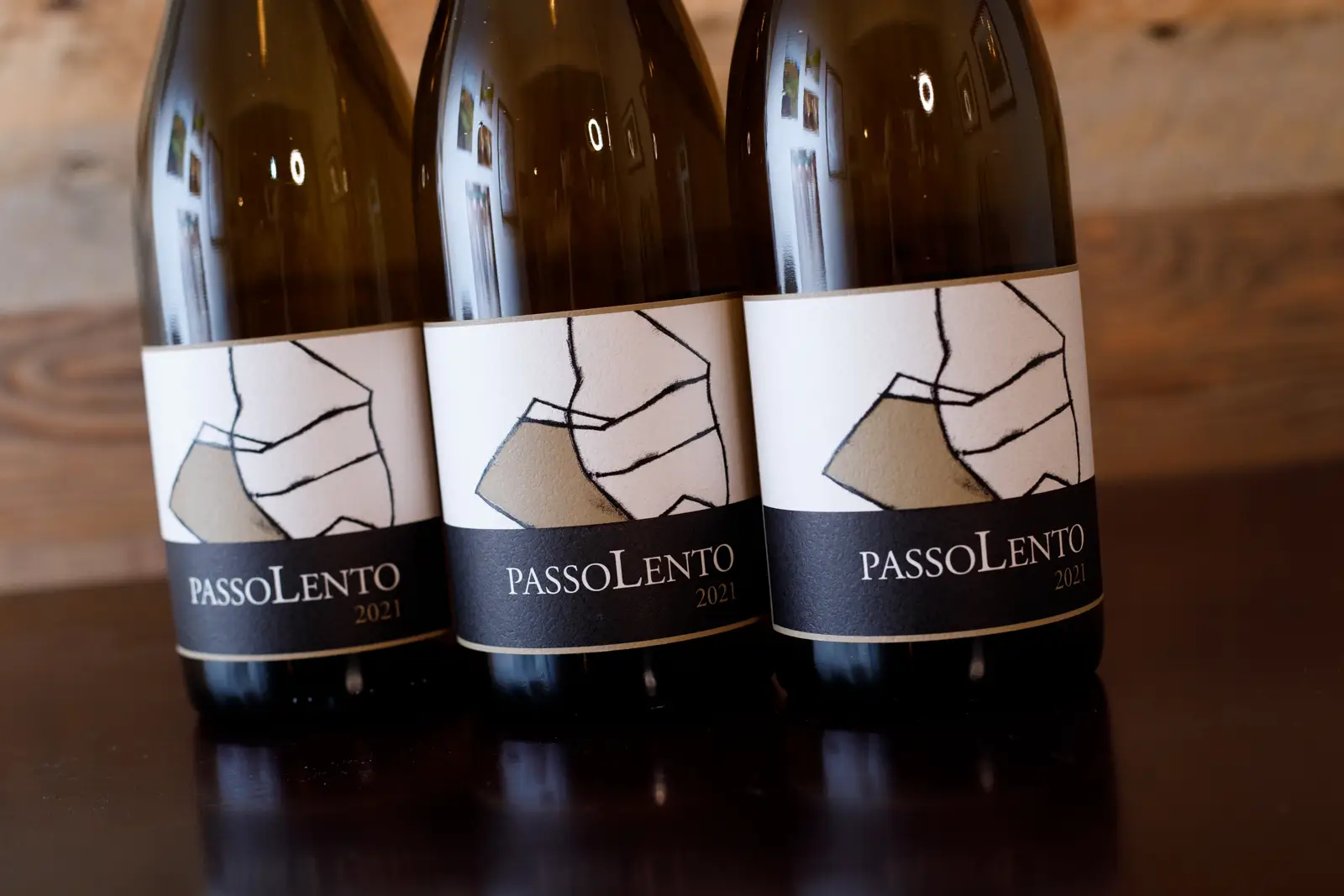
- 2021 La Marca di San Michele Passolento Castelli di Jesi Verdicchio Riserva
The Reigning Champ
For the second half of Opening a Bottle: Italy, I wanted to give readers something to keep them entertained for years to come. The 100 Wines to Admire in the back come from nearly every corner of Italy (sorry Lambrusco), and offer readers a well-rounded perspective on authentic, artisanal Italian wine. Think of it as equal parts checklist and treasure map.
I deliberated long and hard on which wines to include, and challenged sommelier and wine educator Scott Thomas to poke as many holes as he could into my selections. But there was never any doubt in my heart that La Marca di San Michele’s “Passolento” Castelli di Jesi Verdicchio Riserva was going to be included.
“Siblings Alessandro and Beatrice Bonci straddle the line between light and serious, playful and poignant with every wine they make,” I wrote. “It is a task that is far more difficult (and noble) than just aspiring for fine wine.”
As book promotions in the summer and fall took shape, I made sure to have the current release of “Passolento” available for guests to taste. Somehow, the wine was better than I ever remembered it. At the book launch, at wine dinners, at our private backyard book parties with friends and family … time and time again the 2021 “Passolento” was relentlessly joyful, its radiant flavors and silky texture proving again and again that the future of Italian white wine is auspicious.
American Importer: Kermit Lynch Wine Merchant
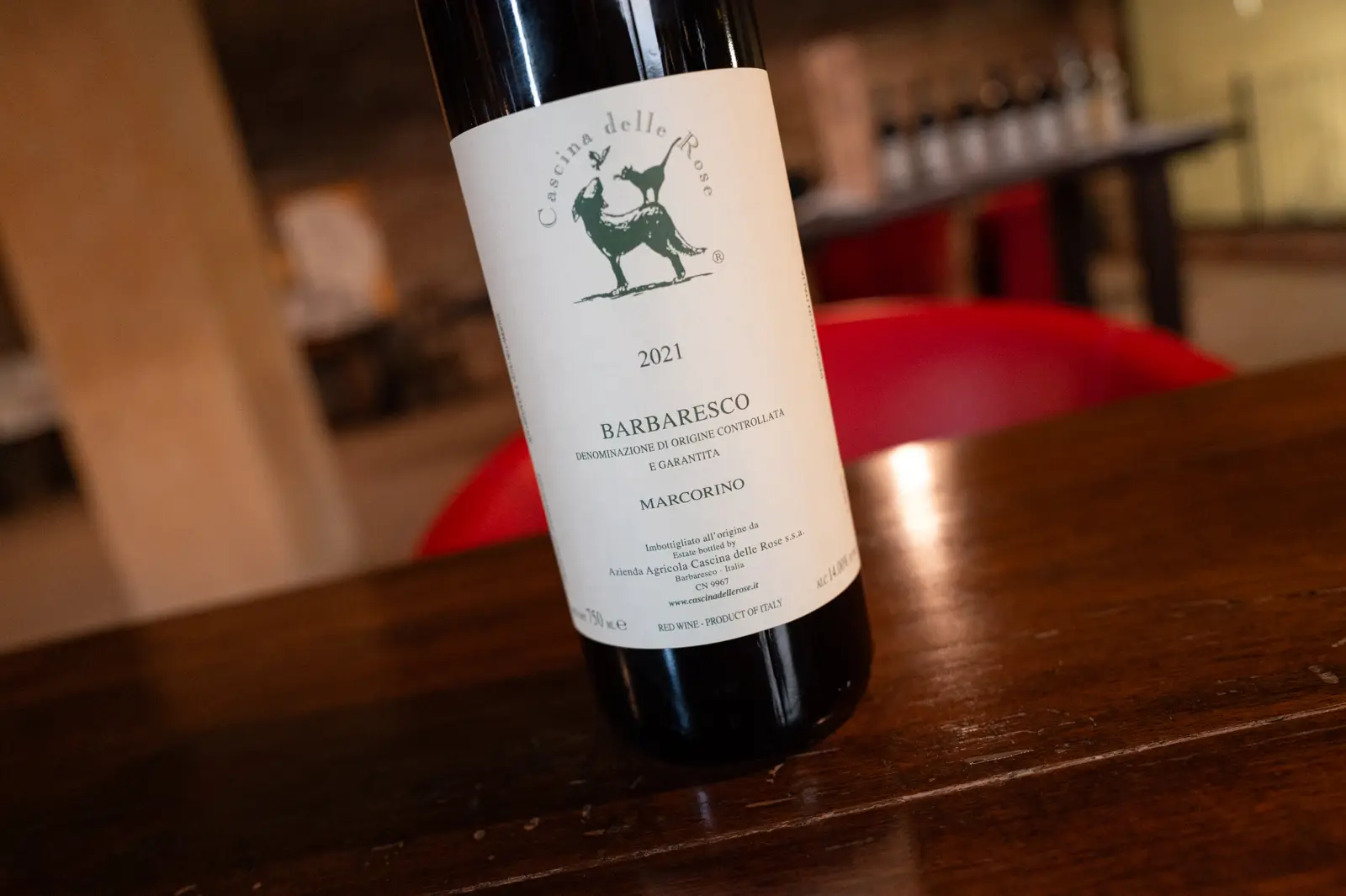
- 2021 Cascina delle Rose Barbaresco Marcorino
The Showstopper
What is Nebbiolo’s gift to the wine world? Is it the capacity to age for decades, or better yet, its ability to express the uniqueness of site? The former is increasingly common in the modern wine landscape, but the latter is still more elusive, and because of that, I would argue that terroir transparency is the Holy Grail of greatness for Nebbiolo.
Winemaker Riccardo Sobrino of Cascina delle Rose elevates this narrative with his three deftly elegant Barbaresco wines from the Tre Stelle, Rio Sordo and Marcorino cru vineyards. Each is fresh and artfully aromatic right out of the bottle, yet composed for the long haul in the cellar. During a tasting of the 2021s in February, it was the thrilling specifics of the Marcorino cru that had me most elated. The site is uniquely sandy, which demands deeper roots from the vines, and leads to a brighter rendition of Barbaresco in the glass. It is as though all the effort exerted by the plant leads to fruit with a leaner body, but heightened aromatics. The nose of the 2021 Marcorino was punctuated with notes reminiscent of raspberry, red tea, juniper leaves and rose flower, all swirling hedonistically from the rim of the glass. A mineral persistence on the finish countered the eager tannins and moderated alcohol, renewing my love for Barbaresco and giving me a glimpse of the most balanced version I’ve tasted in years.
American Importers: Polaner, Terre Madre, Cream Wine Company
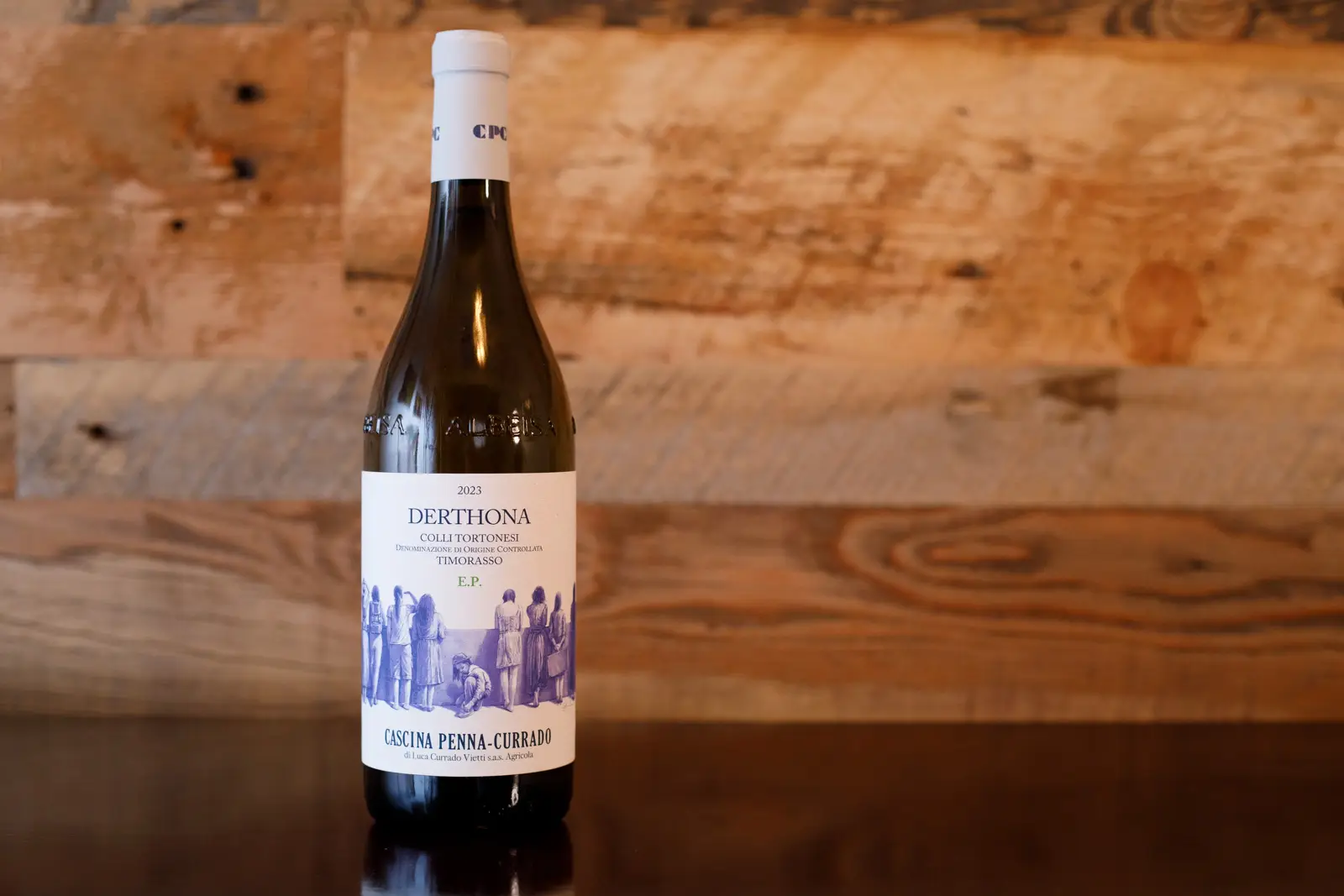
- 2023 Cascina Penna Currado “E.P.” Colli Tortonesi Derthona Timorasso
The Statement Wine
In last year’s Top 12, I wrote about the surge of interest — both globally and personally — in diverse styles of white wine. “Native white-wine grapes, particularly in Italy, are garnering the research and support they’ve long deserved, unleashing them from the sameness of reduction-heavy practices of the past.”
Already on this list we’ve seen this trend embodied by Alessandro and Beatrice Bonci at La Marca di San Michele, who age their Verdicchio on the lees in 10hL Salvonian oak botti for a year (followed by another in bottle). Movia takes a similar approach with their Sauvignon, and as you’ll see with the next wine, Tamara Podversic macerates her Friulano for more than 60 days in huge oak barrels. The goal in each case is substance and openness, and all three of these wines come across the palate with grace and depth that feels novel and provocative.
Which brings us to Cascina Penna Currado’s “E.P.” — for my money, the boldest statement for Italian white wine greatness yet. It is a wild and fantastically complex shape-shifter that seems to holler a challenge over the border at France. Possessed by pear-like fruit and a minty streaky of deliciousness through its core, “E.P.” furthers its case with a caressing texture and brilliant structure, which was coaxed into shape through Elena’s finely tuned craft in the cellar: submerged cap to extract flavor and tannin, followed by a combination of stainless-steel, Clayver amphora and acacia barrels. One taste, and you too will see how Italy’s white wine renaissance has shifted into high gear.
American Importer: Grand Cru Selections
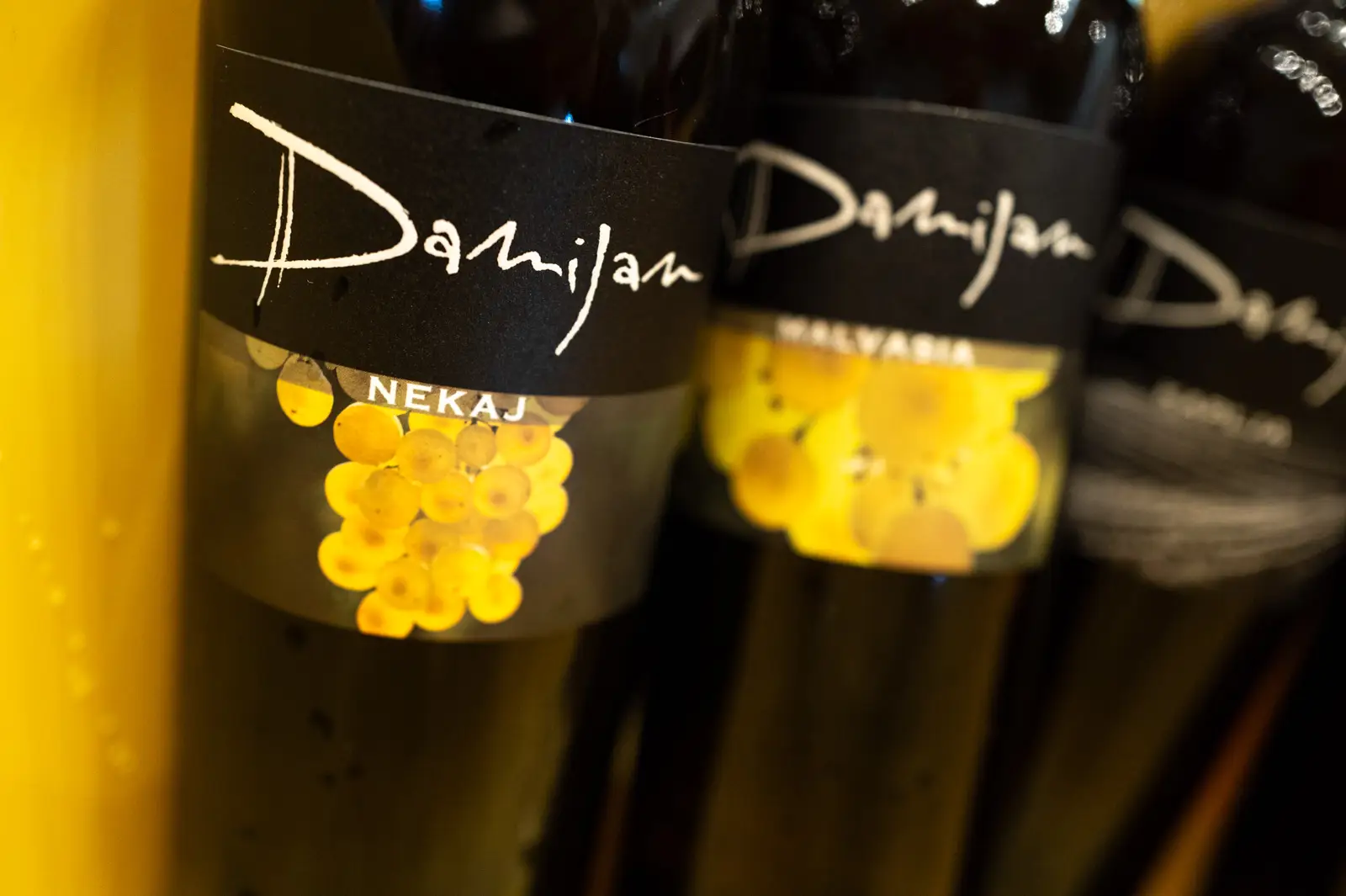
- 2021 Damijan Podversic “Nekaj” Collio Friulano
The Category Crusher
If you are obsessed with wine, you are likely obsessed with details: What grape is this? How do the phenolic compounds in the skins make it unique? Now tell me about the fermentation and aging regiment. I hear these questions all the time on press tours, and I am often the one asking them. In a quest to explain the magic, we demand answers. However, answers are often so complex that we find ourselves seven or eight orbits removed from the soul of the wine. It is a classic “head over heart” formulation.
In the underground cellar of Damijan Podversic this October, I found myself surrendering to wine’s charms completely as winemaker Tamara Podversic pulled tank samples from her family’s enormous oak casks. Tamara knows what’s happening: all of it. Her command of the vineyard, the fermentation, the oak aging, the minutiae, is all there. But on the most basic of questions — i.e. What category of wine is this? White? Orange? Skin-contact? — I was left with joyous acceptance of the unresolved. It is something wine obsessives should embrace more often. We don’t need to know everything, and we certainly don’t need to categorize everything.
It is also difficult to say which of the Podversic family’s wines left the most indelible mark on me, which perhaps renders this Top 12 exercise moot. But I am going to go with the Collio Friulano called “Nekaj.” I am a helpless romantic for wine aromas: win me on the nose, and I’m yours. “Nekaj” feels like a trampoline of aromatics: luscious golden fruit, soft herbs, bitters, almond, a wave of spice (Tamara likes to thoughtfully include the stems in certain vintages). I tasted the 2023 out of the barrel and was astonished, then two days later at the Collio Evolution, the 2021 (again: astonished). Since the former is not yet released, I am choosing the 2021 as this year’s top wine.
American Importer: Vinity Wine Company
Share in the Passion
This publication has been going for more than 11 years, fueled almost entirely by a passion for wines of distinct character. You made it this far in the list, so you get it. Share in this passion by becoming a paid subscriber for just $79/year, and unlock the entire site and all of its in-depth profiles.
Note: Learn more about our editorial policy on samples and wine travel.